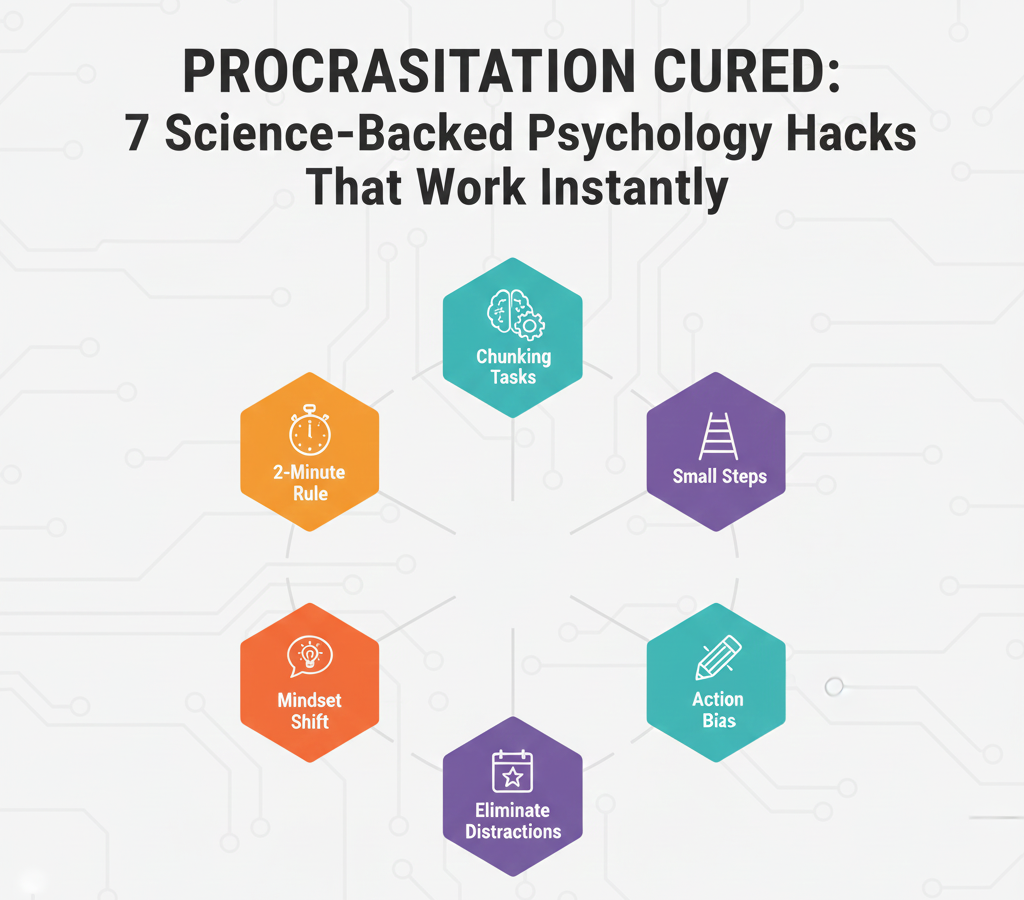
Procrastination isn’t a character flaw—it’s a psychological pattern that millions struggle with daily. The good news? Researchers have identified evidence-based strategies that can help you break free from the cycle of delay. Unlike motivational platitudes, these science-backed hacks address the root causes of procrastination and provide immediate relief.
Understanding Why We Procrastinate
Before diving into solutions, it’s crucial to understand what drives procrastination. Contrary to popular belief, procrastination isn’t about laziness or poor time management. Research reveals that procrastinators are often extremely hard on themselves—both before and after tasks—creating a cycle of negative emotions that perpetuates delay[1]. Additionally, studies show that social capital—feelings of hope, resiliency, optimism, and self-efficacy—plays a significant role in minimizing procrastination[2]. In other words, how you feel about yourself directly influences when and how you approach tasks.
Hack #1: Practice Self-Compassion
One of the most powerful antidotes to procrastination is self-compassion. Rather than berating yourself for delays, treat yourself with the same kindness you’d offer a friend. Research indicates that chronic procrastinators benefit tremendously from reducing self-criticism and adopting a more forgiving mindset[1]. This shift removes the emotional burden that often triggers avoidance behavior, making it easier to start and complete tasks.
Hack #2: Use Mindfulness Exercises
A groundbreaking study published in the International Journal of Applied Positive Psychology found that participants who completed just a three-minute mindfulness exercise showed significantly lower procrastination tendencies afterward[1]. The exercise involved audio instructions designed to induce non-judgmental awareness and attention to present body sensations, including breath. This simple intervention works because mindfulness reduces the anxiety and negative emotions associated with task initiation, creating mental space for action.
Hack #3: Apply Cognitive Reframing
Cognitive reframing—reappraising tasks to see them as more meaningful—is one of the most effective long-term solutions to procrastination. When you create meaning around a task, whether in relation to yourself or others, you establish an emotional connection that reduces resistance[1]. Instead of viewing a project as a burden, ask yourself: How does this task align with my values? Who benefits from my completion of this work? This shift in perspective dials down negative emotions and makes action feel more intrinsically rewarding.
Hack #4: Implement the Pomodoro Technique
Time management is crucial for beating procrastination, and the Pomodoro Technique remains one of the most effective approaches[3]. This method involves working in focused 25-minute intervals followed by 5-minute breaks. The structure creates urgency, prevents burnout, and maintains concentration. The psychological benefit is equally important: knowing exactly when you’ll have a break reduces the overwhelm that often triggers procrastination.
Hack #5: Use the 5-Minute Rule
Sometimes the hardest part is simply starting. The 5-Minute Rule leverages this insight: commit to working on a task for just five minutes[3]. Once you begin, momentum typically carries you forward, and you’ll find yourself working longer than anticipated. This psychological trick bypasses the resistance that prevents initiation and demonstrates that the barrier to action is often lower than we imagine.
Hack #6: Break Tasks Into Micro-Deadlines
Ambiguous goals encourage procrastination, while clear, measurable objectives create focus and accountability[3]. Use SMART goals—Specific, Measurable, Achievable, Relevant, and Time-bound—to structure your work. Additionally, break larger projects into smaller milestones with individual deadlines. This approach maintains urgency without overwhelming you with the full scope of a project, making consistent effort more sustainable.
Hack #7: Reframe Time Perception
A compelling study in Psychological Science demonstrated that downsizing larger metrics of time makes events seem more immediate, prompting action[1]. For example, thinking of a deadline as 48 hours rather than 2 days, or 10,950 days rather than 30 years, creates a sense of urgency that motivates engagement. This simple cognitive trick taps into how our brains perceive temporal distance and can instantly shift your motivation level.
Building Daily Habits That Stick
Beyond individual hacks, incorporating small daily habits creates lasting change[3]. Start your day with clear intentions and prioritized tasks. Take regular breaks to avoid burnout and refresh your mind. Spend 10 minutes each evening reviewing accomplishments and planning the next day. Practice meditation, journaling, or deep work blocks to enhance concentration. Finally, celebrate small wins to reinforce positive habits and build momentum.
The Mindset Shift That Changes Everything
Perhaps the most transformative change involves adopting a growth-oriented mindset[3]. Focus on progress rather than perfection—perfectionism often delays action. View tasks as opportunities for growth rather than obstacles. Accept responsibility for your actions, which encourages consistent effort. Visualize success and picture the benefits of completing tasks. These mindset shifts transform procrastination from a recurring problem into a manageable challenge you can actively address.
Practical Implementation Strategy
Start by identifying which hack resonates most with you. If perfectionism is your primary barrier, focus on cognitive reframing and the progress-over-perfection mindset. If anxiety drives your procrastination, prioritize mindfulness and self-compassion. If you struggle with task initiation, use the 5-Minute Rule or the Pomodoro Technique. The key is consistency—apply your chosen strategy for at least two weeks before evaluating its effectiveness.
Conclusion
Procrastination is a solvable problem, not an inherent character trait. By understanding the psychological roots of delay and applying science-backed strategies, you can break the cycle and reclaim your time and energy. Whether you choose self-compassion, mindfulness, cognitive reframing, or time management techniques, the evidence is clear: these hacks work. Start with one today, build momentum, and watch as procrastination loses its grip on your productivity and peace of mind.
References
- https://www.sciencefocus.com/science/procrastination
- https://online.nursing.georgetown.edu/blog/how-to-stop-procrastinating-there-is-a-science-to-it/
- https://sciencedivine.org/blog/how-to-overcome-procrastination-2026
About the Author
InsightPulseHub Editorial Team creates research-driven content across finance, technology, digital policy, and emerging trends. Our articles focus on practical insights and simplified explanations to help readers make informed decisions.