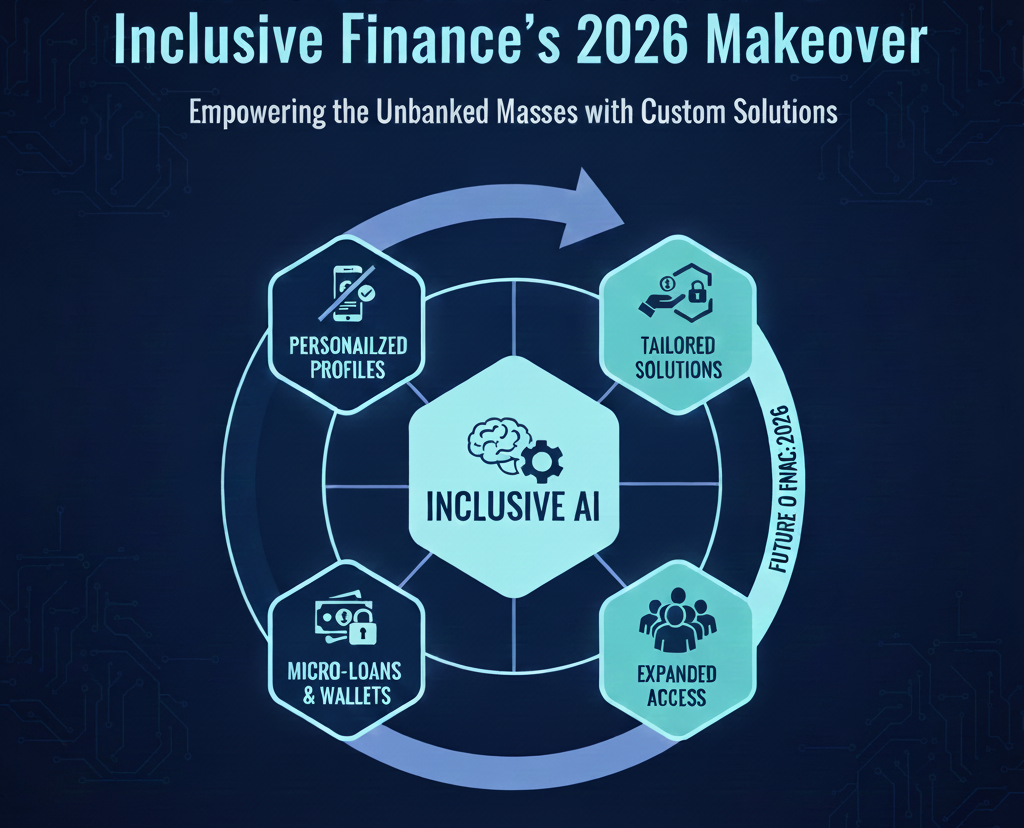
Financial inclusion is undergoing a seismic shift in 2026, driven by hyper-personalized technologies that target the 1.4 billion unbanked adults worldwide. This “personalization tsunami” combines AI-driven insights, embedded finance, and regulatory innovations to deliver tailored services, transforming access from basic accounts to empowering financial ecosystems.
The Unbanked Challenge: Scale and Opportunity
Over 1.4 billion adults lack secure, regulated financial services, despite rapid progress in regions like Indonesia, where the banked population rose from 49% in 2014 to 83% in 2023 via fintech expansion. The Global Findex 2025 marks a milestone, with four in five adults worldwide now holding accounts, alongside gains in gender equality and digital adoption. Yet, challenges persist in sub-Saharan Africa (80% unbanked), the Middle East (67%), and Latin America (65%).
2026 projections highlight massive potential: with global population growth to 9.2 billion by 2040, even 10% uptake among the formerly unbanked could unlock a $575 billion annual market in credit solutions. Personalization addresses this by moving beyond one-size-fits-all access to individualized experiences that build trust and sustained engagement.
AI-Powered Personalization: The Core Engine
AI leads the personalization charge, enabling precise credit scoring for the “unscorable” using alternative data like mobile payment histories. In 2026, AI-powered personalization tops fintech trends, crafting hyper-relevant services that boost inclusion for low-income and rural groups. Examples include Nubank in Brazil, which redefines creditworthiness for millions, and Nigeria’s MoniePoint, serving overlooked small businesses with tailored ecosystems.
This isn’t generic AI; it’s culturally attuned, incorporating behavioral data for user-centric designs that respect local customs and languages. Human-centered banking tech trends emphasize non-English support and rural access, aligning with broader inclusion goals.
Embedded Finance and Digital Channels: Seamless Integration
Embedded finance accelerates in 2026, integrating services into non-financial platforms like commerce and telecom, making banking invisible yet omnipresent. Digital wallets, micro-finance apps, and real-time payments reach unbanked faster than branches ever could. In emerging markets, this leapfrogs legacy infrastructure, fueled by fintech revenues projected at $1.5 trillion by 2030.
The UAE exemplifies success with progressive regulations like Stored Value Facilities, fostering scalable inclusive solutions. For merchants, this means higher engagement; for users, frictionless access via everyday apps.
Regulatory and Funding Shifts: Paving the Path
Regulatory innovations like e-KYC and open banking dismantle barriers, while 2026 sees continued pushes for inclusion amid funding contractions. Donors like USAID and the Gates Foundation are sunsetting programs, shifting to investor-embedded models like Accion, blending advisory with capital for sustainable growth.
Governments collaborate with fintechs and NGOs, prioritizing AI risk assessment and alternative data to serve the excluded. This distributed architecture embeds support across hybrids like university research and corporate R&D.
Building Trust and Literacy: The Human Element
Personalization succeeds on trust, via transparent fees, clear communication, and education embedded in platforms. Financial literacy varies widely, so 2026 solutions include tailored onboarding that empowers long-term decisions, not just transactions.
Blockchain emerges as a risk mitigator for banks wary of unbanked markets, offering secure infrastructure without high costs. Human-first design ensures cultural fit, turning skepticism into loyalty.
Stakeholder Strategies for 2026 Success
- Collaborate: Across sectors for inclusive infrastructure.
- Invest: In mobile-first, culturally apt solutions.
- Innovate: With AI and alternative data.
- Prioritize: Education and empowerment.
- Regulate: Responsibly to spur innovation.
Banks face macro headwinds but can scale AI amid stablecoin disruptions.
Conclusion
The personalization tsunami is redefining inclusive finance in 2026, making banking the unbanked the default through tech, regulation, and empathy. This makeover promises not just access, but economic empowerment for billions.
References
- https://www.riverty.com/en/business/insights/fintech-2040/banking-the-unbanked-will-be-the-default/
- https://www.sganalytics.com/blog/financial-industry-trends-in-banking-and-fintech/
- https://www.centerforfinancialinclusion.org/financial-inclusion-in-2026-progress-funding-shifts-and-the-next-phase-of-the-sector/
- https://www.weforum.org/stories/2025/06/emerging-markets-future-of-finance-ai/
- https://www.ibm.com/think/topics/blockchain-for-unbanked
- https://www.posh.ai/blog/human-centered-banking-technology-top-10-fintech-trends-for-2026-and-beyond