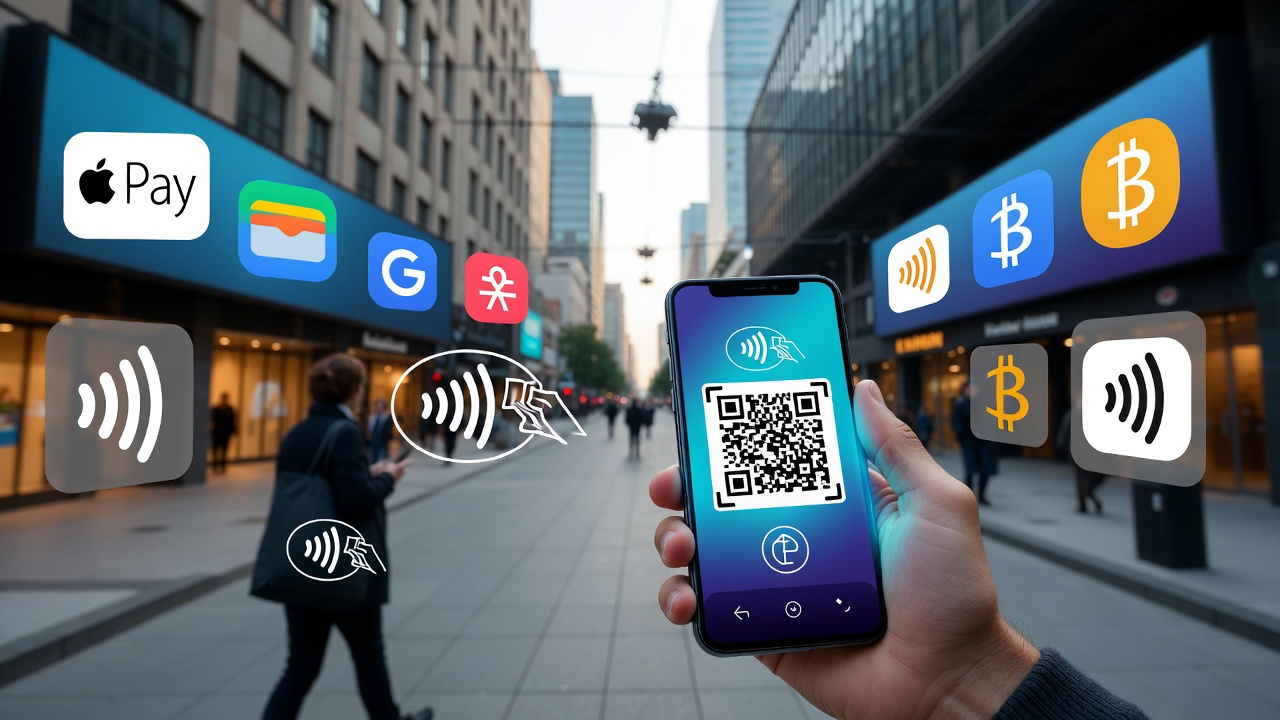
The penny is dead. In 2026, the U.S. Mint stopped producing the 1-cent coin—not because of zinc shortages, but because the idea of physical currency itself is becoming obsolete. With cash now accounting for just 14% of consumer transactions (down from 31% in 2012), central banks worldwide are racing to digitize money entirely. The weapon of choice? Central Bank Digital Currencies (CBDCs) and real-time payment systems that settle in seconds, not days.
This isn’t gradual evolution. It’s a coordinated global shift. China’s digital yuan hit $2.37 trillion in cumulative transactions by November 2025. The Federal Reserve’s FedNow network exploded from 35 institutions at launch to 1,500+ in 2026. And 131 countries—representing 98% of global GDP—are now exploring CBDCs.
The cashless future isn’t coming. It’s already here, and 2026 is the year the dam broke.
The Cash Collapse: By The Numbers
The decline of physical currency is accelerating faster than central bankers predicted:
| Metric | 2024/2025 Data | Change from 2019 |
|---|---|---|
| Cash Share of Transactions (U.S.) | 14% | -46% |
| ATM Usage Decline (Developed Markets) | -5.7% annually | Accelerating |
| Global ATM Count | 2.95 million | -1.4% to -1.8% YoY |
| Mobile Payments (Monthly avg) | 11 per consumer | +175% (from 4 in 2018) |
| Cash for Transactions Under $10 | 35-40% | Declining rapidly |
Sources: Federal Reserve Diary of Consumer Payment Choice 2025, ATM Industry Association 2026
The pattern is clear: cash survives only at the margins—small transactions, older demographics, and rural areas. For mainstream commerce, it’s already a relic.
The CBDC Arms Race: 131 Countries and Counting
While cash dies, central banks are building its digital replacement. The CBDC race has shifted from experimentation to implementation:
China: The $2.8 Trillion Digital Yuan
China’s e-CNY is the world’s most advanced CBDC, and 2026 marks a critical evolution. In January 2026, the People’s Bank of China (PBOC) began paying 0.05% interest on digital yuan balances—transforming it from a cash equivalent into a deposit-like instrument.
The numbers are staggering:
- 16.7 trillion yuan ($2.37 trillion USD) in cumulative transactions by November 2025
- 230 million individual wallets and 19 million business wallets
- 26 pilot regions including Hong Kong cross-border integration
- 50% fee reduction vs. SWIFT correspondent banking for cross-border payments
The strategic goal is clear: reduce dollar dependence in international trade. Pilots with Saudi Arabia and Thailand launched in 2024, allowing businesses to settle trade in e-CNY within seconds rather than days.
Europe: The Digital Euro Decision Year
2026 is make-or-break for the digital euro. The ECB has set a clear timeline:
- March 2026: “Call for Expression of Interest” for payment service providers
- H2 2027: 12-month pilot with 5,000-10,000 users and 15-25 merchants
- 2029: Potential full launch (if legislation passes in 2026)
The design is telling: offline capability for privacy, no interest payments (unlike China’s model), and mandatory acceptance alongside cash. The ECB is positioning it as “digital cash”—not a deposit replacement, but a public alternative to private payment apps.
United States: The Anti-CBDC Rebellion
America is the outlier. While the rest of the world builds CBDCs, the U.S. is actively banning them:
- July 2025: House passes Anti-CBDC Surveillance State Act (219-210)
- August 2025: CBDC ban folded into 2026 National Defense Authorization Act
- January 2025: President Trump signs executive order prohibiting federal CBDC development
- State level: Florida, Texas, and others have banned CBDC recognition under state commercial codes
The opposition is bipartisan in spirit if not votes. Republicans frame CBDCs as “CCP-style surveillance tools.” Democrats like Maxine Waters call anti-CBDC legislation a “full-scale crypto con.” The result: paralysis at the federal level while private real-time payment systems fill the void.
FedNow: The Stealth CBDC Alternative
While Washington debates whether to build a digital dollar, the Federal Reserve has already deployed its functional equivalent. FedNow—the real-time payment system launched July 2023—is exploding in 2026:
| FedNow Metric | 2026 Status | Growth |
|---|---|---|
| Participating Institutions | 1,500+ | +44% YoY |
| Transaction Limit | $10 million | Up from $25K at launch |
| Q2 2025 Volume | $245 billion | +49,000% YoY |
| Reach | 40% of demand deposit accounts | All 50 states |
| Community Banks | 95% of participants | CFI-focused adoption |
Sources: Federal Reserve Financial Services, Finzly 2026 analysis
FedNow is effectively a CBDC without the political baggage. It offers instant settlement, 24/7 availability, and direct central bank liability—core features of digital currencies—while avoiding the “surveillance” label that killed the digital dollar politically.
The Treasury is already using it. In September 2025, FEMA began disbursing disaster relief via FedNow, with CB&S Bank in Alabama receiving the first instant government payment. If Social Security and tax refunds follow, FedNow achieves ubiquity without legislation.
The Real-Time Payment Explosion
CBDCs are the headline, but real-time payment (RTP) systems are the workhorses killing cash. The global RTP market is on fire:
| Region | 2026 Market Size | Key Driver |
|---|---|---|
| Global | $44-49 billion | 42.9% CAGR through 2035 |
| North America | 38.1% share | FedNow + RTP network maturity |
| Asia-Pacific | 29.33% CAGR | India UPI (131B transactions FY24) |
| Europe | 27% instant payment jump | Mandatory 24/7 receiving (Jan 2025) |
| Latin America | PIX dominance | Brazil’s public-private model |
Sources: Mordor Intelligence, Research Nester
Brazil’s PIX system is the global model. Since 2020, it has become the fastest-growing national RTP system, processing twice as many real-time transactions per capita as India’s UPI. The secret? Mandatory participation for large institutions, direct fintech access, and government disbursements through the system.
The U.S. is now replicating this playbook—voluntarily for now, but with growing pressure for mandatory adoption.
The Winners and Losers of the Cashless Transition
Winners: Fintechs and Tech Giants
As cash disappears, digital payment platforms capture the value:
- PayPal/Venmo: Default for P2P transactions replacing cash gifts and splits
- Stripe/Square: Instant merchant settlement via RTP rails
- Apple Pay/Google Wallet: 78% of consumers now choose faster payments when available
- Crypto ATMs: 39,000+ worldwide, 6% annual growth, 80% in the U.S.
The irony: as the U.S. bans CBDCs, it’s creating a fragmented private digital currency ecosystem—stablecoins, crypto, and fintech wallets—that’s harder to regulate than a centralized digital dollar.
Losers: The Unbanked and Rural Poor
Cash’s decline isn’t painless. While 82-85% of Americans still carry cash, the 14% who rely on it exclusively are increasingly marginalized:
- 66.2% of unbanked households rely solely on cash
- 24% of households earning under $25k use cash for transactions
- 30% of the U.S. population didn’t withdraw cash from an ATM in the last month
- Rural areas use cash 5-7 percentage points more than urban cores—but have fewer banking access points
The “cashless society” is creating a two-tiered system: digital natives with instant, free payments and cash-dependent populations facing higher fees, longer waits, and exclusion from digital commerce.
The ATM Industry: Managed Decline
The ATM isn’t dead, but it’s evolving. Global ATM counts are shrinking (-1.4% to -1.8% annually), while transaction values rise ($157 average withdrawal, up 35.6% from 2015). The industry is consolidating around “smart ATMs” with video, biometric authentication, and cryptocurrency capabilities.
Crypto ATMs are the growth story—39,000+ installations, 6% annual growth, concentrated in the U.S. as traditional cash infrastructure morphs into digital asset on-ramps.
The Policy Battlegrounds: Privacy vs. Surveillance
The cashless transition isn’t just technological—it’s political. The core conflict: convenience versus privacy.
The Surveillance Concern
CBDCs create perfect financial transparency. Every transaction is recorded, traceable, and potentially programmable. China’s e-CNY is the cautionary tale: integrated with social credit systems, allowing government monitoring of spending patterns, and enabling automatic tax collection.
U.S. opponents like Rep. Tom Emmer warn of “unelected bureaucrats trading Americans’ financial privacy for a CCP-style surveillance tool.” The Anti-CBDC Act explicitly prohibits “intermediated” models where government tracks transactions.
The Inclusion Paradox
Proponents argue CBDCs enhance financial inclusion. China’s e-CNY works offline. India’s UPI brought hundreds of millions into digital payments. The digital euro will be free to use and universally accepted.
But critics counter that digital systems exclude those without smartphones, internet access, or digital literacy—precisely the populations that rely on cash today.
The Programmable Money Debate
2026’s most controversial CBDC feature is “programmability”—smart contract functionality that could:
- Expire money if not spent (helicopter drops with velocity controls)
- Restrict purchases (welfare benefits limited to approved merchants)
- Automate taxation (real-time withholding on every transaction)
The EU has ruled out programmable features for the digital euro. China is actively testing them. The U.S. has banned the conversation entirely.
2026: The Tipping Point Predictions
Based on current trajectories, expect these developments:
- Q2 2026: EU digital euro legislation finalizes; 2029 launch confirmed if passed
- Q3 2026: China’s e-CNY expands to full cross-border trade settlement with Belt & Road countries
- Q4 2026: FedNow reaches 2,000+ institutions; Treasury expands to Social Security payments
- 2027: First major U.S. retailer goes cashless (following Amazon Go model)
- 2027-2028: CBDC interoperability agreements between EU, China, and ASEAN
Conclusion: The Post-Cash Economy
The end of cash isn’t an apocalypse—it’s an evolution. But it’s an evolution with winners and losers, with trade-offs between convenience and privacy, with geopolitical implications that extend far beyond payment rails.
The U.S. faces a strategic choice: maintain the dollar’s global reserve status by digitizing it, or cede ground to China’s e-CNY and Europe’s digital euro while relying on private payment networks. So far, political paralysis has chosen the latter by default.
For businesses, the message is clear: prepare for instant payments, diversify across multiple digital rails, and monitor regulatory developments that could reshape payment economics overnight.
For consumers, the transition offers frictionless convenience—but at the cost of financial anonymity that cash uniquely provided.
For policymakers, the challenge is ensuring that the post-cash economy includes everyone, not just the digitally privileged.
The penny’s death is symbolic. The real story is the transformation of money itself—from physical tokens to digital signals, from private transactions to data points, from national currencies to global competing digital standards. The cashless society isn’t a conspiracy theory anymore. It’s the 2026 reality.
References
- Atlantic Council. (2026, January 15). What to watch as China prepares its digital yuan for prime time. https://www.atlanticcouncil.org/blogs/econographics/what-to-watch-as-china-prepares-its-digital-yuan-for-prime-time/
Analysis of China’s 2026 e-CNY priorities, including interest-bearing wallets, cross-border expansion, and the 15th five-year plan integration.
- Forklog. (2025, August 22). US House folds CBDC ban into 2026 defence bill. https://forklog.com/en/us-house-folds-cbdc-ban-into-2026-defence-bill/
Details on H.R. 3838 attaching Anti-CBDC Act to NDAA, prohibiting Federal Reserve from testing or implementing digital dollar.
- Federal Reserve Financial Services. (2025, December 16). 2026 Fees and Payment System Enhancements. https://www.frbservices.org/news/fed360/issues/121625/general-2026-fees-payment-system-enhancements
FedNow reaches 1,500+ institutions (44% YoY growth), $10M transaction limit, and 40% demand deposit account coverage.
- Mordor Intelligence. (2026, January 16). Real-Time Payments Market Size & Share Analysis. https://www.mordorintelligence.com/industry-reports/real-time-payments-market
Global RTP market valued at $44.58 billion in 2026, growing at 24.85% CAGR to $135.27 billion by 2031; North America 38.1% revenue share.
- Make My Receipt. (2026, February 4). Consumer Payment Statistics 2026: How Americans Pay. https://www.makemyreceipt.com/reports/consumer-payment-statistics
Federal Reserve 2025 Diary data: Cash 14% of transactions (down from 26% in 2019), 11 mobile payments monthly average, 90%+ intend to use cash as store of value.
Disclaimer: This article analyzes payment system trends and regulatory developments. It does not constitute financial, legal, or investment advice. CBDC and real-time payment regulations vary by jurisdiction and change frequently.
Tags: CBDC, Digital Dollar, FedNow, Real-Time Payments, Cashless Society, Digital Yuan, Financial Privacy, Payment Systems, Fintech
About the Author
InsightPulseHub Editorial Team creates research-driven content across finance, technology, digital policy, and emerging trends. Our articles focus on practical insights and simplified explanations to help readers make informed decisions.