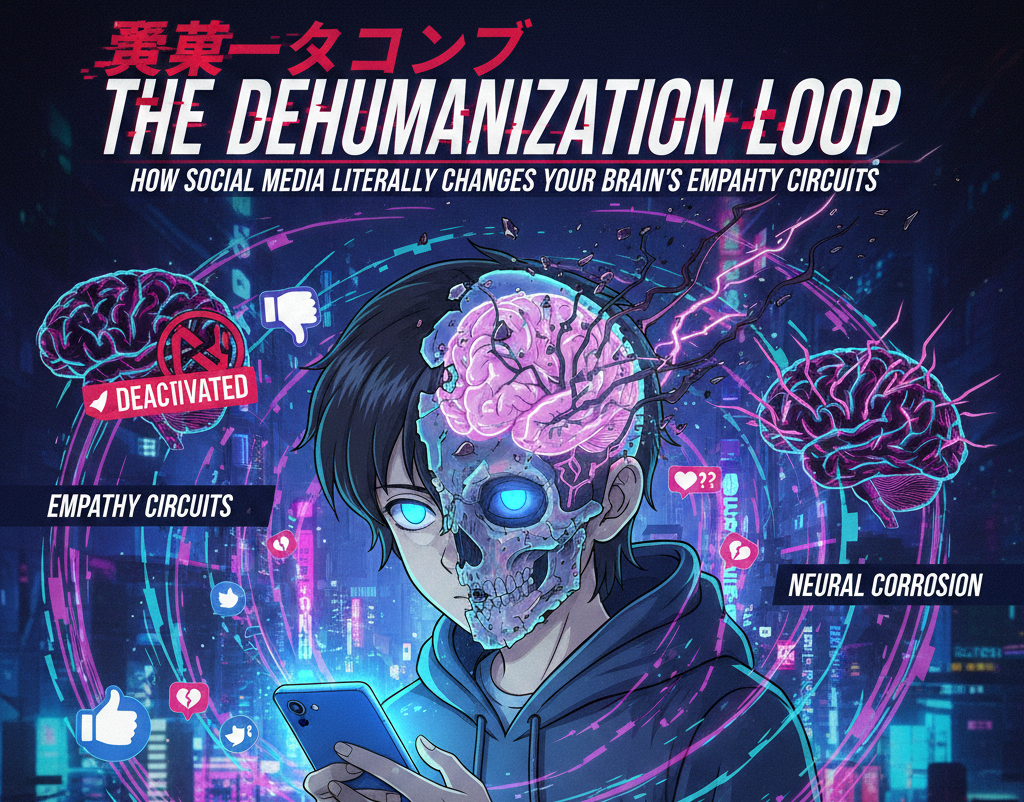
Your brain is being rewired right now. Not metaphorically. Not hypothetically. Literally, physically, measurably. While you scroll through Instagram, swipe through TikTok, or fire off a heated comment on X, your neural pathways are shifting, your gray matter is shrinking, and your capacity for empathy—the fundamental human ability to understand and share the feelings of others—is eroding. This isn’t science fiction. It’s neuroscience, and the findings are as alarming as they are undeniable.
In 2025, researchers at Stanford University and the University of Hong Kong published a groundbreaking theory called the “Virtual Disengagement Hypothesis.” Their proposition: our brains may not properly respond to others’ emotions in online environments because digital communication strips away the facial expressions, tone of voice, body language, and eye contact that normally activate our empathy circuits. Without these cues, the anterior cingulate cortex, insula, and prefrontal cortex—brain regions responsible for empathy—remain dormant or underactivated. The result? A generation increasingly capable of cruelty they would never exhibit face-to-face.
This is the dehumanization loop: social media platforms are designed to capture attention and trigger dopamine releases, which encourages compulsive use; this compulsive use physically alters brain structure, reducing gray matter in regions critical for empathy and impulse control; these neurological changes make users more susceptible to online hostility and less capable of genuine human connection; which drives them back to social media for the very validation and stimulation their damaged brains now crave. The loop is closed, and breaking it requires understanding exactly what’s happening inside your skull.
The Neuroscience of Digital Empathy Erosion
Empathy isn’t just a feel-good concept—it’s a neurobiological process. When you interact with someone in person, your brain engages in a sophisticated dance of mirror neurons, emotional contagion, and cognitive perspective-taking. You tear up when a loved one cries. You smile when a friend laughs. Your anterior cingulate cortex (ACC) fires in response to their pain. Your insula helps you feel what they feel. This is the neural infrastructure of human connection.
But social media disrupts this infrastructure at the most fundamental level. The Virtual Disengagement Hypothesis, presented by neuroscientists Ben Rein and Maria Tavares, argues that online interactions remove the very stimuli our brains evolved to process. When people bicker online, they see no facial expressions and hear no tone of voice. There are no social cues to activate the brain’s empathy centers. The result is what researchers call “everyday people committing acts of unusual hostility”—ordinary individuals transformed into trolls not by character flaws, but by neurological disconnection.
The data supports this theory. A 2025 study published in the journal Communica found significantly lower empathy scores in online compared to face-to-face communication, with younger participants showing the highest rates of “phubbing” (phone snubbing) and emotional disconnection. The researchers identified three major causes of this relational disconnection: emotional fatigue, attentional fragmentation, and the online disinhibition effect.
The Online Disinhibition Effect: Anonymity Breeds Cruelty
First identified by psychologist John Suler in 2004, the online disinhibition effect explains why people say things online they would never say in person. The effect has six components, but two are particularly relevant to empathy erosion: anonymity and empathy deficit.
Anonymity makes people feel safe online, like different people. They can take on new personas, free from real-world consequences. But more insidious is the empathy deficit—the reduction in ability to identify with others’ emotions due to lack of non-verbal feedback. Through mediated communication, it’s hard to know what tone and facial expressions accompany a message. This makes it harder to empathize with others. Both anonymity and empathy deficit make it harder to perceive others online as people with feelings because of the lack of facial interaction.
Recent research confirms this mechanism. A study published in 2024 found that emotion regulation difficulties predicted higher levels of online disinhibition, which in turn predicted uncivil communication. The link is clear: when we can’t see the person we’re communicating with, our brains treat them less like humans and more like abstractions.
Gray Matter Atrophy: Your Brain on Social Media
The empathy erosion isn’t just functional—it’s structural. Multiple neuroimaging studies have documented physical changes in the brains of heavy social media users, particularly in regions associated with empathy, impulse control, and emotional regulation.
The Evidence: Shrinking Brains
| Brain Region Affected | Function | Impact of Heavy Use |
|---|---|---|
| Anterior Cingulate Cortex (ACC) | Empathy, emotional regulation, impulse control | Reduced gray matter volume; decreased activity during emotional processing |
| Prefrontal Cortex (PFC) | Decision-making, attention, social behavior | Reduced gray matter; impaired judgment and self-regulation |
| Insula | Emotional awareness, empathy, self-perception | Lower gray matter volume; reduced ability to perceive emotions |
| Orbitofrontal Cortex (OFC) | Reward processing, emotional processing, decision-making | Reduced gray matter; loss of regulatory control over reinforced behaviors |
| Superior Cerebellar Peduncle | Motor control, sensory processing, autonomic functions | Reduced volume in adolescents with problematic smartphone use |
A landmark 2020 study published in Addictive Behaviors used magnetic resonance imaging (MRI) to examine 48 smartphone users aged 18-30. Researchers found that individuals exhibiting signs of smartphone addiction showed lower gray matter volumes in the left anterior insula, left inferior temporal, and parahippocampal cortex—regions broadly associated with empathy, memory, and self-regulation.
Another study found that problematic smartphone users displayed reduced gray matter volume in the right lateral orbitofrontal cortex (OFC), a region linked to decision-making and emotional processing. The researchers noted this demonstrates “the connection between structural alterations in this brain region and heavy smartphone use,” suggesting a loss of regulatory control over previously reinforced behaviors.
Perhaps most concerning, research on adolescents—whose brains are still developing—found reduced gray matter volume in the anterior cingulate gyrus and right fusiform gyrus associated with smartphone use. In the corpus callosum body, fractional anisotropy (a measure of white matter integrity) showed an inverse relationship with problematic mobile phone use. These findings suggest that excessive smartphone use during critical developmental periods may have lasting impacts on brain structure.
The Dopamine Trap: How Social Media Hijacks Your Reward System
The structural brain changes don’t occur in a vacuum—they’re driven by a relentless neurochemical feedback loop. Social media platforms are engineered to exploit the brain’s reward system, creating addiction patterns that mirror substance abuse.
The mechanism is the mesolimbic dopamine system. When you receive a like, comment, or share, your brain releases dopamine—the same neurotransmitter involved in pleasure from food, sex, and drugs. But social media adds a crucial variable: unpredictability. You don’t know when the next reward will come, creating a variable-ratio reinforcement schedule—the same mechanism that makes slot machines addictive.
Research from California State University, Fullerton, confirms that “the reward system in the brain is more active and more sensitive in people who present symptoms of addiction to social media.” Dr. Ofir Turel, who studies technology addiction, estimates that 5-10% of Americans could meet criteria for social media addiction risk. “What it means is that social media provides rewarding experiences that generate dopamine in the brain, the same substance produced when we eat cake or have sex. Over time, it trains your brain to want to check social media more and more often.”
This training has measurable consequences. Heavy social media users show:
- Reduced reward sensitivity: Natural rewards (face-to-face interaction, outdoor activities, reading) become less pleasurable compared to digital stimulation
- Increased impulsivity: The prefrontal cortex, responsible for impulse control, becomes less effective
- Attention fragmentation: The average person checks their phone 144 times per day, creating “attention residue” that impairs focus
- Emotional dysregulation: Reduced gray matter in the ACC makes managing emotions more difficult
The TikTok Brain: Extreme Neurological Impact
While all social media platforms affect the brain, TikTok represents a particularly potent neurological threat. The platform’s design—endless short-form videos, algorithmic personalization, and rapid content switching—creates what researchers call “TikTok brain.”
A 2025 systematic review published in European Child & Adolescent Psychiatry examined 20 studies encompassing 17,336 subjects from 10 countries. The findings were consistent: TikTok use is associated with lower life satisfaction, increased risk of “contagion” of psychiatric symptoms, and problematic usage patterns that resemble behavioral addiction.
The neurological mechanisms are alarming:
- Attention span destruction: 50% of TikTok users admit they find longer videos “stressful.” The optimal video length for engagement is 21-34 seconds—far below the threshold required for sustained attention
- Memory impairment: Users report inability to focus on longer video formats, let alone reading or complex tasks
- Dopamine dysregulation: The platform operates on “random reinforcement”—the same psychological principle that makes gambling addictive
- Structural atrophy: Research shows visible atrophy in the frontal cortex of children aged 9-10 who use smartphones for more than seven hours daily
The adolescent brain is especially vulnerable. Between ages 10-12, receptors for oxytocin and dopamine multiply in the ventral striatum, making preteens extra sensitive to social rewards. Simultaneously, we hand them smartphones. As Mitch Prinstein, chief science officer of the American Psychological Association, notes: “This region gets a dopamine and oxytocin rush whenever we experience social rewards.” Unlike adults, adolescents lack a fully developed prefrontal cortex to regulate these responses.
The Empathy Decline: A Generational Crisis
The neurological changes translate into measurable social and emotional deficits. A comprehensive meta-analysis published in the Journal of Personality examined emotional intelligence in Western college students from 2001-2019, encompassing nearly 17,000 participants across the US, UK, Canada, and Australia. The findings were stark: significant declines in three facets of emotional intelligence—well-being, self-control, and emotionality (the ability to perceive, express, and connect with emotions in oneself and others).
The researchers speculated that “the rapid rise in young adults’ use of social media might be responsible for some of the declines in emotional intelligence.” Their reasoning: “In-person social interaction provides greater opportunity for emotional closeness and bonding compared to online communication, which is problematic if individuals are replacing in-person social interactions with online communication.”
The consequences extend beyond individual empathy deficits. The same meta-analysis linked declining emotional intelligence to “generational decreases in empathy and increases in depression and anxiety symptoms” as well as “increases in mood disorders, suicide ideation, and suicide attempts.” When we can’t read others’ emotions, we can’t connect. When we can’t connect, we suffer.
Digital Dehumanization: From Screens to Society
The erosion of empathy doesn’t stay online. Research on dehumanization—the psychological process of perceiving others as less than fully human—reveals disturbing patterns in digital environments. Studies show that dehumanizing language (metaphors comparing groups to animals, disease, or objects) spreads rapidly on social media and predicts negative attitudes toward targeted groups.
One study found that participants exposed to “vermin” metaphors in news articles reported significantly higher levels of disgust and supported more stringent policies against dehumanized groups. On social media, this effect is amplified by the empathy deficit inherent in mediated communication. When we can’t see the humanity in others online, we become capable of cruelty we would never exhibit face-to-face.
The 2024 study on digital empathy confirmed this trajectory, finding that “emotional fatigue, attentional fragmentation, and disinhibition” were major causes of relational disconnection. As the researchers noted: “The rapid growth of digital communication has reshaped interpersonal interaction and raised concerns about empathy in computer-mediated environments.”
Breaking the Loop: Is Recovery Possible?
The neurological changes associated with heavy social media use are concerning, but they may not be permanent. Emerging research on digital detox and neuroplasticity suggests the brain can recover—if given the opportunity.
The Digital Detox Evidence
Research from the University of California, Irvine, found that even brief breaks from smartphones can produce measurable benefits. While a 72-hour digital detox is ideal, even one-hour breaks can make “a huge difference” according to neuropsychologists. The benefits include:
- Improved sleep quality: Without blue light disrupting melatonin production, natural sleep-wake cycles reset
- Enhanced focus: Without frequent interruptions, the brain can engage in “deep work”—sustained, focused attention
- Reduced anxiety: Heavy smartphone use correlates with increased anxiety and depression; breaks interrupt this cycle
- Better memory formation: Constant task-switching impairs memory consolidation; digital breaks allow effective information processing
Neuroplasticity—the brain’s ability to reorganize itself by forming new neural connections—suggests that gray matter reductions can potentially be reversed. Just as the brain adapts to chronic social media use by pruning unused empathy circuits, it can rebuild those circuits through sustained face-to-face interaction, mindfulness practices, and reduced screen time.
Practical Intervention Strategies
| Strategy | Neurological Target | Implementation |
|---|---|---|
| Scheduled Digital Fasting | Dopamine receptor recovery, attention restoration | One hour daily without screens; one full day weekly |
| Face-to-Face Socialization | Empathy circuit reactivation (ACC, insula, PFC) | Prioritize in-person interactions; maintain eye contact |
| Mindfulness Meditation | Prefrontal cortex strengthening, emotional regulation | 10-20 minutes daily focusing on breath and bodily sensations |
| Deep Reading | Attention span restoration, empathy through narrative | Long-form reading without digital interruptions |
| Physical Exercise | Gray matter preservation, neurogenesis | Regular aerobic activity to promote brain health |
The research on emotional intelligence decline offers hope: interventions that improve trait emotional intelligence have been successful in improving participants’ social relationships and employability. The brain remains plastic into adulthood, and intentional practice can rebuild eroded capacities.
The Path Forward: Reclaiming Our Humanity
The dehumanization loop is not inevitable. It is a product of specific design choices by technology companies and specific usage patterns by individuals. Breaking it requires both systemic and personal action.
Systemically, the research calls for “empathy-centered design in communication technologies” and “systemic redesign of digital platforms to strengthen attentiveness, emotional intelligence, and ethical engagement.” This includes responsive interfaces that encourage reflection rather than impulsive reaction, ethical frameworks like the Ethics of Care embedded in platform design, and user-centered practices that prioritize well-being over engagement.
Personally, awareness is the first step. Understanding that every scroll is a neurological event—that your brain is literally changing with each swipe—empowers different choices. The research is clear: heavy social media use is associated with reduced gray matter in empathy circuits, declining emotional intelligence, and increased capacity for dehumanization. But the brain remains plastic, and recovery is possible.
The question is not whether social media affects your brain. It does. The question is whether you will be intentional about how it affects you. The dehumanization loop can be broken, but only by recognizing our shared humanity—and protecting the neural infrastructure that makes that recognition possible.
Your brain is being rewired right now. The only question is: by whom, and toward what end?
References
- Rein, B., & Tavares, M. (2025). Wired for Connection, Cursed by Computers: How Social Media May Be Affecting Our Empathy. BrainFacts.org. Retrieved from https://www.brainfacts.org/neuroscience-in-society/tech-and-the-brain/2025/wired-for-connection-cursed-by-computers-how-social-media-may-be-affecting-our-empathy-100125
- Khan, M., Minbashian, A., & MacCann, C. (2021). College students in the western world are becoming less emotionally intelligent: A cross-temporal meta-analysis of trait emotional intelligence. Journal of Personality. Retrieved from https://onlinelibrary.wiley.com/doi/abs/10.1111/jopy.12643
- Conte, G., et al. (2025). Scrolling through adolescence: a systematic review of the impact of TikTok on adolescent mental health. European Child & Adolescent Psychiatry. Retrieved from https://pubmed.ncbi.nlm.nih.gov/39412670/
- Smithsonian Magazine. (2025, September 12). Can You Really ‘Rot’ Your Brain by Scrolling Too Much on Your Smartphone? Retrieved from https://www.smithsonianmag.com/science-nature/can-smartphone-overuse-really-rot-your-brain-180987329/
- Baptist Health. (2025, August 26). Could a Break from Your Smartphone Rewire Your Brain? The Science Says Yes. Retrieved from https://baptisthealth.net/baptist-health-news/could-a-break-from-your-smartphone-rewire-your-brain-the-science-says-yes
Disclaimer
Disclaimer: This article examines neuroscience research on social media’s effects on brain structure and empathy. It does not constitute medical, psychological, or professional advice. Neuroscience research in this field is rapidly evolving, and individual responses to social media vary significantly. Readers concerned about their own or others’ social media use should consult qualified healthcare professionals. The findings discussed represent current research trends but should not be interpreted as definitive causal claims about individual brain changes.
About the Author
InsightPulseHub Editorial Team creates research-driven content across finance, technology, digital policy, and emerging trends. Our articles focus on practical insights and simplified explanations to help readers make informed decisions.