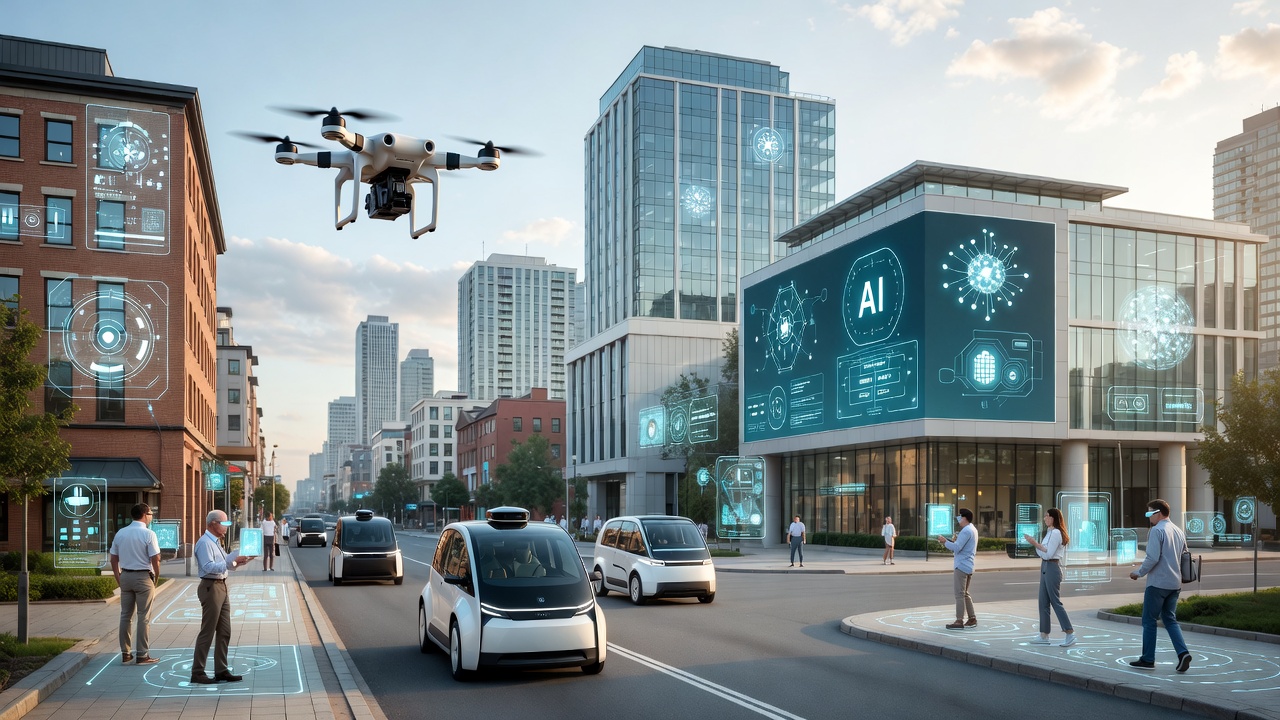
The convergence of artificial intelligence and physical systems is no longer science fiction—it’s the defining technological shift of our decade. As we stand at the precipice of 2025, Physical AI (also known as Embodied AI) is fundamentally transforming how digital intelligence interacts with the tangible world. From autonomous delivery drones navigating urban airspace to humanoid robots working alongside humans in warehouses, the boundary between the digital realm and physical reality is dissolving at an unprecedented pace.
This comprehensive exploration examines how Physical AI is bridging the digital-real divide, the explosive market growth driving this revolution, and the transformative applications reshaping industries from logistics to urban infrastructure.
Understanding Physical AI: Beyond Digital Boundaries
Physical AI represents a paradigm shift from traditional software-based artificial intelligence to systems that possess embodiment—the ability to perceive, act upon, and learn from the physical world through sensors, actuators, and mechanical forms. Unlike conventional AI that processes data in abstract digital spaces, Physical AI agents interact dynamically with real-world environments, adapting to unpredictable conditions and physical constraints.
The technology encompasses a broad spectrum of applications:
- Autonomous robots capable of warehouse navigation and package handling
- Delivery drones performing last-mile logistics in urban environments
- Smart infrastructure systems managing traffic, energy, and public safety
- Humanoid robots designed for human collaboration and service roles
- Industrial cobots working safely alongside human workers
- Exoskeletons enhancing human physical capabilities
What distinguishes modern Physical AI from earlier robotics is the integration of multimodal large language models (LLMs) that enable these systems to understand natural language, reason about complex scenarios, and make autonomous decisions in unstructured environments—capabilities that were impossible just five years ago.
The Explosive Market Growth: By the Numbers
The Physical AI revolution is backed by staggering investment figures and market projections that underscore the transformative potential of this technology sector.
Embodied AI Market Projections
| Metric | Value | Year |
|---|---|---|
| Global Market Size | $4.44 Billion | 2025 |
| Projected Market Size | $23.06 Billion | 2030 |
| Compound Annual Growth Rate (CAGR) | 39.0% | 2025-2030 |
| China Market Growth (CAGR) | Highest Globally | 2025-2030 |
The embodied AI market’s trajectory from $4.44 billion in 2025 to a projected $23.06 billion by 2030 represents one of the fastest-growing segments in the technology sector. This 39% compound annual growth rate reflects not just technological advancement, but fundamental shifts in how industries approach automation and human-machine collaboration.
Investment and Financing Surge
The capital markets have recognized Physical AI’s transformative potential. According to venture capital data from 2025:
- 610 new financing events occurred in the domestic robot industry in the first three quarters of 2025
- 50 billion yuan (approximately $6.9 billion USD) in total financing was raised—2.5 times the amount from the same period in 2024
- 165 embodied intelligence enterprises completed 303 financings as of December 2025
- Cumulative financing reached nearly 37 billion yuan (approximately $5.1 billion USD), representing a 260% growth compared to the entirety of 2024
This capital influx is transitioning the industry from “performance economy” to “value creation”—moving beyond demonstration robots that dance and perform tricks to practical systems that solve real operational challenges.
Smart Cities AI Market
The urban application of Physical AI is equally impressive:
| Market Segment | 2025 Value | 2030/2034 Projection | CAGR |
|---|---|---|---|
| AI in Smart Cities | $50.63 Billion | $460.47 Billion (2034) | 27.80% |
| Smart Cities (Total) | $699.7 Billion | $1,445.6 Billion (2030) | 15.6% |
| Autonomous Last Mile Delivery | $24.56 Billion | $199.46 Billion (2034) | 23.30% |
From Performance to Practicality: The Evolution of Physical AI
The trajectory of Physical AI in 2025 marks a critical inflection point. The first half of 2025 witnessed spectacular demonstrations—humanoid robots performing at the Spring Festival Gala, intelligent security robots deployed in Shenzhen Metro, and the world’s first humanoid robot marathon in Beijing. These events generated massive public attention and investor interest, but they represented a “skill-showing” orientation with strictly controlled environments and pre-set programs.
The transformation occurred with the implementation of multimodal large models. This technological breakthrough enabled robots to move beyond pre-programmed routines to demonstrate genuine autonomous capabilities:
- Intention understanding through natural language processing
- Action planning in open, unstructured environments
- Disturbance handling and real-time adaptation
- Learning from interaction rather than relying solely on training data
This shift from performance-oriented to practical-oriented deployment represents the true maturation of the Physical AI industry.
Key Application Domains: Where Physical AI Is Making Impact
1. Autonomous Delivery Systems
The last-mile delivery sector is experiencing radical transformation through Physical AI. The autonomous drone delivery market alone is valued at $1.5 billion in 2025 and projected to reach $15.0 billion by 2035—a tenfold increase representing a 25.9% CAGR.
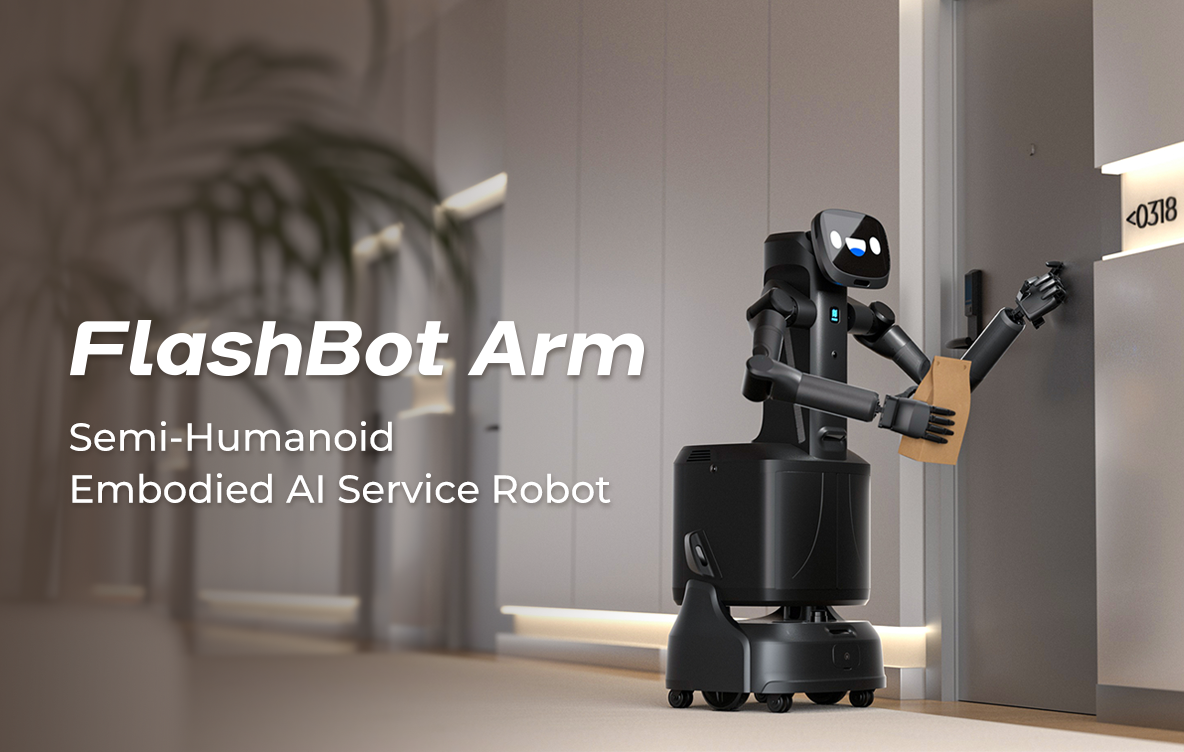
Modern semi-humanoid embodied AI service robots are transforming commercial delivery and service applications.
Key developments in this space include:
- Amazon Scout: Six-wheeled autonomous robots operating in select neighborhoods, carrying packages up to 30 pounds
- DoorDash and Coco partnership: Expanded sidewalk-robot deliveries to nearly 600 merchants in Los Angeles and Chicago as of April 2025
- Medical delivery drones: Capturing 30% of the autonomous drone delivery market in 2025, transporting pharmaceuticals and emergency supplies
- Multirotor dominance: Representing 60% of autonomous drone delivery demand due to superior maneuverability in urban environments
The efficiency gains are substantial—autonomous systems reduce delivery timeframes from weeks to days while operating in conditions that would be hazardous or impractical for human couriers.
2. Smart Manufacturing and Collaborative Robotics
Industrial applications of Physical AI are moving beyond traditional automation to true human-robot collaboration. Collaborative robots (cobots) work safely alongside humans without requiring safety barriers, handling repetitive tasks while adapting to individual working styles.
Notable implementations include:
- General Motors: Deploying cobots for adhesive application and precision assembly, adapting to individual worker patterns
- Ford’s EksoVest: Exoskeleton systems supporting assembly-line workers during overhead tasks, reducing fatigue by 60%
- Boston Dynamics and DHL: Strategic partnership signed in May 2025 to deploy over 1,000 additional Stretch robots globally for container unloading and case picking
- Agility Robotics’ Digit: Enhanced humanoid robot unveiled in April 2025 featuring 4-hour battery runtime, autonomous charging, and improved safety systems
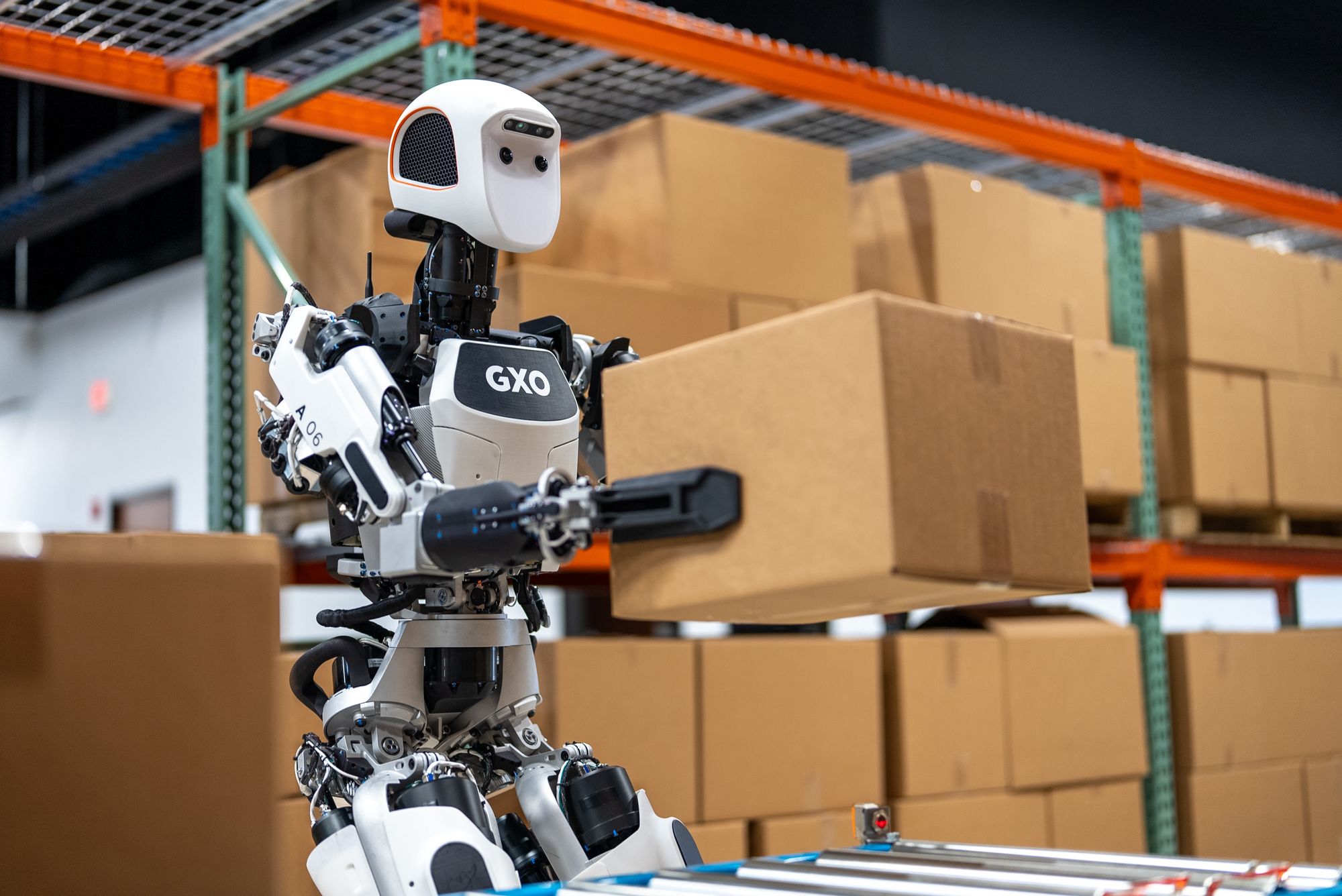
Humanoid robots are being tested and deployed for warehouse automation, working alongside human workers in logistics environments.
3. Smart City Infrastructure
The integration of Physical AI into urban infrastructure represents perhaps the most visible manifestation of the digital-real divide being bridged. Modern smart cities utilize AI-powered systems for:
Traffic and Mobility Management
AI applications in traffic management accounted for the largest market share in smart city implementations in 2024. These systems utilize real-time data from sensors, cameras, and connected vehicles to optimize traffic flow, reduce congestion, and minimize emissions. The European Commission reports that under the EU Mission Label, the number of climate-neutral and smart cities grew from 10 in October 2023 to 103 cities by May 2025.
Energy and Utility Optimization
Smart grids powered by AI algorithms balance energy distribution, predict demand patterns, and integrate renewable sources with unprecedented efficiency. Physical AI systems manage everything from intelligent street lighting to predictive maintenance of power infrastructure.
Public Safety and Surveillance
Autonomous patrol robots equipped with facial recognition and behavioral analysis monitor facilities continuously. These systems distinguish between authorized personnel and potential threats while coordinating with human security teams—operating effectively in conditions where human guards would face safety risks.
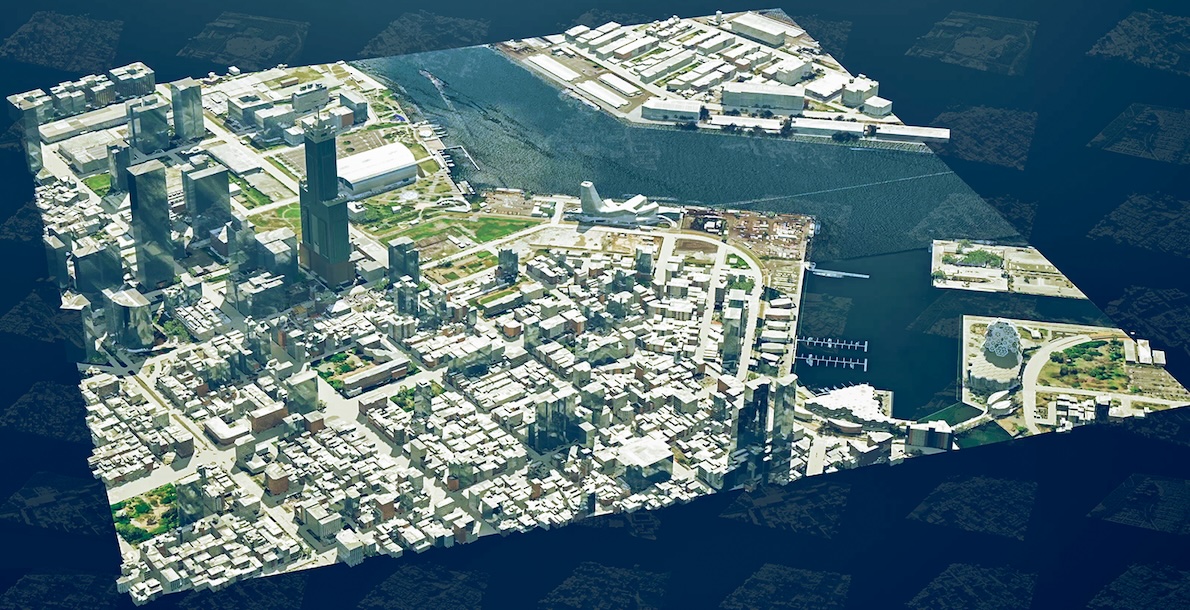
Advanced Physical AI platforms enable comprehensive smart city simulations and real-world infrastructure management.
4. Precision Agriculture
Agricultural applications of Physical AI are revolutionizing food production. AI-powered drones monitor crop health across thousands of acres, identifying pest infestations and irrigation problems weeks before human detection becomes possible.
John Deere’s drone integration enables farmers to reduce chemical usage by 30-40% while improving crop yields. The technology identifies problems across vast acreage in hours rather than days of manual inspection, enabling precision interventions that minimize environmental impact while maximizing productivity.

AI-powered drones are revolutionizing precision agriculture through automated crop monitoring and targeted intervention systems.
5. Healthcare and Surgical Robotics
The healthcare sector represents one of the highest-value applications for Physical AI. Robotic surgical systems enhance procedural precision while reducing patient recovery times across various medical specialties.
Johnson & Johnson’s Ottava system enables procedures through keyhole openings that once required large incisions, with many procedures now involving same-day discharge rather than extended hospitalization. The benefits include tremor elimination, enhanced visualization, and access to difficult anatomical areas that challenge even experienced surgeons.
Additionally, Procter & Gamble’s cleaning robots utilizing Swiffer and Mr. Clean solutions in healthcare facilities have demonstrated decreased infection rates in areas where these robots maintain regular cleaning schedules.
Regional Adoption Patterns
The global adoption of Physical AI follows distinct regional patterns:
| Region | Market Position | Key Characteristics |
|---|---|---|
| North America | Largest Market Share (36.9% in 2024) | Strong e-commerce adoption, advanced AI infrastructure, leading in autonomous delivery implementation |
| Asia-Pacific | Fastest Growing Region | China leading global CAGR, massive urbanization driving smart city adoption, strong manufacturing robotics base |
| Europe | Strong Medical Applications | Germany leading with 28% market share, focus on precision engineering and healthcare robotics |
The United States maintains a 26.0% CAGR in autonomous drone delivery through 2035, driven by expanding e-commerce capacity and government initiatives promoting autonomous technology development. Meanwhile, China’s embodied AI market demonstrates the highest compound annual growth rate globally, fueled by massive urbanization and government investment in smart infrastructure.
Technological Enablers: Why Now?
Several converging technological advances have made the current Physical AI revolution possible:
1. Multimodal Large Language Models
The integration of LLMs with physical systems enables robots to process natural language instructions, understand context, and reason about physical spaces. This eliminates the need for complex programming and allows non-technical users to interact with robotic systems intuitively.
2. Edge AI Processing
Advanced chips enable real-time decision-making without cloud connectivity, essential for autonomous vehicles and robots operating in environments with limited network access. Edge processing reduces latency and enhances privacy while enabling sophisticated onboard intelligence.
3. Sensor Fusion and Perception
Modern Physical AI systems integrate LiDAR, computer vision, tactile sensors, and spatial audio to build comprehensive environmental understanding. This multimodal perception enables safe navigation in dynamic, unstructured environments.
4. Digital Twins and Simulation
Before deployment in physical environments, AI systems train extensively in simulated environments—digital twins that replicate real-world physics. This accelerates learning while preventing costly failures during the training phase.
Challenges and Considerations
Despite the remarkable progress, several challenges remain:
- Regulatory frameworks: Airspace management for drones, safety standards for human-robot collaboration, and liability questions require ongoing legal evolution
- Ethical considerations: Privacy concerns with surveillance systems, job displacement fears, and algorithmic bias in physical decision-making
- Technical limitations: Battery life constraints, edge case handling in unpredictable environments, and the “sim-to-real” gap between training and deployment
- Economic barriers: High initial capital costs for deployment and the need for specialized maintenance expertise
However, the trajectory suggests these challenges are being addressed systematically through industry standards development, regulatory pilot programs, and continuous technological refinement.
The Future Landscape: 2025-2030
Looking ahead, several trends will define the Physical AI landscape:
- Level 3 Advanced Embodiment will dominate the market, representing systems with full environmental awareness and autonomous decision-making capabilities
- Logistics and supply chain applications will experience the fastest growth rates as e-commerce continues expanding
- Healthcare robotics will capture the largest market share by 2030 as aging populations drive demand for assistive and surgical technologies
- Humanoid robots will transition from demonstration to practical deployment in service and manufacturing roles
- Smart city integration will accelerate as 5G and IoT infrastructure mature, enabling seamless coordination between thousands of autonomous systems
Conclusion: The Physical-Digital Convergence
Physical AI represents more than technological advancement—it signals a fundamental restructuring of how intelligence manifests in our world. As digital algorithms gain physical form through robots, drones, and smart infrastructure, the distinction between the virtual and the real becomes increasingly irrelevant.
The market projections tell a clear story: with embodied AI growing from $4.44 billion to $23.06 billion by 2030, and smart city AI applications reaching $460 billion by 2034, we are witnessing the emergence of a new technological foundation that will underpin human civilization in the coming decades.
From the warehouse floor to the urban skyline, from agricultural fields to hospital operating rooms, Physical AI is not just bridging the digital-real divide—it is dissolving it entirely, creating a world where intelligence flows seamlessly between bits and atoms, between the imagined and the tangible.
The question is no longer whether Physical AI will transform our world, but how quickly we can adapt to the new reality it is creating—one autonomous decision, one robotic interaction, one smart city integration at a time.
References
- MarketsandMarkets – Embodied AI Market Report
https://www.marketsandmarkets.com/Market-Reports/embodied-ai-market-83867232.html
Market analysis projecting embodied AI to reach $23.06 billion by 2030, with detailed segmentation by product type, embodiment level, and vertical applications. - 36Kr – Embodied AI in 2025: Transitioning from “Toys” to “Colleagues”
https://eu.36kr.com/de/p/3629212768797959
Analysis of 2025 market financing trends showing 610 financing events and 50 billion yuan raised in the first three quarters of 2025. - Appinventiv – Top 10 Physical AI Use Cases
https://appinventiv.com/blog/benefits-and-use-cases-of-physical-ai/
Comprehensive overview of real-world Physical AI applications including autonomous delivery, surgical robotics, smart manufacturing, and agricultural drones. - Precedence Research – AI in Smart Cities Market
https://www.precedenceresearch.com/ai-in-smart-cities-market
Market report projecting AI in smart cities to reach $460.47 billion by 2034, with analysis of regional growth patterns and application segments. - Fact.MR – Autonomous Drone Delivery Market
https://www.factmr.com/report/autonomous-drone-delivery-market
Market forecast showing autonomous drone delivery growing from $1.5 billion (2025) to $15.0 billion (2035) at a 25.9% CAGR.
Disclaimer: The information provided in this blog post is for informational and educational purposes only. Market projections, statistics, and financial figures are based on publicly available research reports and industry analyses from reputable sources as of the publication date. These projections are subject to change based on market conditions, technological developments, regulatory changes, and economic factors. Readers should conduct their own research and consult with qualified professionals before making investment or business decisions based on this content. The author and publisher assume no liability for any errors, omissions, or outcomes related to the use of this information.
About the Author
InsightPulseHub Editorial Team creates research-driven content across finance, technology, digital policy, and emerging trends. Our articles focus on practical insights and simplified explanations to help readers make informed decisions.