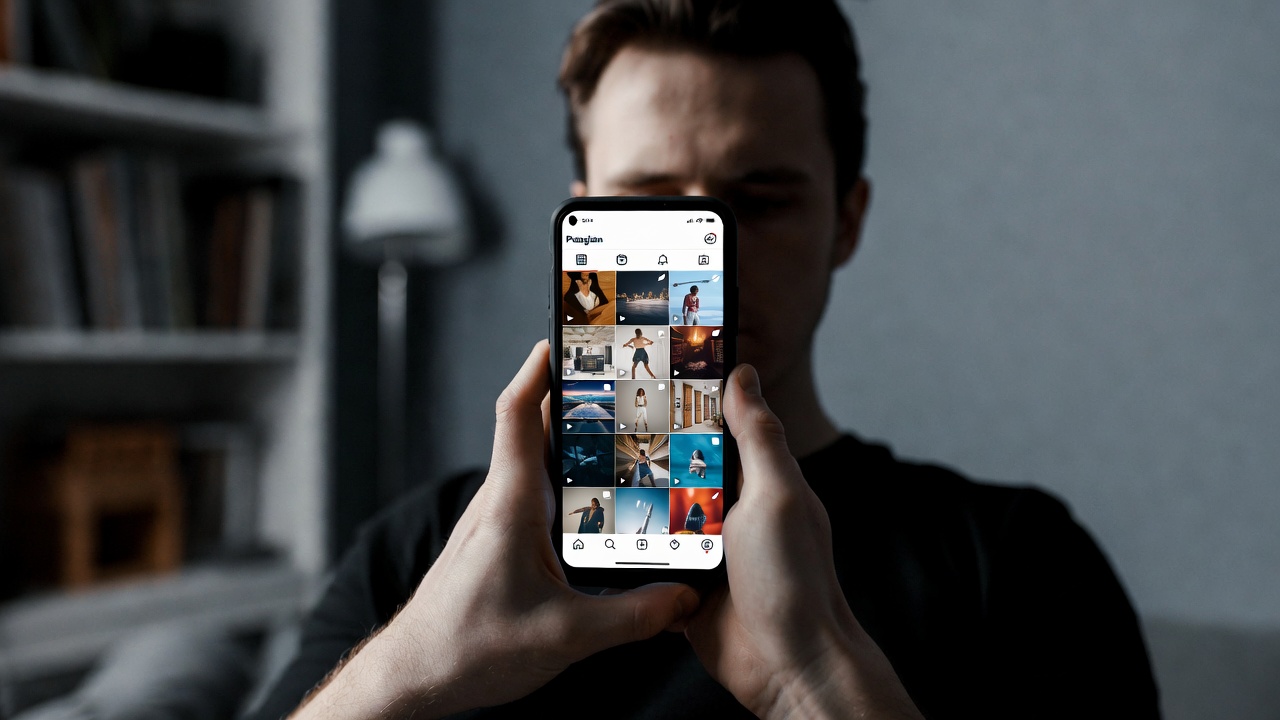
The Algorithm Rebellion: In January 2026, nearly 2 million Americans per month searched for ways to permanently delete their social media accounts—not snooze, not detox, but delete. Instagram leads this exodus with 600,000 monthly deletion searches, followed by TikTok at 460,000. The reason isn’t platform bans or government intervention—it’s algorithm collapse. Users are exhausted by “black box” feeds that optimize for engagement over meaning, by AI-generated “slop” flooding their timelines, and by the relentless pressure to perform. In response, they’re migrating to human-curated spaces: Bluesky with its customizable algorithms, Discord’s community infrastructure, Substack’s intentional newsletters, and Tumblr’s reblog culture. This isn’t a temporary trend—it’s a structural shift from algorithmic control to human agency. Welcome to the post-algorithm internet.
The Collapse Data: Quantifying the Exodus
The numbers reveal a crisis of confidence in algorithmic social media. According to Get Response analysis of U.S. search behavior, approximately 2 million people monthly actively seek to delete social media accounts—a figure that represents not just fatigue, but fundamental rejection.
The platform-specific breakdown exposes where trust has eroded most severely:
| Platform | Monthly Deletion Searches | Primary Complaint | Return Rate |
|---|---|---|---|
| ~600,000 | Digital burnout, comparison loop, filtered life pressure | 5% | |
| TikTok | ~460,000 | Doomscrolling, algorithmic addiction, censorship concerns | 5x higher than Instagram |
| Snapchat | Significant volume | Privacy concerns, lawsuits, algorithmic pressure | Moderate |
| High volume | Privacy frustration, political tension | 20% (nostalgia pull) | |
| X (Twitter) | ~250,000 | Outrage cycles, political tension, algorithmic conflict | Low |
The disparity in return rates is telling. Only 5% of Instagram users seeking deletion are curious about suspension—95% want permanent exit. Meanwhile, TikTok users return at 5x the rate of Instagram users, suggesting that while TikTok’s algorithm is exhausting, its dopamine-driven discovery loop is physiologically harder to abandon. This is addiction behavior, not loyalty.
Globally, the trend is accelerating. A 2025 Deloitte survey of 4,000+ Britons found nearly a quarter deleted a social media app in the previous 12 months, rising to nearly a third for Gen Z. GWI analysis of 250,000 adults across 50 countries shows social media use peaked in 2022; by end of 2024, adults spent 2 hours 20 minutes daily on social platforms—down almost 10% from the peak. The decline is most pronounced among teens and 20-somethings, the very demographic these platforms were built to capture.
The Oracle Catastrophe: When Algorithms Break
The January 2026 TikTok crisis—triggered by Oracle’s takeover of U.S. operations—provided a natural experiment in algorithm collapse. When Oracle assumed control on January 22, 2026, the platform didn’t just change ownership; it broke.
Within days, creators reported:
- Zero views on new content that previously reached millions
- The For You Page showing videos from months ago
- Words like “Epstein” blocked in direct messages
- Content critical of ICE enforcement mysteriously disappearing
- Missing payouts and wiped analytics
- Underperforming reach across the board
The technical explanation—a “power outage” according to TikTok USDS—was less revealing than the user response. The exodus was immediate and massive. Alternative platforms saw explosive growth: UpScrolled shot to #2 on the App Store, Skylight Social downloads surged 919%, and Clapper, RedNote, and YouTube Shorts scrambled to capture “TikTok refugees.”
But the crisis exposed something deeper: users had been waiting for a reason to leave. The algorithm collapse didn’t create dissatisfaction; it revealed existing fragility. When the discovery engine that made TikTok irresistible stopped working, users discovered they didn’t miss it—they were relieved. The “algorithmic curation” that once felt magical now felt manipulative and broken.
The Three Pillars of Algorithm Fatigue
Research on algorithm fatigue—defined as “mental and emotional exhaustion users experience due to prolonged interaction with algorithmic systems”—identifies three primary drivers of the 2026 exodus:
1. The Black Box Problem: Loss of Agency
Users can no longer tolerate opacity. Instagram’s December 2024 “Your Algorithm” feature provided minimal transparency—users could see topic categorizations but not the ranking formulas themselves. As researcher Laura Herman notes, “Instagram has publicly announced that the content displayed in users’ Home feed will increasingly be decided by a ‘black box’ algorithm… we do not know exactly what Instagram chooses to prioritise, though these prioritised selections drastically influence users’ experience of visual culture.”
This opacity creates what users call “algorithmic anxiety”—the stress of not knowing why content succeeds or fails, of reach collapsing overnight without explanation, of being “shadowbanned” without recourse. When 41% of creators cite “competing with AI-generated content” as their #1 challenge, and 41% of users say they wouldn’t support a creator going 100% AI, the black box feels actively hostile to human creativity.
2. AI Slop and Creative Fatigue
The “AI slop” problem has reached critical mass. In 2026, thousands of businesses are flooding platforms with AI-generated visuals, robotic scripts, and cliché brand voices. The result is “a rising tide of sameness that’s numbing audiences and driving creative decay.” Users describe scrolling through feeds where “everything looks the same, sounds the same, and feels like it was spat out of a template.”
Creative fatigue now operates on compressed timelines. Where ad creative once decayed over months, it now burns out in weeks or days. Meta cycles creative faster than ever; TikTok burns through trends “like kindling.” The “algorithm aesthetic”—art optimized for engagement rather than meaning—has created visual monoculture where “bright, high-contrast images that would perform well as content” dominate, while human curators select for “stories about grief, memory, and the universal human experience.”
3. Performance Pressure and Authenticity Collapse
Perhaps the most insidious factor is the exhaustion of constant performance. Users describe social media as having shifted from “social expression” to “obligation.” Even platforms designed for “authenticity” became stages where “Instagram rewards perfection, TikTok rewards constant output, [and] BeReal still rewards attention—just faster.”
The “economy of attention” has created what researchers call “performance fatigue”—the exhausting need to “brand” one’s life for an audience. This manifests as:
- Always feeling behind on trends
- Constant social comparison
- Pressure to perform happiness and success
- Perpetual availability and responsiveness
When 52% of millennials ended relationships over “icks” (minor flaws), and 52% of social media users feel creators are “less authentic now,” the authenticity collapse is complete. Users are rejecting algorithmic platforms not because they dislike content, but because they dislike who they become while consuming it.
The Human Curation Renaissance: Where Users Are Going
The algorithm collapse has triggered a migration to platforms offering “attention relief”—spaces that reduce reliance on broadcast-style algorithmic feeds and emphasize choice, structure, and deliberate participation.
Bluesky: Negotiable Algorithms
Bluesky’s growth exploded in late 2024-early 2025, adding 700,000+ users immediately after the U.S. election as people sought alternatives to X. But its sustained appeal lies in “negotiable algorithms.” Unlike legacy platforms’ black box feeds, Bluesky allows users to “choose, modify, and even build their own discovery rules.”
The platform’s algorithm “tends to show what gets shared more… but you can customize it too, with skyfeed.” This transparency—moving from “black box to glass box”—creates what users describe as “shared control between platform and user.” The result is lower fatigue, higher trust, and genuine community formation rather than viral performance.
Discord: Community Infrastructure
Originally a gamer tool, Discord evolved into “essential Community Infrastructure” during the pandemic, serving as “default social layer where interaction is anchored in shared purpose rather than viral reach.” Without a central discovery feed, interaction stays rooted in presence and shared interest.
Discord’s 150 million monthly active users represent a different model of digital sociality: “collaborative relationship with the system” rather than extractive attention harvesting. Users control their participation level; discovery feels adjustable; and the absence of algorithmic pressure allows for “slower social rhythms” and “irregular posting” without penalty.
Substack and Tumblr: The Return of Blogging
Substack has grown into a major subscription ecosystem reaching 20 million+ monthly active subscribers and 5 million+ paid subscriptions by late 2025. Its expansion into video and multimedia reflects “creator-led content beyond newsletters”—a model where audiences pay for human curation rather than receiving algorithmic recommendations.
Tumblr’s rebound—with 135-142 million monthly active users and 620 million+ blogs—demonstrates renewed appetite for “slower social rhythms.” Its “looser discovery, reblog culture, and support for niche communities shape participation around identity and subculture rather than continuous optimization.” The platform’s “irregular posting, reduced discovery pressure, and lower performance incentives” create environments where users exercise “greater control over participation and attention.”
YouTube: The Utility Exception
Notably, YouTube shows minimal deletion interest—only 185,000 searches across 2.7 billion users. The reason: “video still reigns supreme,” and when a platform “feels like a tool that helps you learn or relax rather than a place where your identity is constantly on display, people stay.” YouTube’s algorithm, while sophisticated, is perceived as serving user goals (learning, entertainment) rather than exploiting user psychology (addiction, comparison).
The Great Social Media Breakup: A Cultural Correction
The 2026 shift is not merely platform-hopping—it’s a “cultural correction.” Users aren’t leaving social media; they’re leaving “social performance.” The trend represents a fundamental shift from “social performance” (the exhausting need to “brand” one’s life) toward “social presence” (simply being with others in shared digital space).
This manifests in specific behavioral changes:
- Group chats over feeds: Private, human-moderated conversations replacing public algorithmic broadcasts
- Long-form writing over short clips: Substack newsletters and blog posts replacing TikToks and Reels
- Anonymous accounts over personal brands: Identity decoupled from content performance
- Real-time conversations over content archives: Ephemeral, present-moment connection over permanent performative records
- Vinyl records, flip phones, and analog hobbies: Physical, tactile experiences replacing digital consumption
The “low-visibility life” has emerged as a status symbol: “No public opinions, no algorithmic identity, no need to explain your absence.” Being unavailable is no longer suspicious—it’s a flex. The “quiet revolution” involves “lunch dates, vinyl records and brick phones”—a deliberate rejection of the algorithmic life.
Why This Isn’t a Trend—It’s a Structural Shift
Several factors suggest the algorithm collapse is permanent rather than cyclical:
1. Careers No Longer Require Daily Posting
The professional necessity of social media presence is declining. Remote work normalized during the pandemic reduced the need for personal brand maintenance. AI handles “visibility” better than humans for many professional functions. The “influencer economy” is maturing into specialized roles rather than mass participation.
2. Private Communities Outperform Public Ones
Data shows that “private communities outperform public ones” for both engagement and satisfaction. The “parasocial” relationships of algorithmic platforms—one-to-many broadcasts—are being replaced by “multisocial” relationships in group chats, Discord servers, and paid communities where interaction is reciprocal and human-moderated.
3. AI-Generated Content Flooding
The “AI slop” problem is accelerating. As AI tools become more accessible, algorithmic feeds fill with synthetic content that lacks human intentionality. Users are developing “AI detection” fatigue—constantly questioning whether content is human-created—and are retreating to spaces where human provenance is guaranteed.
4. Regulatory Pressure and Algorithm Opt-Outs
Facebook is testing “AI opt-out options” in response to regulatory pressure, aiming to “reduce polarization and make feeds feel less overwhelming.” If successful, this marks a “rare shift toward healthier scrolling habits” and legitimizes user demands for algorithmic control.
5. The Metaverse Failure as Warning
Meta’s termination of the Metaverse project—”an example of a solution looking for a problem to solve”—signals that tech giants can no longer dictate digital culture. “Nobody wanted it, and now it’s gone.” This emboldens users to reject other corporate-imposed futures, including algorithmic feeds.
The Business Implications: From Reach to Community
For brands and creators, the algorithm collapse requires fundamental strategy shifts:
| Old Model (Algorithmic) | New Model (Human-Curated) |
|---|---|
| Viral reach through algorithmic optimization | Community depth through intentional curation |
| Content designed for engagement metrics | Content designed for human connection |
| Broadcast to mass audiences | Nurture niche communities |
| Short-form, high-frequency posting | Long-form, high-quality, lower-frequency |
| Platform-dependent “rented” audiences | Owned communities (email lists, Discord servers) |
Emplifi’s “State of Social Media Marketing 2026” report confirms: “Users want different things from digital spaces… They DO want content that feels real, fast, useful, and personal.” The implication is clear: “The next phase of digital growth will not come from louder feeds or bigger algorithmic engines. It will come from giving people back some control over their experience.”
The Future: Human Curation as Competitive Advantage
The platforms winning in 2026 share common traits:
- Transparency: Bluesky’s visible, customizable algorithms
- Purpose: Discord’s shared-interest community infrastructure
- Intentionality: Substack’s subscription-based curation
- Slowness: Tumblr’s irregular, non-optimized posting culture
- Utility: YouTube’s tool-like functionality
The “algorithm collapse” is ultimately a story about trust. Users no longer trust black box systems to curate their cultural consumption. They’re seeking “human curation”—whether that’s their own customization, trusted community moderators, or paid newsletter writers—because human judgment, however imperfect, carries intentionality that algorithmic optimization lacks.
The anthropological significance is profound. Just as the shift from oral to written culture required new cognitive habits, and the shift from print to digital required new attention patterns, the shift from algorithmic to human-curated media requires new social habits. The “algorithm collapse” represents not a rejection of technology, but a maturation of digital culture—users becoming sophisticated enough to distinguish between tools that serve them and systems that exploit them.
The platforms that survive will be those that recognize this shift and adapt. The “Great Social Media Breakup” isn’t ending—it’s just beginning. And the winners will be those that treat users as humans to be served, not data points to be harvested.
Key Statistics: The Algorithm Collapse Landscape
- 2 million Americans monthly search for ways to delete social media accounts (not snooze, permanent deletion)
- 600,000 monthly deletion searches for Instagram (95% want permanent exit, not suspension)
- 460,000 monthly deletion searches for TikTok (5x higher return rate than Instagram—addiction vs. loyalty)
- 10% decline in global social media time spent since 2022 peak (2 hours 20 minutes daily, down from peak)
- 33% of Gen Z deleted a social media app in past 12 months (Deloitte 2025 survey)
- 919% surge in Skylight Social downloads during January 2026 TikTok crisis
- 700,000+ new Bluesky users immediately post-2024 election
- 20 million+ Substack monthly active subscribers (5 million+ paid)
- 135-142 million Tumblr monthly active users (620 million+ blogs)
- 41% of users wouldn’t support a creator going 100% AI
- 52% of users feel creators are “less authentic now”
References
- CNBC. “A ‘quiet revolution’: Why young people are swapping social media for lunch dates, vinyl records and brick phones.” February 7, 2026. https://www.cnbc.com/2026/02/07/young-people-quiet-revolution-social-media.html
- Medium. “Your TikTok Replacement Will Probably Fail.” James Chris, February 2, 2026. https://jameschris.medium.com/your-tiktok-replacement-will-probably-fail-1eb346a34eaf
- Pulsar Platform. “Platform-Hopping and Social Media Fatigue: Why People Are Moving Between Platforms in 2026.” January 30, 2026. https://www.pulsarplatform.com/blog/2026/platform-hopping-and-social-media-fatigue-2026
- LinkedIn. “The Great Social Media Breakup in 2026.” Matt Wurst, BeGenuin CMO, December 11, 2025. https://www.linkedin.com/pulse/great-social-media-breakup-in2026-begenuin-jt8ee
- ScienceDirect. “Decoding algorithm fatigue: The role of algorithmic literacy, information cocoons, and algorithmic opacity.” Telematics and Informatics, January 30, 2025. https://www.sciencedirect.com/science/article/abs/pii/S0160791X24002975
Disclaimer
This blog post is provided for informational and educational purposes only and does not constitute professional advice on digital marketing, social media strategy, or technology adoption. The content reflects cultural trends and platform data as of February 2026 and may not capture subsequent developments. Social media platform dynamics, user behaviors, and algorithmic systems are subject to rapid change. Readers should conduct their own research and consult with qualified professionals before making decisions regarding platform presence, content strategy, or digital marketing investments.
About the Author
InsightPulseHub Editorial Team creates research-driven content across finance, technology, digital policy, and emerging trends. Our articles focus on practical insights and simplified explanations to help readers make informed decisions.