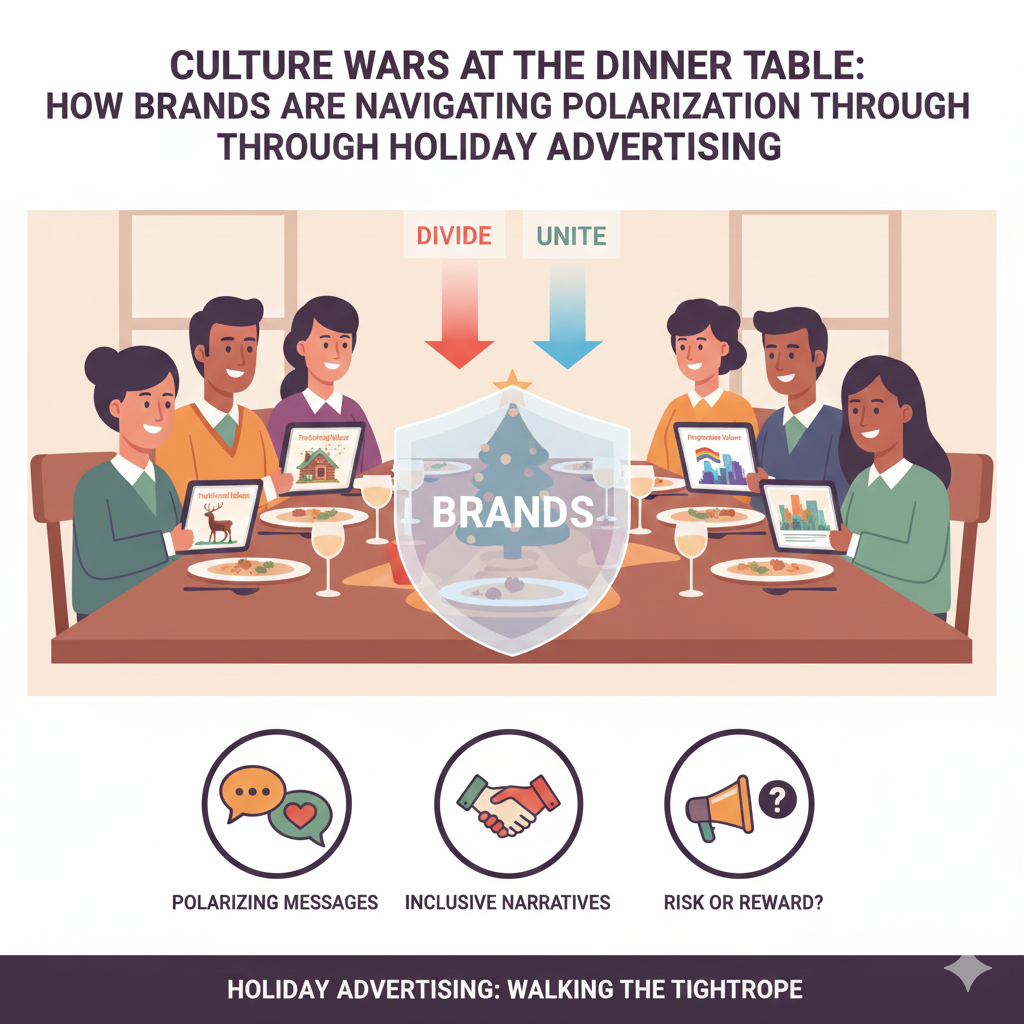
In the 2025 holiday season, brands face a unique challenge: crafting ads that unite families amid deepening political divides. With CTV political ad spending surging to 12.8% of the market and marketers targeting nuanced political segments, holiday campaigns must thread the needle between festive cheer and cultural sensitivity.[1]
The Rise of Polarized Audiences in Holiday Marketing
Holiday advertising traditionally evokes warmth and togetherness, but 2025’s landscape is marked by polarization. Marketers expect a 66% rise in holiday spend, yet only 22% of consumers share that optimism, reflecting cautious consumer behavior influenced by economic and political tensions.[1] Experian identifies granular audience segments like “Moderate Democrats,” “Political Leaning Conservatives,” and “Liberal Leaning Independents,” enabling brands to tailor messages without alienating broad swaths of shoppers.[1]
This precision targeting stems from CTV’s growth in political ads, projected at $1.5 billion for the 2024 cycle, with campaigns like Harris’s allocating $200 million to streaming platforms.[1] As families gather, brands risk amplifying “culture wars at the dinner table”—awkward political debates—unless ads foster neutrality or shared joy.
Early Trends: Togetherness as a Unifying Theme
Early 2025 holiday ads emphasize “togetherness x special moments” to sidestep polarization. Facebook reunites high school friends, Gap features multigenerational musicals, and Lego promotes family bonding.[3] John Lewis’s U.K. campaign depicts a father-son connection, while Etsy pushes personalized gifts signaling “I get you.”[3]
These themes counterbalance division by focusing on universal emotions. However, Muse by Clio notes a desire for “less saccharine, more reality,” suggesting brands succeed by portraying authentic family dynamics, including subtle tensions resolved through shared rituals.[3]
Value and Deals: Appealing Across the Political Spectrum
Economic caution unites polarized shoppers. Ads from Asda, starring the Grinch amid cash-strapped references, Best Buy promising low prices, and Chime with Jason Momoa as a penny-pincher, prioritize value.[3] AdRoll recommends highlighting deals, value beyond price, and smaller-ticket items to drive conversions in a stretched shopping season.[4]
Shoppers plan purchases early: 37% in September-October versus 32% in November-December, per BazaarVoice, prompting brands to sustain messaging without political undertones.[4] This approach navigates polarization by focusing on pragmatism—something conservatives and liberals alike appreciate amid inflation concerns.
AI’s Role: Innovation Without Backlash
AI features prominently but cautiously. Coca-Cola’s 2025 spot blends 100 humans with 70,000 AI clips of festive critters, muting backlash compared to prior years.[3] Google’s talking-turkey AI campaign has fared better, signaling brands’ shift toward enhancing creativity rather than replacing it.[3][4]
AdRoll advises using AI for smart budget allocations across campaigns, maximizing ROI during peak periods like Cyber Five.[4] In polarized times, AI enables hyper-personalized ads—liberal-leaning for one viewer, conservative for another—delivered invisibly via CTV, keeping dinner table vibes intact.[1]
Extended Shopping Seasons and Omnichannel Strategies
The 2025 holiday window spans nearly three months: 42% shop pre-Thanksgiving, 27% Thanksgiving-Cyber Monday, and 31% post-Cyber Monday.[2] Amazon Ads urges sustained visibility with Sponsored Brands and remarketing.[2]
Gen Z drives omnichannel evolution, seeking social proof on TikTok.[4] J.P. Morgan notes early deals and seamless experiences appeal across divides, as Boomers (36%) skip promo events, highlighting generational polarization.[5] FedEx reports polarizing return policies—36% free within 30 days, 26% none—further complicating trust.
Case Studies: Brands Walking the Tightrope
- John Lewis: Father-son bonding ad transcends politics, emphasizing emotional ties.[3]
- Coca-Cola: AI critters focus on whimsy, avoiding human-like uncanny valley that sparked past debates.[3]
- Chime: Momoa’s value pitch resonates with budget-conscious across ideologies.[3]
- Gap: Multigenerational music unites diverse views in celebration.[3]
These examples show brands prioritizing inclusivity, with NIQ observing gadgetry and glam driving gifts amid broader divides.[5]
Challenges and Future Outlook
Polarization risks backfire: overly political targeting could fuel dinner table spats. Basis Technologies’ report outlines 15 trends favoring experimentation in channels like social media.[6] Success hinges on data-driven neutrality—leveraging political segments privately while projecting unity publicly.[1]
Conclusion
As 2025 holidays unfold, brands adept at navigating culture wars will thrive by blending togetherness, value, and tech innovation. In a divided world, holiday ads offer a respite, reminding us that shared meals—and smart marketing—can bridge divides.
References
- https://www.experian.com/blogs/marketing-forward/2025-holiday-shopping-trends/page/43/
- https://advertising.amazon.com/library/guides/holiday-shopping-trends
- https://musebyclios.com/on-trend/these-are-your-early-holiday-ad-trends-so-far/
- https://www.adroll.com/blog/2025-holiday-marketing-trends-what-advertisers-need-to-know
- https://nielseniq.com/global/en/insights/analysis/2025/gifts-gadgets-and-glam-whats-driving-holiday-2025-shopping/
- https://basis.com/wp-content/uploads/2025/06/2025-Holiday-Shopping-and-Advertising-Trends-Report_Basis.pdf
About the Author
InsightPulseHub Editorial Team creates research-driven content across finance, technology, digital policy, and emerging trends. Our articles focus on practical insights and simplified explanations to help readers make informed decisions.