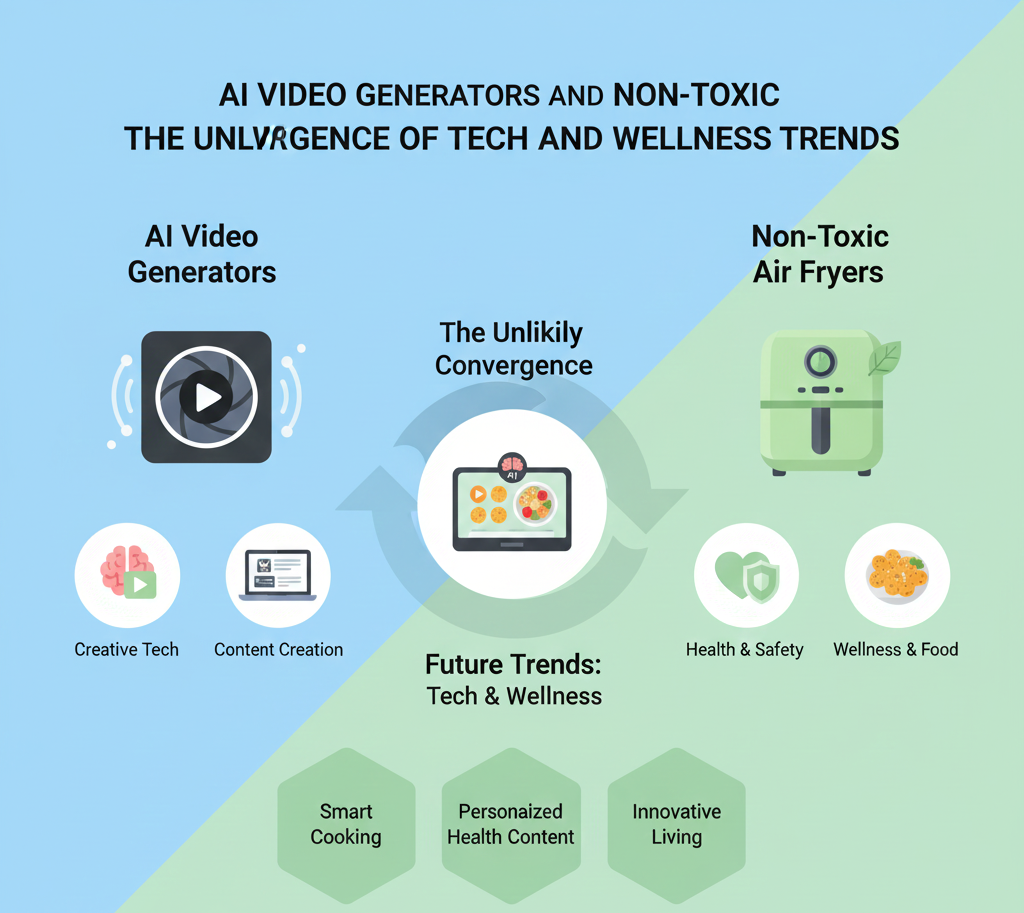
In 2025, two seemingly disparate innovations—AI video generators and non-toxic air fryers—are converging to redefine how we create content and pursue healthier living. This fusion highlights a broader cultural shift toward tech-enabled wellness, where advanced tools make sophisticated video production and safer cooking accessible to everyone.
The Rise of AI Video Generators: Tech’s Creative Revolution
AI video generators are exploding in popularity, transforming content creation across marketing, education, and entertainment. The global market, valued at around USD 534.4 million in 2024, is projected to reach USD 2,562.9 million by 2032, growing at a compound annual growth rate (CAGR) of 19.5%.[1] Another forecast pegs growth from USD 716.8 million in 2025 to the same 2032 figure at a 20.0% CAGR, driven by surging video content demand on digital platforms.[2]
Key players like Synthesia, HeyGen, Runway ML, and Veed.io dominate, offering tools that generate professional videos from text prompts. Recent advancements, such as Runway’s Gen-4 model launched in 2025, enable consistent characters and scenes from a single image, boosting realism and efficiency.[4] Asia-Pacific leads with over 31% revenue share in 2024 and the fastest growth at 23.8% CAGR, fueled by digitalization and social media in markets like China and India.[2]
This tech trend emphasizes speed and scalability: nearly half of marketers now use AI for video, reducing production costs while personalizing content for audiences.
Non-Toxic Air Fryers: Wellness Meets Kitchen Innovation
Parallel to AI’s creative boom, non-toxic air fryers embody the wellness movement’s focus on health-conscious cooking. These appliances use hot air circulation to mimic frying with minimal oil, promoting reduced fat intake and crisp results. The surge in ‘non-toxic’ models stems from consumer demand for PFAS-free (per- and polyfluoroalkyl substances) coatings, avoiding chemicals linked to health risks in traditional non-stick pans.
Wellness trends in 2025 prioritize clean-label products, with air fryers evolving into smart devices integrating apps for recipe guidance and nutritional tracking. Brands like Our Place, HexClad, and Caraway offer ceramic or stainless steel options certified free of PTFE, PFOA, and other toxins, appealing to eco-conscious consumers seeking convenience without compromise.
Market data shows air fryer sales growing amid broader kitchen tech adoption, as health-focused shoppers—spurred by post-pandemic wellness priorities—opt for appliances that support oil-free meals rich in vegetables and lean proteins.
The Convergence: Tech Amplifying Wellness Narratives
The unlikely link? AI video generators are supercharging the promotion and education around wellness tools like non-toxic air fryers. Content creators use AI to produce quick, engaging recipe demos, ‘day-in-the-life’ wellness vlogs, and personalized cooking tutorials. For instance, a fitness influencer can input a prompt like ‘Show a 30-second recipe for air-fried salmon using PFAS-free pan’ to generate polished videos instantly.
This synergy boosts discoverability on platforms like TikTok and YouTube Shorts, where short-form video rules. AI’s personalization—tailoring clips to viewer preferences—mirrors how non-toxic air fryers customize health goals, creating a feedback loop of tech-driven lifestyle enhancement. Marketers leverage this for targeted campaigns: wellness brands commission AI videos highlighting toxin-free benefits, reaching tech-savvy millennials and Gen Z who value both innovation and health.
Examples abound. Synthesia’s avatar-based videos demo air fryer recipes, while HeyGen’s trends predict 2025 dominance of personalized AI edits in health content. Similarly, GarageFarm notes AI’s role in scalable video for businesses promoting kitchen wellness.[3]
Key Examples and Real-World Impact
- Wellness Influencer Campaigns: Creators use Runway ML to visualize air fryer transformations, driving 49% marketer adoption of AI tools.
- Brand Integrations: Our Place partners with AI platforms for virtual cooking classes, blending tech demos with non-toxic messaging.
- E-commerce Boost: AI-generated product unboxings for HexClad air fryers increase conversion rates via hyper-personalized ads.
Data underscores the impact: AI video market growth aligns with wellness appliance surges, as Asia-Pacific’s digital boom accelerates both.[4]
Challenges and Future Outlook
Despite excitement, hurdles exist. AI videos face ethical concerns like deepfakes, while non-toxic air fryers grapple with higher costs versus traditional models. Yet, innovations like Gen-4 address quality, and ceramic tech matures for affordability.
Looking ahead, this convergence signals a 2025 trend: tech as wellness enabler. Expect hybrid apps where AI suggests air fryer recipes based on health data, visualized in generated videos.
Conclusion
AI video generators and non-toxic air fryers exemplify how tech and wellness intersect, making creativity and health more attainable. As markets expand, this duo promises a future where innovation nurtures balanced living.
References
- https://artsmart.ai/blog/ai-video-generator-statistics/
- https://www.fortunebusinessinsights.com/ai-video-generator-market-110060
- https://garagefarm.net/blog/the-complete-guide-to-ai-video-generators
- https://www.marknteladvisors.com/research-library/ai-video-generator-market.html
- https://www.heygen.com/blog/top-ai-video-trends
About the Author
InsightPulseHub Editorial Team creates research-driven content across finance, technology, digital policy, and emerging trends. Our articles focus on practical insights and simplified explanations to help readers make informed decisions.