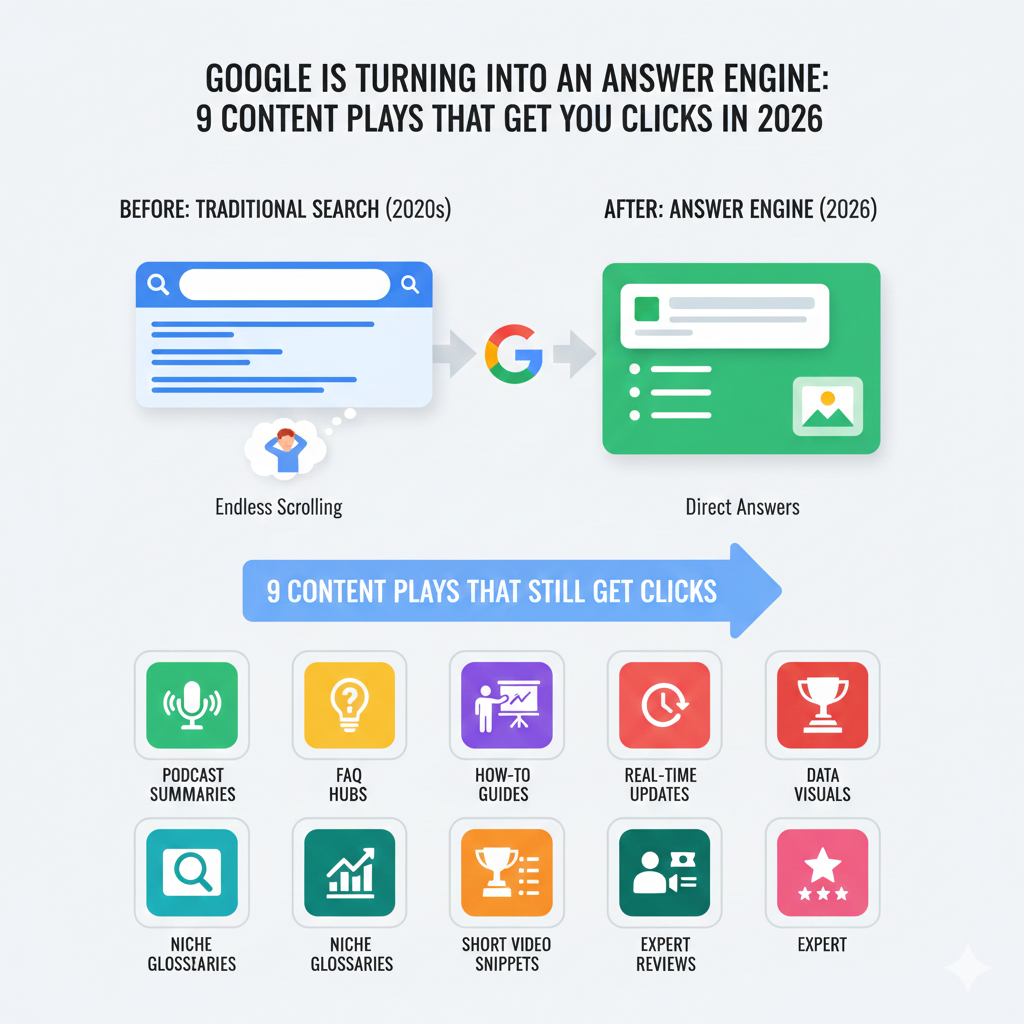
Google’s evolution into an answer engine, powered by AI Overviews and generative experiences, is compressing the search journey. Users now get synthesized answers without clicking through, prompting marketers to adopt Generative Engine Optimization (GEO) and Answer Engine Optimization (AEO) strategies.[1][3][4]
The Shift to Answer Engines: Why Traditional SEO Isn’t Enough
Generative AI models like Gemini and ChatGPT have transformed queries from keywords to natural language conversations, where AI synthesizes information rather than just listing links.[3] Google’s Search Generative Experience (SGE) acknowledges this by providing direct answers, reducing traditional click-through rates by up to 32% after rollout—from 28% to 19% for top organic results.[6]
Gartner predicts a 25% drop in traditional search engine volume by 2026 as AI chatbots and virtual agents capture share.[4] Marketers must now optimize for visibility in AI-generated responses across Google, Perplexity, Bing, and ChatGPT, focusing on content that’s authoritative, structured, and easily parsable.[2][5]
In this landscape, clicks come from content that AI cites, quotes, or links to—bypassing the need to rank #1. GEO emphasizes earning inclusion as a trusted source in these responses.[4]
9 Content Plays to Drive Clicks in the Answer Engine Era
Here are nine proven strategies, drawn from expert analyses, to maintain visibility and generate traffic in 2026. Allocate efforts across discovery platforms like social, video, and AI interfaces.[1]
1. Opinion-Led, Expert Content for Thought Leadership
Create curious, reflective pieces that shape perspectives and spark conversations. Publish opinion articles, newsletters, and blogs on platforms like X, Medium, and Threads to build authority AI models trust and cite.[1]
2. Short-Form Visual Storytelling for Emotional Engagement
Target users seeking identity and connection via emotionally resonant content. Use short-form videos, UGC, and reels on TikTok, Instagram, and YouTube Shorts to foster affinity and drive shares that amplify in AI discovery.[1]
3. Explainer and How-To Guides for Practical Help
Simplify friction with visual demos and step-by-step formats on YouTube and LinkedIn Live. These empower users with actionable advice, making your content a go-to for AI-synthesized answers.[1][5]
4. Structured FAQs with Schema Markup
Answer specific questions in under three sentences, using schema for FAQs, HowTos, and definitions. This makes content AI-parseable, increasing citations in overviews.[5]
5. Conversational ‘What Is,’ ‘X vs Y’ Comparisons
Write in natural, speakable language with short paragraphs (2-3 sentences max). Formats like comparisons and definitions align with how users query AI conversationally.[3][5]
6. Authoritative People-First Content Ecosystems
Build libraries of high-quality, helpful assets for AI-powered campaigns. Google’s 2026 trends emphasize rich ecosystems that fuel personalized ad adaptations and discovery.[2]
7. Evergreen Assets with Digital PR Integration
Invest 30% in timeless content enhanced by 45% always-on commentary, 20% schema integration, and 5% experiments like AI-native formats. Map PR to audience queries for GEO readiness.[1]
8. Multi-Platform Optimization (Google, Bing, ChatGPT)
Submit to Bing Webmaster Tools for ChatGPT visibility, ensure mobile speed and HTTPS. Track citations across engines to cover diverse query paths.[5]
9. Question-Based Headers and Bullet Lists
Structure posts with H2/H3 questions, bullets, and predictable formats. This boosts parsability for AI, positioning your site above traditional results.[5]
Implementing These Plays: Budget and Measurement
Distribute GEO budgets across mindsets: curious (opinion), emotional (visual), and practical (explainers).[1] Track success by monitoring AI citations, not just rankings—tools from top GEO providers help measure outcome-based results.[4]
For tech brands, platforms like semantic CMS enable AEO with modular, structured answers for Google SGE and beyond.[6]
Conclusion
As Google solidifies its role as an answer engine, these nine content plays—rooted in GEO and AEO—ensure your brand remains clickable in 2026. Prioritize structured, authoritative content across platforms to thrive in AI-first discovery.
References
- https://searchengineland.com/plan-for-geo-2026-evolve-search-strategy-463399
- https://business.google.com/uk/think/consumer-insights/digital-marketing-trends-2026/
- https://www.clearscope.io/blog/2026-seo-aeo-playbook
- https://markets.businessinsider.com/news/stocks/new-2026-geo-report-spotlights-10-providers-bringing-outcome-based-results-as-a-service-to-the-ai-search-era-1035671804
- https://www.boralagency.com/optimize-for-ai-overviews-answer-engines/
- https://www.thegutenberg.com/blog/answer-engine-optimization-for-ai-first-discovery-tech-brands/
About the Author
InsightPulseHub Editorial Team creates research-driven content across finance, technology, digital policy, and emerging trends. Our articles focus on practical insights and simplified explanations to help readers make informed decisions.