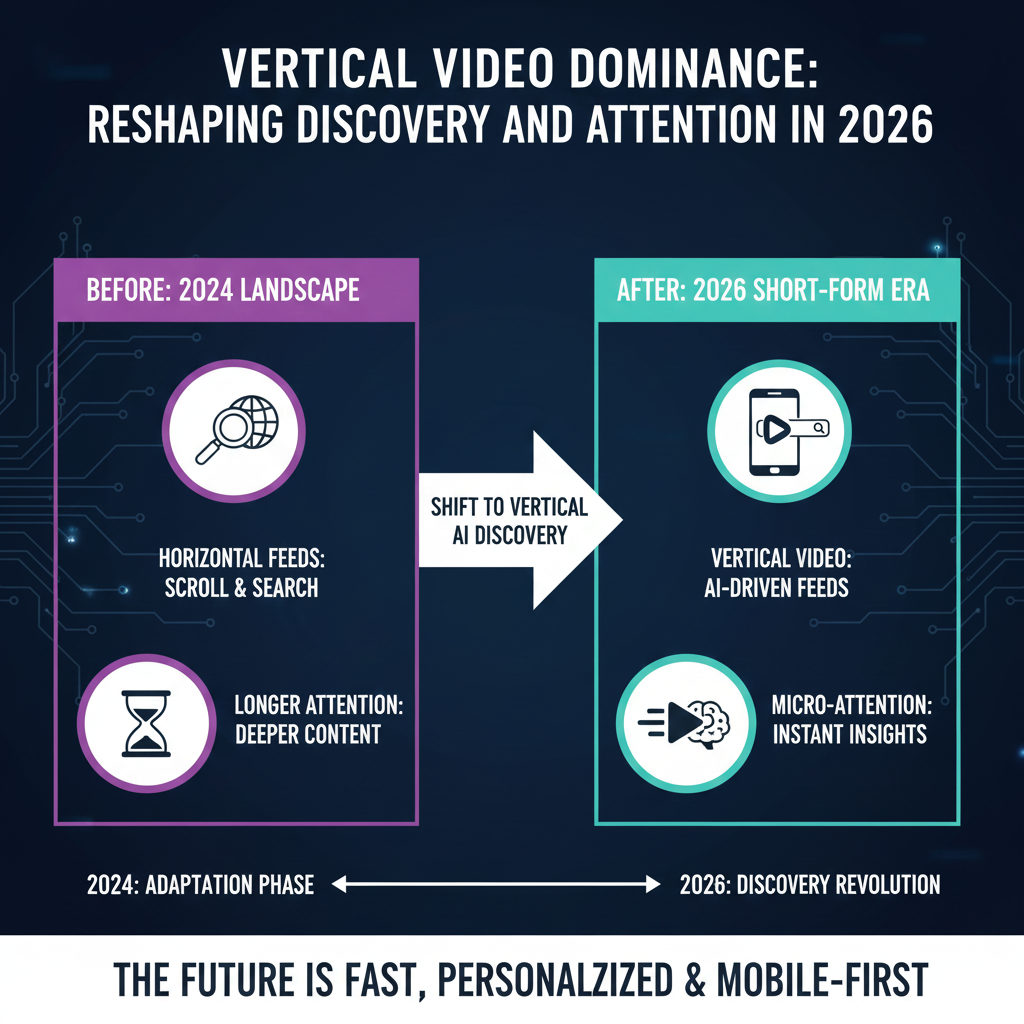
Vertical video has solidified its position as the dominant format for digital content consumption in 2026, driven by mobile-first habits and platform algorithms that prioritize short-form, immersive experiences. This shift is fundamentally altering how users discover content and process information, compressing attention spans while amplifying engagement metrics.
The Rise of Vertical Video in a Mobile-First World
Mobile video consumption now accounts for over 75% of total video views, with vertical formats outperforming horizontal ones in engagement.[2] Platforms like TikTok, Instagram Reels, YouTube Shorts, and Snapchat have accelerated this trend by designing feeds around the natural vertical hold of smartphones, eliminating the need for screen rotation and fostering seamless viewing.[2]
Publishers are adapting aggressively to compete with social platforms and creators. In 2026, outlets like Time and CNN have integrated vertical video feeds into their own sites and apps to recapture audience time lost to TikTok-style scrolling. Time places vertical clips after the second paragraph of articles, reporting far greater engagement time than text alone, with video ads sold at 25-40% premium CPMs over display ads.[3] CNN’s mobile app now features a toggleable ‘Shorts’ feed for breaking news, noting that video viewers spend significantly more time on the platform.[3]
This isn’t just a social media phenomenon. Brands report completion rates for vertical videos exceeding 50%, more than double the 21% average for non-vertical content, alongside 64% higher interaction rates.[1] The BBC saw a 30% increase in in-app footage access after adopting vertical formats, highlighting its immersive power.[1]
How Vertical Video Is Reshaping Content Discovery
Discovery mechanisms have evolved with vertical video’s dominance. Algorithm-driven feeds on TikTok, Reels, and Shorts surface content based on rapid user signals like watch completion and shares, prioritizing bite-sized clips under 60 seconds that deliver 2.5 times higher engagement.[3] Ninety percent of U.S. consumers are open to TikTok-style clips on publisher sites, per a Media.net survey.[3]
Publishers view this as a defensive strategy against creator-driven news consumption, where 21% of U.S. adults and 37% under 30 get news from influencers. Among under-35 social media users, 48% prefer creators over mainstream media at 41%.[3] Recurrent Ventures has doubled average watch times to 13 minutes by expanding vertical video, with video now driving all business growth.[3]
Ad revenue underscores the shift: Creator economy spend hit $29.5 billion in 2024 and is projected at $37 billion in 2025, growing 26% YoY—four times faster than overall media.[3] Publishers like Time anticipate vertical video as their top growth driver in 2026, following a 22% ad revenue increase in 2025.[3]
Impact on Attention Spans: Shorter, Yet Stickier
Short-form vertical content, ideally 30 seconds to 2 minutes, is the sweet spot for 71% of marketers and preferred by 63% of consumers learning about products.[5] This format demands instant hooks, training users for rapid consumption and shrinking traditional attention spans.
Yet, paradoxically, it boosts overall session times. Vertical video’s full-screen immersion aligns with thumb-scrolling habits, leading to longer dwell times and higher retention.[1][2] Authenticity plays a key role: Audiences favor unpolished, relatable clips over produced ones, fostering deeper connections via user-generated styles and behind-the-scenes content.[2]
AI and AR enhancements amplify this. Tools generate content faster, while filters and overlays on TikTok and Snapchat make videos more shareable, extending reach without diluting short-form appeal.[2] Publishers and brands must balance speed with storytelling to combat fatigue in saturated feeds.
Real-World Examples and Strategies for 2026
Time’s integration of vertical videos post-article boosts eyeballs and monetization, with programmatic and direct sales via Media.net.[3] CNN’s app ‘Shorts’ lowers friction for mobile users, who form the bulk of its audience.[3]
Brands should optimize for vertical: Craft succinct messages with quick hooks, leverage AI for production, and test AR effects. Focus on platforms like LinkedIn and YouTube Shorts alongside TikTok and Reels, where short-form draws massive views.[4][5]
- Prioritize authenticity to build trust.
- Measure success via completion rates and interactions, not just views.
- Experiment with publisher-site feeds to own the audience.
Challenges and the Path Forward
While dominant, vertical video risks oversaturation and algorithm dependency. Publishers combat traffic losses from AI tools by owning vertical experiences.[3] Emerging trends like agentic AI in advertising could further personalize feeds, intensifying competition.
In conclusion, vertical video’s dominance in 2026 marks a mobile-centric era where short-form content redefines discovery through algorithmic precision and reshapes attention via immersive brevity. Brands and publishers succeeding will blend authenticity, technology, and data-driven optimization to thrive in this landscape.
References
- https://www.medianug.com/blog/10-new-video-trends-to-elevate-your-brand-strategy-in-2026
- https://www.newtarget.com/web-insights-blog/vertical-video/
- https://digiday.com/media/media-briefing-publishers-turn-to-vertical-video-to-compete-with-creators-and-grow-ad-revenue-in-2026/
- https://jammydigital.com/video-content-trends-2026/
- https://www.visla.us/blog/listicles/video-marketing-trends-for-2026/
- https://omdia.tech.informa.com/om139136/2026-trends-to-watch-advertising
About the Author
InsightPulseHub Editorial Team creates research-driven content across finance, technology, digital policy, and emerging trends. Our articles focus on practical insights and simplified explanations to help readers make informed decisions.