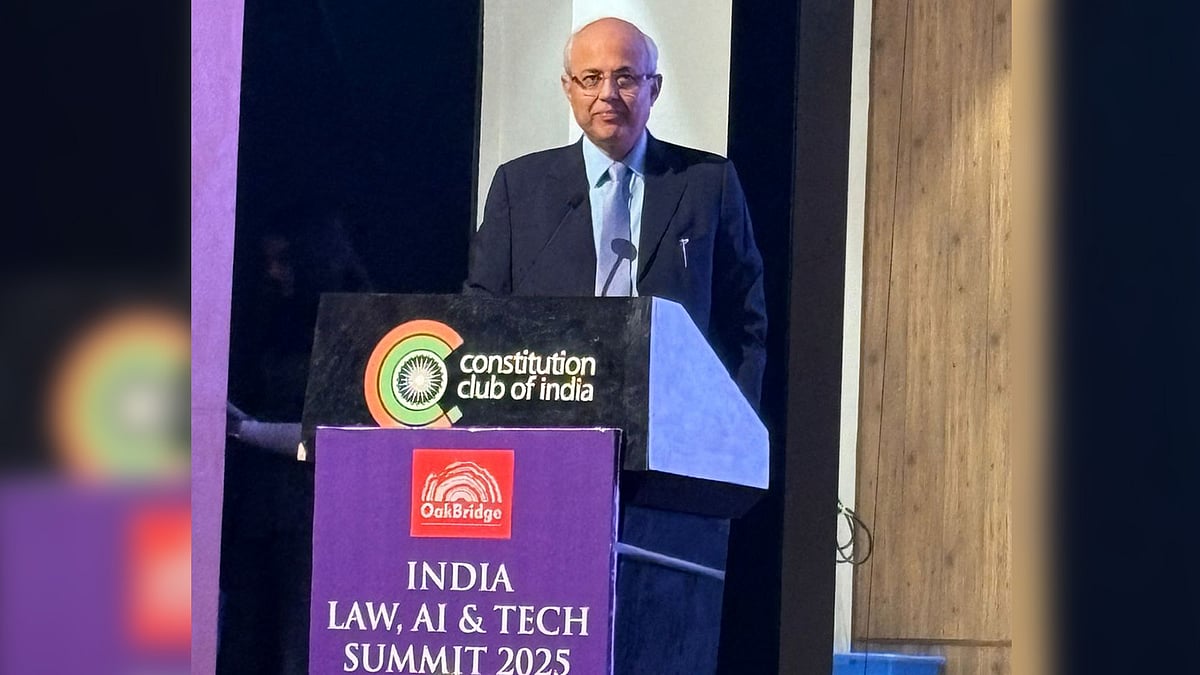
Supreme Court Justice Manmohan addressed the India Law, AI and Tech Summit 2025 on November 29, 2025, presenting a nuanced perspective on artificial intelligence's potential role in resolving India's massive litigation backlog. He proposed that AI could help clear more than 60 percent of India's pending cases by automating decisions in routine, small-ticket matters that do not require complex judicial evaluation. Justice Manmohan explained that a significant portion of India's caseload comprises minor, repetitive disputes—such as land acquisition cases and mass filings—that could be efficiently processed through AI-enabled decision platforms, allowing courts to dispose of entire blocks of similar cases through single rulings. The Supreme Court has already begun piloting an AI-driven tool called SU-PACE, which functions as a digital research assistant to read case files, extract legal issues, and flag relevant precedents for judges, thereby reducing the time spent on administrative burdens. However, Justice Manmohan emphasized critical limitations and risks associated with deploying AI at scale, including algorithmic bias, hallucinated case law, and privacy concerns that must be addressed before widespread implementation. He stressed that technology should liberate judges from clerical work to focus on complex adjudication requiring human judgment, emotional intelligence, and constitutional values. Justice Manmohan cautioned that while AI can assist with accessibility through translation and case clustering, machines cannot replicate the emotional and human elements essential to judicial decision-making. He concluded with a powerful statement that the ultimate character of justice rests not in algorithms but in the integrity, independence, and intellect of human judges. Other speakers, including senior lawyer Dr. Lalit Bhasin, echoed concerns about over-reliance on technology, warning that India's deeper crisis involves outdated and overlapping laws rather than mere case processing speed. The discussion highlighted the need for India's legal system to evolve responsibly in governing emerging technologies while maintaining human-centered justice delivery.
Why it matters:
- Addresses India's critical case backlog of 50 million pending cases across courts by proposing AI-assisted solutions for routine matters
- Establishes framework for responsible AI deployment in judiciary while preserving human judgment and constitutional values
Key Points
- AI could resolve 60% of litigation backlog by automating routine, small-ticket cases and mass filings
- Supreme Court piloting SU-PACE tool as digital research assistant to reduce judicial administrative burden
- Justice Manmohan warns against AI limitations including algorithmic bias, hallucinated citations, and lack of emotional intelligence
- Technology should free judges from clerical work to focus on complex cases requiring human judgment
- Legal system must evolve to govern AI responsibly while maintaining constitutional values and citizen-centered justice
Source: Read original
Summary
Supreme Court Justice Manmohan addressed the India Law, AI and Tech Summit 2025 on November 29, 2025, presenting a nuanced perspective on artificial intelligence's potential role in resolving India's massive litigation backlog. He proposed that AI could help clear more than 60 percent of India's pending cases by automating decisions in routine, small-ticket matters that do not require complex judicial evaluation. Justice Manmohan explained that a significant portion of India's caseload comprises minor, repetitive disputes—such as land acquisition cases and mass filings—that could be efficiently processed through AI-enabled decision platforms, allowing courts to dispose of entire blocks of similar cases through single rulings. The Supreme Court has already begun piloting an AI-driven tool called SU-PACE, which functions as a digital research assistant to read case files, extract legal issues, and flag relevant precedents for judges, thereby reducing the time spent on administrative burdens. However, Justice Manmohan emphasized critical limitations and risks associated with deploying AI at scale, including algorithmic bias, hallucinated case law, and privacy concerns that must be addressed before widespread implementation. He stressed that technology should liberate judges from clerical work to focus on complex adjudication requiring human judgment, emotional intelligence, and constitutional values. Justice Manmohan cautioned that while AI can assist with accessibility through translation and case clustering, machines cannot replicate the emotional and human elements essential to judicial decision-making. He concluded with a powerful statement that the ultimate character of justice rests not in algorithms but in the integrity, independence, and intellect of human judges. Other speakers, including senior lawyer Dr. Lalit Bhasin, echoed concerns about over-reliance on technology, warning that India's deeper crisis involves outdated and overlapping laws rather than mere case processing speed. The discussion highlighted the need for India's legal system to evolve responsibly in governing emerging technologies while maintaining human-centered justice delivery.
Why It Matters
Addresses India's critical case backlog of 50 million pending cases across courts by proposing AI-assisted solutions for routine matters
Establishes framework for responsible AI deployment in judiciary while preserving human judgment and constitutional values
Key Points
- AI could resolve 60% of litigation backlog by automating routine, small-ticket cases and mass filings
- Supreme Court piloting SU-PACE tool as digital research assistant to reduce judicial administrative burden
- Justice Manmohan warns against AI limitations including algorithmic bias, hallucinated citations, and lack of emotional intelligence
- Technology should free judges from clerical work to focus on complex cases requiring human judgment
- Legal system must evolve to govern AI responsibly while maintaining constitutional values and citizen-centered justice
Source: www.barandbench.com
Original Publish Date: 29/11/2025
Entities: Justice Manmohan, Supreme Court of India, India Law, AI and Tech Summit 2025, Oak Bridge, Dr. Lalit Bhasin, Society of Indian Law Firms (SILF), SU-PACE