AI Risk Modelling In East Asia: How Singapore Leads SME Lending Revolution – Cross-border, Audit-ready AI
singapore

Singapore stands at the forefront of AI-driven risk modeling for SME lending across East Asia, revolutionizing access to capital through scalable, compliant models. While neighbors like Hong Kong, Japan, and South Korea advance in fintech, Singapore’s MAS-led frameworks ensure audit-ready AI that supports seamless cross-border operations. This positions the Lion City as the hub for … Read more
AI Will Cut 200K EU Banking Jobs By 2030: What Compliance And Fraud Teams Do Next

ai

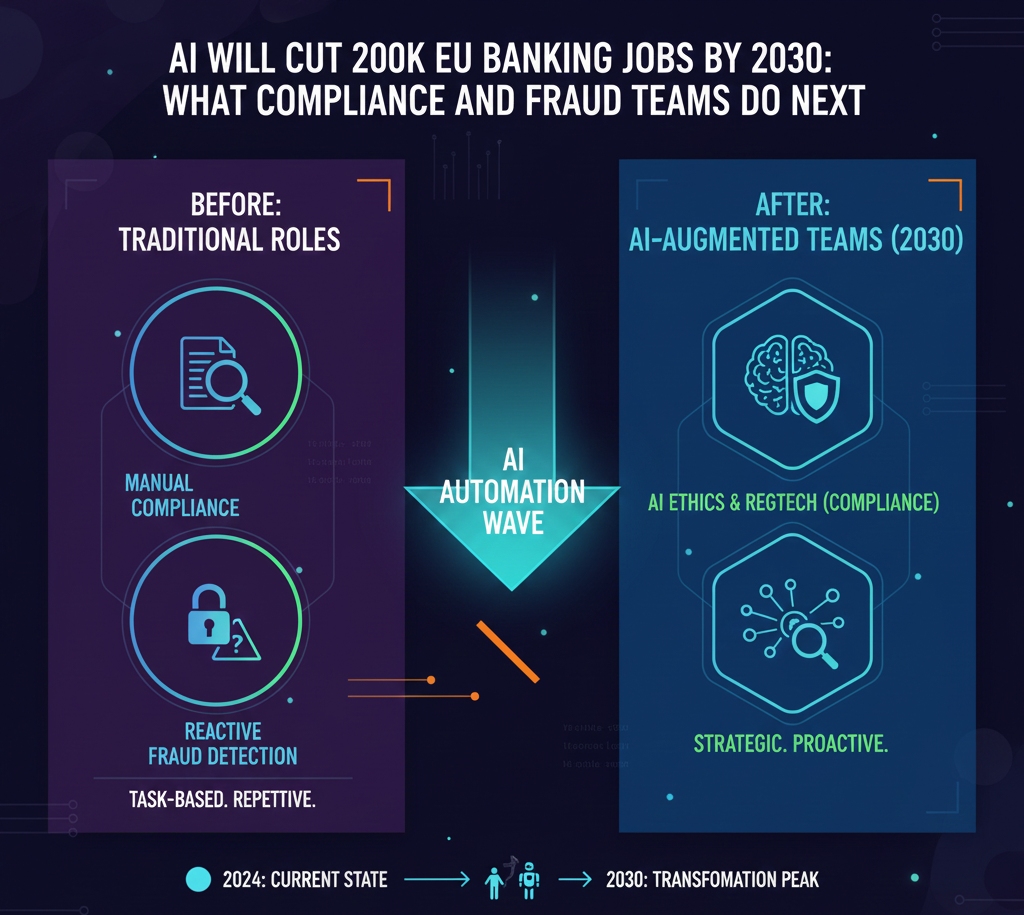
Analysts at Morgan Stanley predict that artificial intelligence will displace around 200,000 jobs in European banking by 2030, primarily targeting back and middle office roles including compliance and fraud detection.[1] This forecast, equating to about 10% of the sector’s workforce, signals a profound shift as banks prioritize AI for efficiency gains amid competitive pressures. The … Read more

How European Banks Are Building Privacy-Proof Fraud Detection With Small LLMs (Beating US Giants)

llm

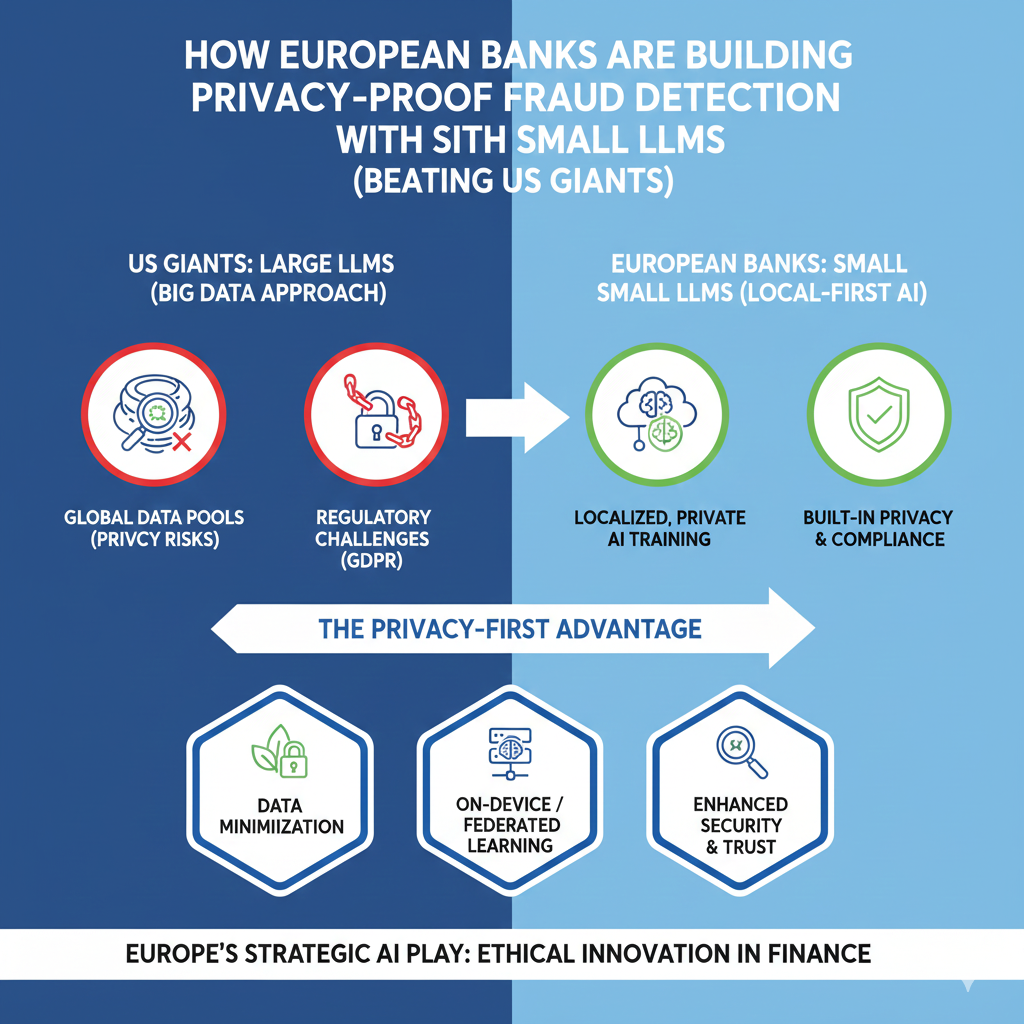
European banks are pioneering privacy-compliant fraud detection systems using small language models (LLMs) and established AI techniques, delivering tangible benefits like reduced losses and fewer false positives while adhering to stringent EU regulations—positioning them ahead of US giants burdened by less unified privacy frameworks. The Rise of AI in European Banking Fraud Detection AI adoption … Read more

AI Search Hits CEE: Why Polish and Romanian Brands Need ‘Assistant-Ready’ Content Now

poland

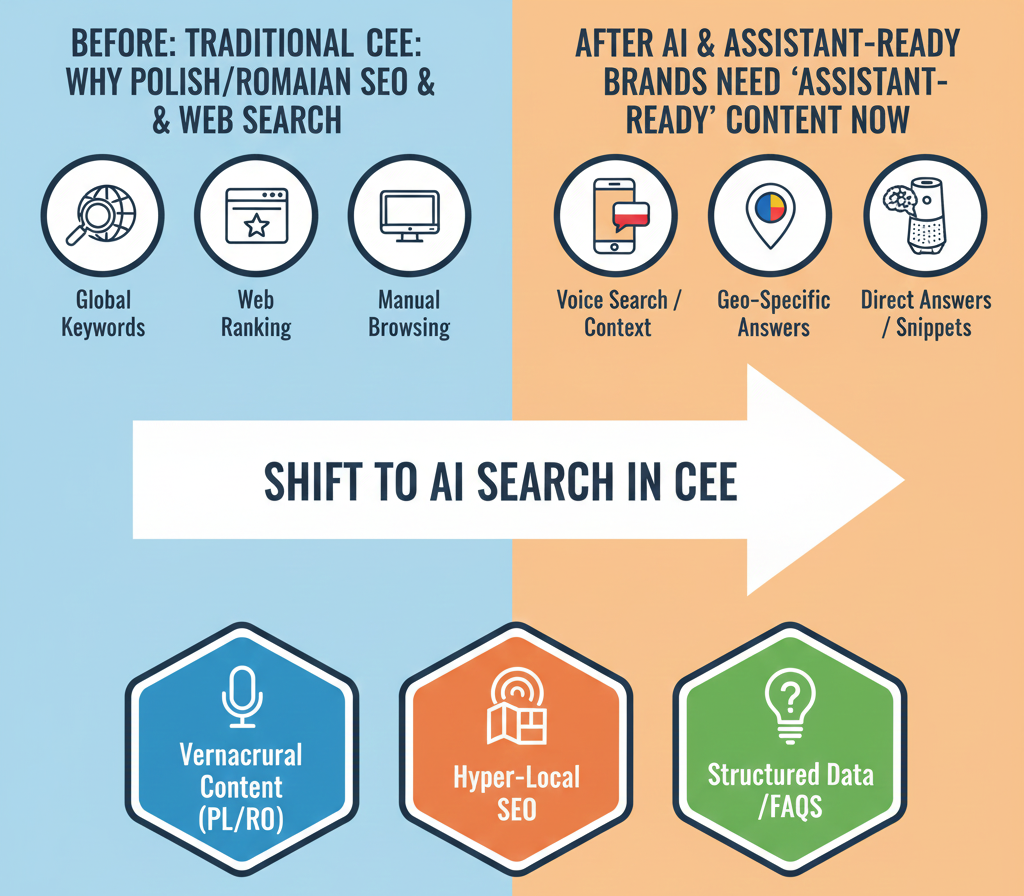
AI Search Hits CEE: Why Polish/Romanian Brands Need ‘Assistant‑Ready’ Content Now AI-powered search and virtual assistants are rapidly transforming how consumers in Central and Eastern Europe (CEE) discover brands, with Poland and Romania at the forefront of this shift. Brands in these markets must optimize content for AI assistants like generative AI-enhanced Google or ChatGPT … Read more

AI-Driven Compliance 2026 Preview: The Risk Tools That Could Save or Sink Fintech Giants

compliance

AI-driven compliance tools promise to transform fintech operations in 2026 by enabling real-time monitoring, fraud detection, and regulatory reporting, but they also introduce risks like black-box decisions and integration hurdles that could undermine giants if mismanaged.[1][2] The Rising Stakes of Compliance in Fintech Fintech leaders face a perfect storm in 2026: AI-powered fraud, crypto complexities, … Read more

Exposed: Avadhut Sathe’s ₹546 Cr Trading Empire Crumbles

avadhut sathe

SEBI’s Historic Finfluencer Takedown Avadhut Sathe started as a chawl kid in Mumbai dreaming of stock market riches. By 2025, his Avadhut Sathe Trading Academy (ASTA) raked in ₹86 crore annually from 3.37 lakh followers hooked on “wisdom-based” Bank Nifty tips. On December 4, 2025, SEBI slammed the door shut, banning Sathe, his academy, and … Read more

₹1,000 for lost liberty: The illusory remedy under Section 399 BNSS

barandbench%2F2023 08%2F8624fe40 d24a 4b5d ad0e cbc52a9b0585%2FDELHI WEB PAGE 1600x900yu

In a significant legal ruling, the Kharkhoda Civil Court in Haryana discharged a farmer named Ravinder who was accused of burning stubble, finding that the prosecution lacked merit because the District Magistrate’s ban on stubble burning was no longer in force on the date of the alleged violation. The court discovered that the ban remained effective from September 12, 2024, to November 10, 2024, but the complaint was filed on November 15, 2024, for an incident that occurred on November 14, 2024, meaning the order had already expired when the alleged burning took place. Beyond the procedural issues, the court also condemned the District Level Committee for imposing an unjustified fine on the farmer, charging him double the prescribed environmental compensation amount. According to the court’s findings, farmers with less than 2 acres of land should pay ₹2,500 in environmental compensation, but Ravinder was forced to pay ₹5,000 without proper justification or an opportunity to be heard. The court characterized this action as “unjust and unlawful enrichment” and “a matter of putrescence and dishonesty” within the District administration. As a remedy for the wrongful prosecution and loss of time, the court awarded the farmer only ₹1,000 under Section 399 of the Bharatiya Nyaya Sanhita (BNSS), which the article’s title suggests is an inadequate and illusory remedy for the farmer’s suffering. The court directed that a copy of the order be sent to the State Human Rights Commission and the Environment Department for investigation into the erring officials. This case highlights systemic issues in the enforcement of environmental regulations, including procedural lapses, administrative overreach, and the inadequacy of compensation mechanisms available under current law to address wrongful prosecutions.

Sanchar Saathi App: India’s Government-Backed Solution to Combat Telecom Fraud and Protect Mobile Users

sanchar

In an increasingly digital world where mobile phones have become an extension of our daily lives, cybersecurity threats continue to evolve at an alarming pace. India’s Department of Telecommunications has responded to these challenges by introducing Sanchar Saathi, a comprehensive government-backed platform designed to protect mobile users from fraud, theft, and unauthorized telecom usage. This … Read more

AI can resolve 60 per cent of litigation by taking over routine, small-ticket cases: Supreme Court Justice Manmohan

barandbench%2F2025 11 29%2F6gmhai6x%2FViewPoint MIddle Single Image oppcopy

Supreme Court Justice Manmohan addressed the India Law, AI and Tech Summit 2025 on November 29, 2025, presenting a nuanced perspective on artificial intelligence’s potential role in resolving India’s massive litigation backlog. He proposed that AI could help clear more than 60 percent of India’s pending cases by automating decisions in routine, small-ticket matters that do not require complex judicial evaluation. Justice Manmohan explained that a significant portion of India’s caseload comprises minor, repetitive disputes—such as land acquisition cases and mass filings—that could be efficiently processed through AI-enabled decision platforms, allowing courts to dispose of entire blocks of similar cases through single rulings. The Supreme Court has already begun piloting an AI-driven tool called SU-PACE, which functions as a digital research assistant to read case files, extract legal issues, and flag relevant precedents for judges, thereby reducing the time spent on administrative burdens. However, Justice Manmohan emphasized critical limitations and risks associated with deploying AI at scale, including algorithmic bias, hallucinated case law, and privacy concerns that must be addressed before widespread implementation. He stressed that technology should liberate judges from clerical work to focus on complex adjudication requiring human judgment, emotional intelligence, and constitutional values. Justice Manmohan cautioned that while AI can assist with accessibility through translation and case clustering, machines cannot replicate the emotional and human elements essential to judicial decision-making. He concluded with a powerful statement that the ultimate character of justice rests not in algorithms but in the integrity, independence, and intellect of human judges. Other speakers, including senior lawyer Dr. Lalit Bhasin, echoed concerns about over-reliance on technology, warning that India’s deeper crisis involves outdated and overlapping laws rather than mere case processing speed. The discussion highlighted the need for India’s legal system to evolve responsibly in governing emerging technologies while maintaining human-centered justice delivery.

Corporate Treasury Under Transformation: Why Automation Is Now the Top Priority for Indian Banks

corporate

The corporate treasury landscape in India is experiencing a seismic shift. For decades, treasury teams have operated as guardians of liquidity and risk, managing cash flows and compliance through largely manual, spreadsheet-driven processes. Today, that model is becoming obsolete. According to the EY India Corporate Treasury Survey 2025, which analyzed responses from 85 treasury leaders, … Read more