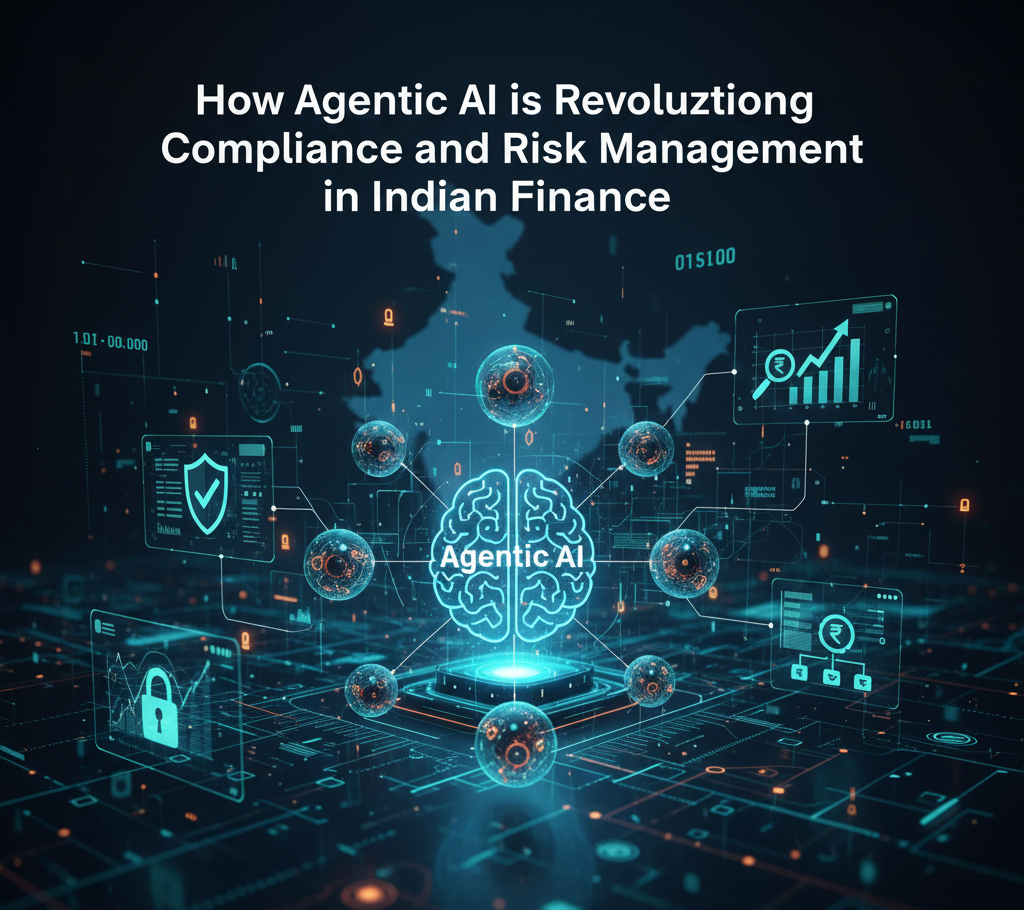
How Agentic AI is Revolutionizing Compliance and Risk Management in Indian Finance
agentic

The Indian financial sector, long characterized by complex regulatory frameworks and evolving risk landscapes, is witnessing a technological revolution with the advent of Agentic AI. Unlike traditional AI systems, which require human prompts and operate within constrained parameters, Agentic AI autonomously reasons, plans, and executes complex tasks. This capability is transforming how financial institutions in … Read more
Kyndryl wins deal to modernise Vodafone Idea’s IT operations, cybersecurity

kyndryl wins deal to modernise vodafone ideas it operations cybersecurity

Kyndryl has signed a three-year deal with Vodafone Idea to modernize its IT operations and enhance cybersecurity. The partnership emphasizes automating key processes to streamline operations. It also prioritizes improving data protection measures. This collaboration aims to deliver better overall operational efficiency for Vodafone Idea. The agreement underscores Kyndryl’s expertise in IT transformation services.

Israel’s cybersecurity firm Check Point looking at more investments in India

israels cybersecurity firm check point looking at more investments in india

Check Point, a leading cybersecurity solutions provider based in Tel Aviv, Israel, announced plans to expand its research and development (R&D) center in Bengaluru, India. The company intends to make further investments in the facility over the coming years. This expansion will include hiring more engineers to bolster its operations. The announcement was made on Thursday, highlighting Check Point’s commitment to growing its presence in the Indian market. This move underscores the increasing collaboration between Israeli tech firms and India’s vibrant tech ecosystem.

CCPA fines PharmEasy ₹2 lakh for auto-renewing paid subscriptions without consent

barandbench2F2025 11 212F0lqzi9sw2FPharmEasy

The Central Consumer Protection Authority (CCPA) has imposed a fine of ₹2 lakh on online pharmacy PharmEasy. The penalty stems from PharmEasy’s practice of auto-subscribing users to paid services without obtaining explicit consent. This action was taken after CCPA investigated complaints regarding unauthorized renewals of subscriptions. PharmEasy’s auto-renewal feature led to unintended charges for users. The decision underscores the regulator’s commitment to safeguarding consumer rights in digital transactions. Such practices are deemed unfair trade practices under consumer protection laws.

Don’t Gamble With Your Risk Tool

The article emphasizes the importance of effective risk-tolerance questions in financial advising, highlighting that these questions should facilitate meaningful discussions between advisors and clients. It argues that a well-structured approach to assessing risk tolerance can lead to better investment decisions and stronger client relationships. By engaging clients in thoughtful conversations about their financial goals and risk preferences, advisors can tailor their strategies to meet individual needs. The article suggests that risk-tolerance assessments should not be viewed merely as a checkbox exercise but rather as an opportunity to deepen understanding and trust. It also points out that the quality of the questions asked can significantly impact the outcomes of these discussions. Advisors are encouraged to move beyond generic questions and instead focus on personalized inquiries that resonate with clients’ unique situations. This approach not only enhances the advisor-client relationship but also helps in aligning investment strategies with clients’ true risk appetites. The article concludes by urging financial professionals to prioritize these conversations, as they are crucial for effective risk management and client satisfaction. Ultimately, the goal is to foster a collaborative environment where clients feel heard and understood, leading to more informed financial decisions.

Advanced AML Strategies: Enhancing Compliance in Indian Fintech

aml

In India’s rapidly expanding fintech ecosystem, where digital payments and lending platforms process trillions of rupees annually, Anti-Money Laundering (AML) compliance is no longer a checkbox exercise—it’s a strategic imperative. With UPI transactions surpassing 12 billion in October 2023 alone, according to NPCI data, the influx of funds creates fertile ground for illicit activities. Fintechs, … Read more

PwC finds AI and cloud security as companies’ top cyber priorities

pwc finds ai and cloud security as companies top cyber priorities

Indian cybersecurity leaders are prioritizing Artificial Intelligence as a top focus for the coming year. Budget allocations are rising, with AI investment leading the surge in spending. Companies are investing in AI-driven threat hunting and other advanced capabilities to bolster defenses. However, they face challenges such as talent shortages and limited understanding of emerging quantum threats. Overall, resilience will be built through strategic foresight and alignment with AI and cloud security priorities.

Google-parent Alphabet share rises as Berkshire reveals $4.9 billion stake

google parent alphabet share rises as berkshire reveals 4 9 billion stake

Berkshire Hathaway acquired a $4.93 billion stake in Alphabet, Google’s parent company, causing Alphabet shares to jump 5.2% in response to the news. The move represents a strategic shift for Berkshire, which simultaneously reduced its holdings in Apple. Investors viewed the large bet on a major tech firm as a signal of confidence in Alphabet’s growth prospects. The market reaction underscores how institutional moves can drive short-term volatility in megacap stocks. Berkshire’s rebalancing also highlights its evolving technology allocation strategy.

Cloud Innovation Without the Bill Shock: How Organizations Can Rein in Costs While Scaling Fast

cloud innovation without the bill shock how organizations can rein in costs while scaling fast

The article explains how organizations can keep cloud spending under control while still driving innovation. It argues that cost discipline does not have to slow down speed if cloud economics are managed deliberately. The piece highlights that aligning spending with business value is essential for sustainable growth. It encourages adopting practices such as FinOps, rightsizing, autoscaling, and commitment-based pricing to optimize costs. The article also stresses the importance of visibility through tagging and showback/chargeback to make cost impact clear to engineers. Ultimately, it shows how to scale fast without experiencing bill shock.