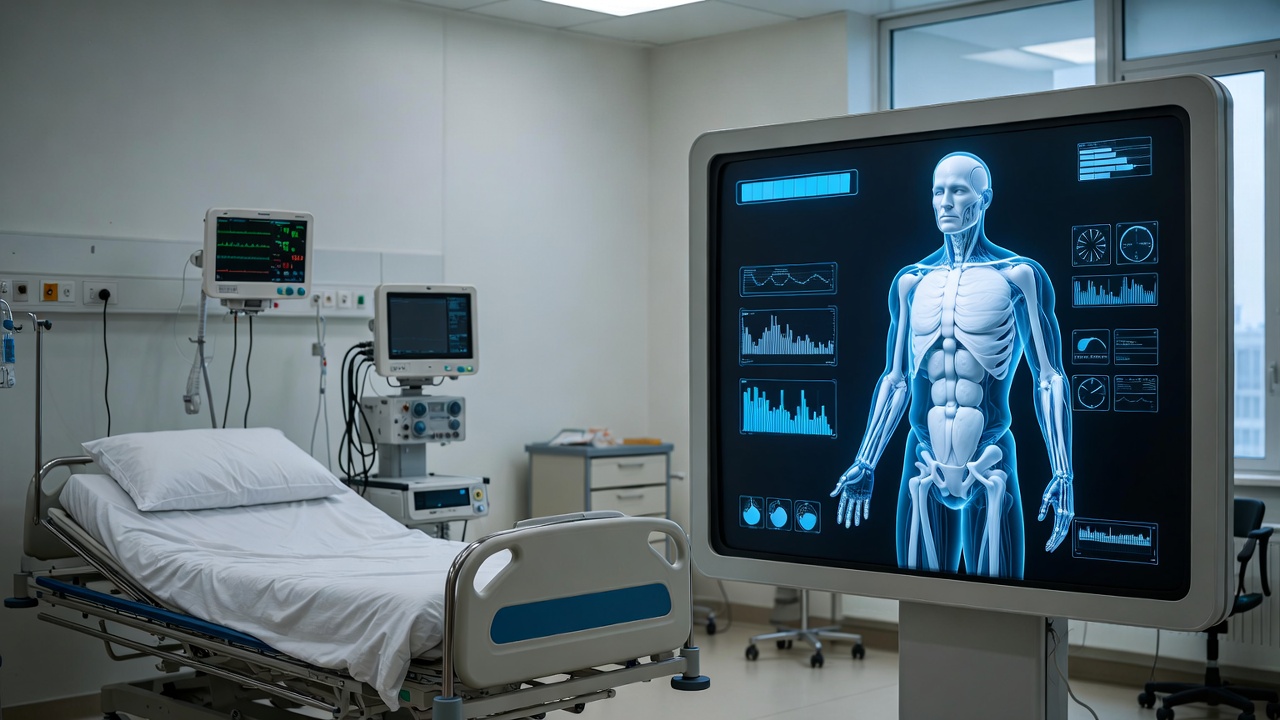
Your doctor can now test treatments on your digital twin before touching your body. In 2026, this isn’t science fiction—it’s the $3.4 billion reality of healthcare digital twins, virtual replicas of patients, organs, and entire hospital systems that are revolutionizing how medicine is practiced, tested, and delivered. With the market projected to explode to $31.7 billion by 2032, digital twin technology represents one of the fastest-growing segments in healthcare innovation, expanding at a compound annual growth rate of 37.6%.
The concept is elegantly simple yet profoundly powerful: create a dynamic virtual model of a physical entity—a patient’s heart, a diabetic’s metabolism, or an entire hospital’s operations—using real-time data from electronic health records, imaging, wearable sensors, and IoT devices. Then simulate countless scenarios to predict outcomes, optimize treatments, and prevent failures before they occur in the real world.
For patients, this means personalized medicine that accounts for their unique physiology, genetics, and lifestyle factors. For clinicians, it means testing treatment strategies on virtual patients to identify optimal approaches without risking adverse outcomes. For healthcare systems, it means predicting equipment failures, optimizing resource allocation, and reducing operational costs while improving care quality.
This comprehensive analysis examines how digital twin technology is transforming cardiovascular care, oncology, drug development, and hospital operations, while exploring the investment landscape and implementation challenges shaping the 2026 healthcare ecosystem.
1. The Digital Twin Healthcare Market: Explosive Growth Trajectory
The healthcare digital twin market has reached an inflection point where technological capability, clinical validation, and economic necessity converge to drive unprecedented adoption. Multiple market analyses confirm robust growth across all segments:
Table 1: Healthcare Digital Twin Market Projections (2025-2034)
| Year | Market Size | CAGR | Key Milestone |
|---|---|---|---|
| 2023 (Base) | $0.72 Billion | — | Early adoption phase |
| 2025 | $3.4 Billion | 26-37% | Clinical validation acceleration |
| 2026 | $4.7 Billion | 37.6% | Mainstream hospital adoption |
| 2032 | $31.7 Billion | 37.6% | Standard of care integration |
| 2033 | $7.24 Billion | 26.0% | Global market maturation |
| 2034 | $9.05 Billion | 25.92% | Precision medicine ubiquity |
Sources: Precedence Research 2026, Market.us 2025, Coherent Market Insights 2025, P&S Intelligence 2026
Regional Market Dynamics
North America dominates the global market with approximately 40-47% share, driven by advanced digital infrastructure, significant R&D investment, and the presence of major technology companies including Microsoft, IBM, and GE HealthCare. The U.S. market alone is projected to grow from $400 million (2025) to $3.2 billion (2034).
Asia-Pacific represents the fastest-growing region with 38% CAGR, fueled by expanding smart hospital infrastructure, government digitization initiatives, and increasing IoT device adoption in healthcare settings across China, Japan, and India.
Market Segmentation Insights
- By Component: Software dominates with 52-79% market share, serving as the integrated platform for simulation, modeling, and predictive analytics
- By Application: Personalized medicine leads with 25-32% share, followed by healthcare workflow optimization (37.5%) and medical device design/testing
- By End User: Hospitals and healthcare providers represent 32-37% of adoption, with pharmaceutical companies showing fastest growth
- By Deployment: Cloud-based platforms capture 55% share, enabling centralized data integration and real-time collaboration
2. What Is a Healthcare Digital Twin?
A healthcare digital twin is a dynamic virtual representation of a physical healthcare entity—whether a patient, organ, medical device, or entire hospital system—created using real-time data, advanced analytics, and simulation models. Unlike static 3D models, digital twins continuously update based on new data inputs, enabling predictive modeling and scenario testing.
The Three Core Components
Every healthcare digital twin consists of:
- Physical System: The actual patient, organ, device, or facility being modeled
- Virtual Representation: The digital model incorporating anatomical, physiological, or operational data
- Bilateral Information Flow: Continuous data exchange between physical and virtual entities, enabling real-time updates and predictive insights
Data Sources Powering Virtual Patients
Modern healthcare digital twins integrate diverse data streams:
- Electronic Health Records (EHR): Medical history, diagnoses, medications, lab results
- Medical Imaging: MRI, CT, ultrasound, X-rays providing anatomical structure
- IoT Devices: Wearables monitoring heart rate, glucose, activity, sleep patterns
- Genomic Data: Genetic profiles informing personalized treatment responses
- Real-time Sensors: Continuous monitoring of vital signs and biomarkers
This integration enables digital twins to account for individual physiological nuances, historical health patterns, and real-time status—creating truly personalized virtual patients.
3. Cardiovascular Digital Twins: Precision Heart Care
Cardiovascular medicine has emerged as the most clinically advanced application of digital twin technology, with virtual heart models now guiding treatment decisions in hospitals worldwide.
Virtual Drug Testing for Arrhythmias
Digital twins have demonstrated remarkable capability in predicting cardiac drug responses. In studies evaluating hydroxychloroquine and azithromycin, virtual heart models predicted pro-arrhythmic risks with 89% accuracy—significantly outperforming traditional animal models (75% accuracy).
More importantly, patient-specific cardiac digital twins are now guiding antiarrhythmic drug selection with measurable clinical impact. Treatment guided by virtual testing achieved significantly lower atrial fibrillation recurrence rates (40.9% vs. 54.1%) compared to standard care, demonstrating that digital twin-informed decisions produce superior patient outcomes.
Surgical Planning and Intervention Optimization
The Digital-Heart Identification of Fat-based Ablation Targeting (DIFAT) technology has revolutionized ventricular tachycardia (VT) ablation procedures. By incorporating infiltrating adipose tissue distribution into 3D cardiac models, DIFAT achieved:
- 79% overlap between predicted ablation targets and actual clinical ablation sites
- Significant reduction in ablation volumes (1.87 vs. 7.05 in standard procedures)
- Reduced procedure time and improved safety profiles
Population-Scale Cardiac Insights
Researchers have constructed an unprecedented cohort of 3,461 cardiac digital twins from the UK Biobank, revealing fundamental insights into cardiac electrophysiology:
- Sex-specific differences in QRS duration are fully explained by myocardial anatomy
- Myocardial conduction velocity remains similar across sexes but changes with age and obesity
- Longer QTc intervals in obese females result from larger delayed rectifier potassium conductance
These findings, impossible to obtain through traditional clinical studies, demonstrate how digital twins enable population-level insights while maintaining individual precision.
Real-Time Monitoring Systems
The Cardio Twin architecture provides continuous ECG monitoring with 85.77% classification accuracy and 95.53% precision for arrhythmia detection. The Longitudinal Hemodynamic Mapping Framework (LHMF) simulates hundreds of heartbeats with error rates between 0.0002%–0.004%, enabling unprecedented precision in cardiac function assessment.
4. Oncology and Cancer Digital Twins
Cancer care presents ideal conditions for digital twin application: complex disease progression, heterogeneous patient responses, and high stakes for treatment optimization.
DT-GPT: AI-Powered Cancer Prediction
The DT-GPT model integrates electronic health record data to forecast clinical variables for non-small cell lung cancer patients with remarkable accuracy (R² of 0.98) and a 3.4% improvement in mean absolute error over traditional methods. This system effectively manages missing data while enabling zero-shot forecasting capabilities—predicting outcomes for scenarios not present in training data.
Pediatric Oncology: The PRIMAGE Project
The PRIMAGE project demonstrates digital twin potential in pediatric cancer, specifically targeting neuroblastoma and diffuse intrinsic pontine glioma. This framework integrates imaging biomarkers, clinical data, and AI to achieve:
- 0.997 Dice similarity coefficient for tumor segmentation (near-perfect accuracy)
- 93% reduction in radiologist workload through automated analysis
- Personalized treatment planning based on virtual patient responses
Head and Neck Cancer Optimization
For oropharyngeal squamous cell carcinoma (OPSCC), digital twin technology employing deep Q-learning with patient-physician dyad modeling has demonstrated:
- 3.73% improvement in survival rates
- 0.75% reduction in dysphagia (swallowing difficulty) rates
- 87% average prediction accuracy for treatment outcomes
Trained on data from 536 patients, this system optimizes treatment decisions by simulating thousands of virtual patient trajectories to identify optimal therapeutic approaches.
Tumor Microenvironment Modeling
Advanced digital twins now model the mechanical and immunological aspects of tumor development. Multiphase poro-mechanical models reveal how mechanical stresses influence tumor growth and invasive phenotypes, while multiscale mathematical models study immune surveillance of micrometastases. These systems generate over 100,000 virtual patient trajectories to recapitulate diverse clinical scenarios including uncontrolled growth, partial response, and complete immune response.
5. Neurological Digital Twins: Brain Modeling and Disease Prediction
Neurological applications of digital twin technology are advancing rapidly, offering insights into previously opaque disease processes.
Neurodegenerative Disease Progression
Physics-based models integrating the Fisher-Kolmogorov equation with anisotropic diffusion successfully simulate the spread of misfolded proteins across the brain—capturing both spatial and temporal aspects of neurodegenerative disease progression. For multiple sclerosis, digital twins have revealed that progressive brain tissue loss begins 5–6 years before clinical symptom onset, enabling potential early intervention.
Parkinson’s Disease Management
Digital twin-based Healthcare Systems for Parkinson’s disease have achieved 97.95% prediction accuracy for earlier identification from remote locations. This capability enables proactive management before significant symptom progression.
Brain Tumor Analysis and Treatment Planning
Hybrid approaches combining Semi-Supervised Support Vector Machine (S3VM) and improved AlexNet CNN have achieved 92.52% feature recognition accuracy for brain tumor analysis. Personalized radiotherapy planning for high-grade gliomas has demonstrated either increased tumor control or significant radiation dose reductions (16.7% decrease) while maintaining equivalent outcomes.
Early Diagnosis Through Digital Twins
The DADD (Digital Twin for Alzheimer’s Disease Diagnosis) model achieves 88% accuracy in identifying CSF biomarker positivity and 87% accuracy in predicting clinical conversions using non-invasive EEG recordings. This enables early diagnosis without invasive procedures.
6. Metabolic Health and Chronic Disease Management
Digital twins are transforming chronic disease management through continuous monitoring and predictive intervention.
Diabetes Digital Twins
The exDSS (Exercise Decision Support System) digital twin for Type 1 diabetes increased time in target glucose range from 80.2% to 92.3% during exercise periods. For Type 2 diabetes, frameworks integrating multiomic data have enhanced predictive accuracy through comprehensive metabolic modeling.
Twin Health: Metabolic Disease Reversal
In August 2025, Twin Health raised $53 million in Series E funding to expand its AI-based metabolic health digital twin platform. The company’s technology creates personalized metabolic models that enable diabetes reversal through precision nutrition and lifestyle interventions, demonstrating the commercial viability of metabolic digital twins.
Chronic Wound Management
Digital twin technology applied to chronic wound management utilizes AI techniques to enhance clinical decision support and predict healing trajectories. Generative adversarial networks for visual prediction achieve approximately 74% accuracy in tissue distribution predictions, enabling personalized treatment recommendations based on wound characteristics and healing patterns.
7. Revolutionizing Clinical Trials with Virtual Patients
Perhaps the most transformative application of digital twins is in clinical trial design—using virtual patients to reduce costs, accelerate timelines, and improve outcomes.
The ClinicalGAN Breakthrough
ClinicalGAN, a generative adversarial network creating patient digital twins for clinical trial monitoring, has demonstrated remarkable capabilities:
- 3-4% improvement over state-of-the-art approaches in generation quality metrics
- 5-10% improvement in mean absolute percentage error for patient drop-off prediction
- Personalized patient generation using metadata for conditional modeling
Validated on Alzheimer’s clinical trial datasets, ClinicalGAN enables proactive monitoring and improved retention through predictive analytics.
Unlearn.AI: Regulatory-Approved Virtual Controls
Unlearn.AI has secured $50 million in Series C funding (February 2024) and $15 million in additional funding (March 2023) to scale its clinical trial digital twin technology. The company’s platform creates “digital twin” profiles of patients that serve as virtual control arms, reducing the number of patients required for trials while maintaining statistical power.
Key advantages of digital twin clinical trials:
- Reduced patient enrollment requirements (smaller control groups)
- Accelerated drug development timelines
- Improved trial efficiency and cost-effectiveness
- Enhanced patient safety through virtual testing
Regulatory Acceptance Growing
As noted in recent research, virtual patients and digital twins are increasingly being used to simulate in silico the efficacy and safety of drug candidates and medical devices. Regulators are growing more accepting of digital evidence, with predictive AI-based models supporting confirmatory trial design while accelerating development.
8. Hospital Operations and Healthcare Infrastructure
Beyond individual patient care, digital twins are optimizing entire healthcare systems.
Operational Efficiency Gains
Digital twin adoption has delivered 15% operational improvement and 25% performance gains in healthcare facilities. Virtual models of hospitals enable:
- Resource allocation optimization
- Workflow streamlining
- Predictive maintenance of medical devices
- Capacity management and bed planning
- Staff scheduling optimization
Early Warning Systems
Early Warning Systems leveraging digital twin technology have achieved a 60% reduction in code blue incidents (cardiac or respiratory emergencies) through predictive analytics that identify early signs of patient deterioration. This proactive approach enables timely intervention before critical events occur.
Medical Device Design and Testing
Digital twins of medical devices enable virtual testing before physical prototyping, reducing development costs and accelerating time-to-market. This application segment is expected to grow at the fastest CAGR over the forecast period as device manufacturers adopt virtual validation.
9. Key Players and Investment Landscape
The healthcare digital twin ecosystem includes established technology giants, specialized healthcare technology companies, and innovative startups:
Table 2: Major Healthcare Digital Twin Companies and 2025-2026 Developments
| Company | Focus Area | Recent Development |
|---|---|---|
| SOPHiA GENETICS | Oncology Digital Twins | Launched SOPHiA DDM Digital Twins (Oct 2025) – AI-powered virtual patient modeling for oncology |
| Twin Health | Metabolic Health | Raised $53M Series E (Aug 2025) for diabetes reversal platform expansion |
| Quibim | Imaging Biomarkers | Completed $50M Series A (Jan 2025) for AI-driven organ-level digital twins |
| Unlearn.AI | Clinical Trials | Raised $50M Series C (Feb 2024) for virtual control arm technology |
| PrediSurge | Surgical Planning | Partnership with Medtronic (Jan 2025) for endovascular digital twins |
| Microsoft | Cloud Infrastructure | Collaboration with Be My Eyes (Oct 2024) for inclusive AI training data |
| Royal Philips | Diagnostic Imaging | AWS cloud expansion (Nov 2024) for integrated diagnostics portfolio |
Investment activity remains robust, with venture capital and private equity firms including Bain Capital, TPG Capital, and General Atlantic increasing investments in precision care modeling platforms.
10. Implementation Challenges and Future Directions
Despite remarkable progress, healthcare digital twin adoption faces significant challenges:
Data Integration and Interoperability
Digital twins require seamless integration of heterogeneous data sources—EHRs, imaging systems, wearable devices, and genomic databases. Lack of standardization and interoperability between systems remains a primary barrier to widespread deployment.
Validation and Regulatory Approval
Clinical validation of digital twin predictions requires extensive studies to demonstrate safety and efficacy. Regulatory frameworks for AI-based medical devices are evolving, creating uncertainty for developers and adopters.
Computational Requirements
High-fidelity digital twin simulations require significant computational resources. Cloud-based platforms are addressing this challenge, but costs and data security concerns persist.
Clinical Workflow Integration
Successful digital twin implementation requires integration into existing clinical workflows without adding burden to healthcare providers. User interface design and decision support presentation are critical success factors.
Future Directions
Emerging trends shaping the 2026-2030 landscape include:
- Large Language Model Integration: TWIN-GPT and similar systems establishing cross-dataset associations for enhanced predictions despite limited data
- Single-Cell Digital Twins: ScFoundation and scGPT achieving state-of-the-art performance in genetic perturbation prediction
- Multi-Organ Systems: Progress toward whole-body digital twins integrating cardiovascular, metabolic, neurological, and oncology models
- Real-Time Continuous Updates: Wearable and implantable devices enabling dynamic digital twin updates reflecting current patient status
Conclusion: The Virtual Patient Revolution Is Here
Healthcare digital twins represent a fundamental shift from reactive to predictive medicine. By creating dynamic virtual replicas of patients, organs, and healthcare systems, this technology enables personalized treatment planning, accelerated drug development, and optimized care delivery at unprecedented scale.
The $3.4 billion market of 2025 is merely the foundation for a $31.7 billion industry by 2032. With demonstrated clinical impact—including 89% accuracy in cardiac drug prediction, 97.95% accuracy in Parkinson’s identification, and 60% reduction in hospital emergencies—digital twins are transitioning from research curiosity to clinical necessity.
For patients, this means treatments tailored to their unique physiology tested virtually before implementation. For clinicians, it means decision support powered by millions of simulated scenarios. For healthcare systems, it means operational efficiency that reduces costs while improving outcomes.
The virtual patient is no longer a concept—it’s a clinical reality transforming medicine at every level. Healthcare organizations that embrace digital twin technology today will define the standard of care for the next decade. Those that wait risk obsolescence in an increasingly data-driven, predictive healthcare ecosystem.
Bottom line: In the age of digital medicine, the best treatment plan is the one tested on your digital twin first. The technology to make this standard practice exists today. Implementation is no longer a question of capability, but of commitment.
References
- P&S Intelligence: Digital Twin in Healthcare Market Outlook & Forecast to 2032 (2026) – Comprehensive market analysis showing $3.4 billion (2025) to $31.7 billion (2032) growth at 37.6% CAGR, with key developments from SOPHiA GENETICS, Twin Health, and Quibim. https://www.psmarketresearch.com/market-analysis/digital-twin-in-healthcare-market
- Frontiers in Digital Health: Digital Twins in Healthcare – Comprehensive Review and Future Directions (2025) – Academic review detailing clinical applications in cardiovascular (89% drug prediction accuracy), neurological (97.95% Parkinson’s prediction), and oncology (DT-GPT with R² 0.98) domains. https://www.frontiersin.org/journals/digital-health/articles/10.3389/fdgth.2025.1633539/full
- Market.us: Healthcare Digital Twin Market Registers Robust 26.0% CAGR Through 2033 (2025) – Market analysis showing growth from $0.72 billion (2023) to $7.24 billion (2033), with regional breakdowns and segment analysis showing software dominance (52.6% share) and personalized medicine leading applications (32.62%). https://media.market.us/global-digital-twins-in-healthcare-market-news/
- Precedence Research: Healthcare Digital Twins Market Size 2025 to 2034 (2025) – Detailed market projections showing $1.14 billion (2025) to $9.05 billion (2034) growth at 25.92% CAGR, with U.S. market specific data ($400.65M to $3.24B) and end-user adoption trends. https://www.precedenceresearch.com/healthcare-digital-twins-market
- Coherent Market Insights: Healthcare Digital Twins Market Share & Forecast 2025-2032 (2025) – Market analysis showing $1.37 billion (2025) to $6.80 billion (2032) trajectory at 25.7% CAGR, with NHS-backed cardiac digital twin pilot coverage and component segmentation analysis. https://www.coherentmarketinsights.com/industry-reports/healthcare-digital-twins-market
Disclaimer
Important Notice: The information provided in this blog post is for educational and informational purposes only and does not constitute medical, investment, or professional advice. Digital twin healthcare technology is rapidly evolving, and regulatory approvals vary by jurisdiction. Patients should consult qualified healthcare providers for medical decisions. Healthcare organizations should conduct thorough due diligence before implementing digital twin systems. The author and publisher disclaim any liability for any loss or damage arising from reliance on the information contained herein. Always verify current clinical guidelines and regulatory status before adopting new medical technologies.
About the Author
InsightPulseHub Editorial Team creates research-driven content across finance, technology, digital policy, and emerging trends. Our articles focus on practical insights and simplified explanations to help readers make informed decisions.