Top AI Techniques European Banks Are Using in 2025
eu

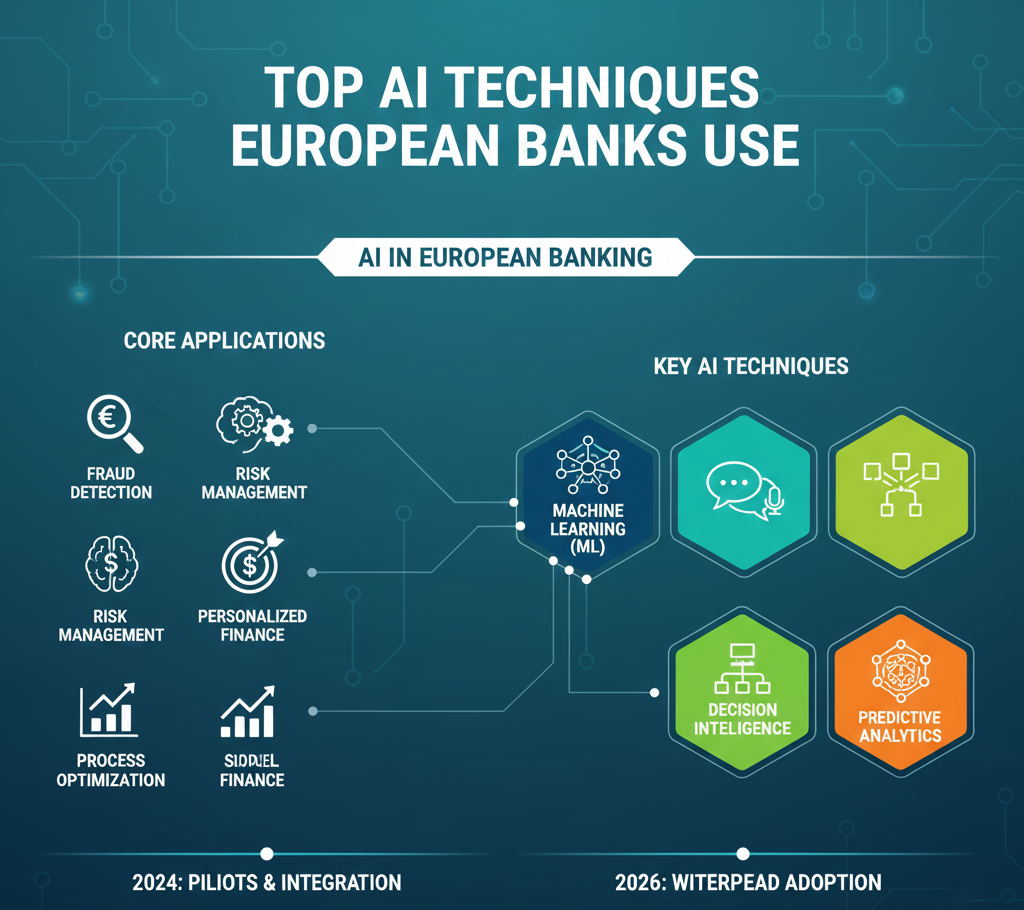
European banks are rapidly adopting artificial intelligence to enhance efficiency, sharpen decision-making, and manage risks, with credit scoring and fraud detection emerging as the top techniques according to the latest European Central Bank (ECB) data.[1][2] This surge aligns with the EU AI Act’s implementation, prompting banks to refine governance while scaling AI applications. The Rise … Read more
Agentic AI’s 2025 Takeover: How Banks Are Secretly Replacing Humans with Autonomous Agents

agent

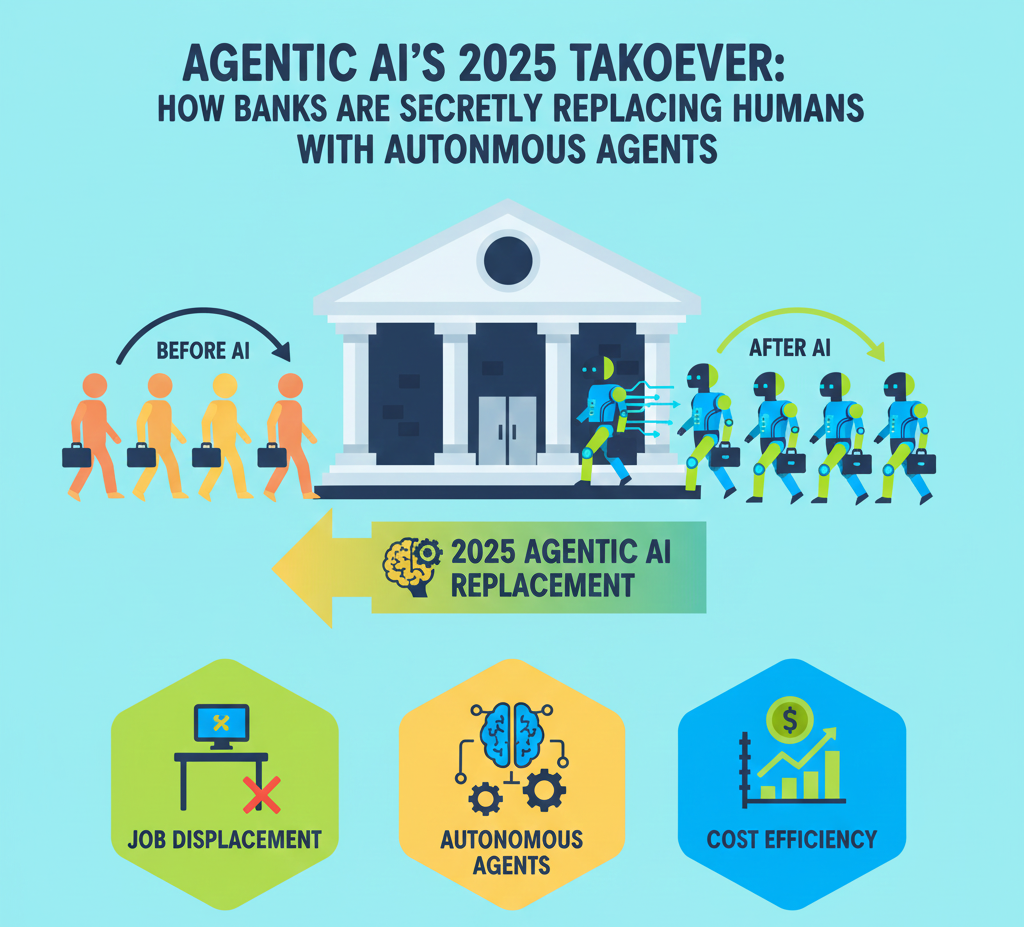
Agentic AI, capable of autonomously reasoning, planning, and executing tasks without constant human oversight, is rapidly transforming banking operations in 2025. While not a complete “replacement” of humans, 70% of banking institutions are already deploying or piloting these systems, automating repetitive and complex workflows in areas like fraud detection, compliance, and customer service.[2][5] What Is … Read more

Instant Payments Revolution: Europe’s First Real-Time Cross-Border Hits That Shocked Wall Street

payment

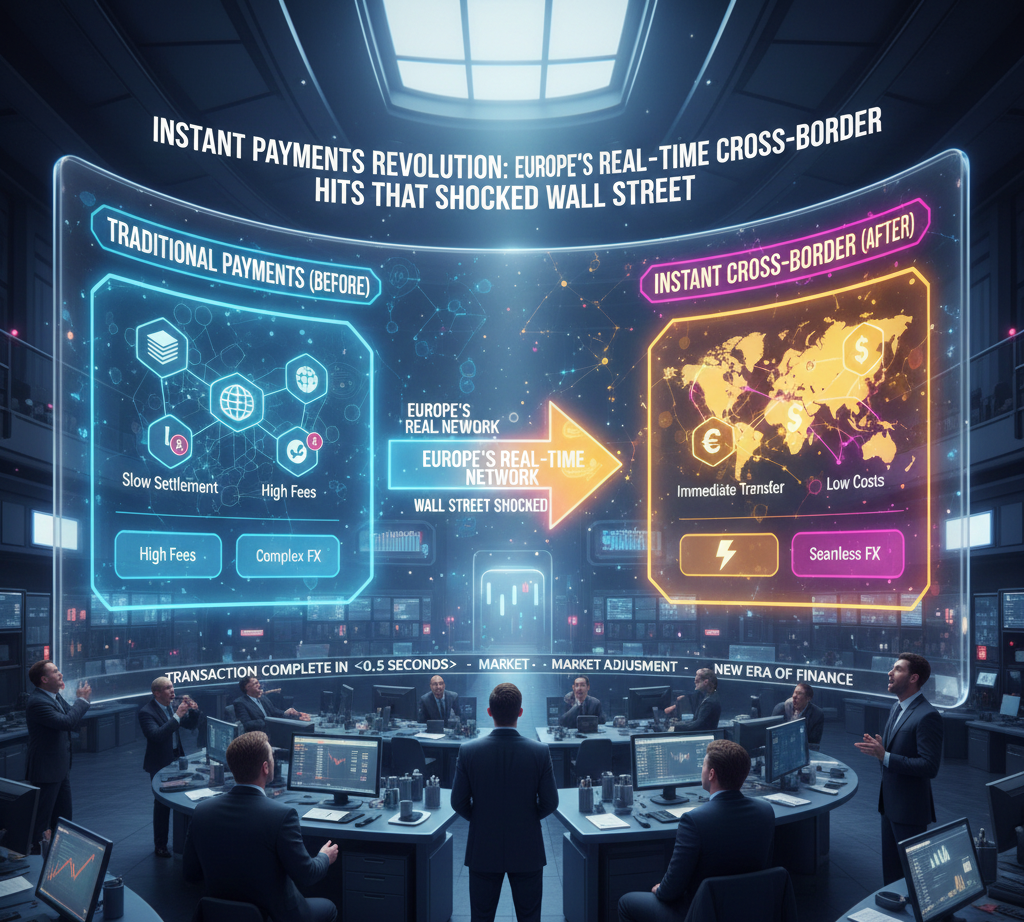
Europe’s push into instant payments has reached a tipping point in 2025, with mandatory SEPA Instant Payments Regulation (IPR) enabling real-time cross-border transactions that process in under 10 seconds, 24/7, at costs no higher than traditional transfers.[1] This seismic shift, driven by strict EU deadlines, is not only transforming intra-European finance but also rippling into … Read more

Stablecoins Explode into 2025: Inside Visa and JPMorgan’s Quiet Pilots Reshaping Global Banking

stable

Stablecoins Explode into 2025: Visa and JPMorgan’s Quiet Pilots That Could Reshape Traditional Banking Stablecoins have shifted from crypto sideshow to institutional priority. In 2025, players like Visa and JPMorgan are no longer just experimenting at the edges—they are quietly wiring stablecoins and blockchain into the plumbing of global finance.[1][3] Rather than a sudden collapse … Read more

What Is a Social Engineering Attack? Understanding the Human Hack in 2025

social

Social engineering attacks exploit human psychology rather than technical vulnerabilities, tricking individuals into revealing sensitive information or granting access.[1][3] In 2025, these “human hacks” remain the leading cause of data breaches, involved in approximately 60% of incidents according to the Verizon DBIR.[2] Defining Social Engineering: Manipulation Over Malware At its core, a social engineering attack … Read more

Mahindra first choice wheels unlocks data value: Chandra Shekhar Prasad, Head – AI Products & Solutions, Mahindra Group

unlocking the power of data mahindras insights on the used car market

Mahindra First Choice Wheels transformed its used vehicle pricing business by converting messy, inconsistent data into a strategic asset through AI and machine learning, as explained by Chandra Shekhar Prasad, Head of AI Products & Solutions at Mahindra Group. The company developed a unified pricing engine called Indian Blue Book that leverages AI-driven vehicle inspections and computer vision systems to detect micro-defects, color mismatches, and structural issues with over 95% accuracy. Initially, the pricing model achieved only 80% accuracy, but through continuous feedback loops and iterative retraining cycles, the company dramatically improved performance by collecting data from multiple sources and assigning trust levels to each source based on credibility. Rather than relying on a single monolithic algorithm, Mahindra built a sophisticated approach using multiple specialized models, each aligned to the quality and trust of its underlying data source, allowing the system to dynamically decide which dataset and model to use for generating prices. The company faced significant challenges including noisy data, escalations from banks and NBFCs, and unrealistic expectations of 100% accuracy from stakeholders, but resolved these through human expert feedback combined with model predictions to ground-truth results. A critical breakthrough came from expanding data sources and augmenting the dataset with several lakhs of data points collected from diverse sources, which initially received skepticism but ultimately became the backbone of the pricing engine. The success of this initiative is reflected in the dramatic reduction of escalations from over 400 to approximately 10, demonstrating the real-world impact of data normalization and alignment strategies. Beyond pricing, Mahindra First Choice Wheels implemented AI-based computer vision systems for real-time vehicle inspection, partnered with HRTech startup Amara to enhance employee engagement, and leveraged cloud-based scalable infrastructure to support its operations. The company also associated with CamCom for AI-powered visual inspection solutions, representing a first-of-its-kind partnership in India for the used car market. This comprehensive AI strategy demonstrates how balancing data trust strategy, multiple specialized models, dynamic retraining, and human feedback creates reliable, scalable solutions that drive both financial returns and organizational learning in the competitive used vehicle market.

The Surge of Digital Lending in India: Trends and Challenges

digital lending

India’s digital lending landscape is experiencing unprecedented transformation. What began as a niche fintech segment has evolved into a critical pillar of the country’s financial infrastructure, reshaping how millions access credit. The market valued at USD 200.13 million in 2024 is projected to reach USD 19.88 billion by 2025-26, growing at a compound annual growth … Read more

Federato Raises $100M Series D

US Dollars Money Grant

Federato, an AI-driven insurtech company, has successfully secured $100 million in a Series D funding round. This round was led by Growth Equity at Goldman Sachs Alternatives, a significant player in the investment landscape. The funding will be instrumental for Federato as it aims to enhance its technology and expand its market presence. The participation of returning investors indicates strong confidence in Federato’s business model and growth potential. This funding round marks a pivotal moment for the company, allowing it to accelerate its development and innovation in the insurance technology sector. Federato’s focus on leveraging artificial intelligence to streamline insurance processes positions it well within a rapidly evolving industry. The investment will likely enable Federato to further refine its offerings and potentially explore new markets. As the insurtech space becomes increasingly competitive, having substantial financial backing is crucial for maintaining a competitive edge. The involvement of a reputable firm like Goldman Sachs adds credibility to Federato’s vision and operational strategy. This funding round is expected to bolster Federato’s capabilities in delivering advanced solutions to its clients. The insurtech sector is witnessing a surge in investment, reflecting the growing demand for technology-driven solutions in traditional industries. Federato’s successful fundraising is a testament to the increasing interest in AI applications within insurance, which could lead to transformative changes in how insurance products are developed and delivered.

Family Office Fintech Asseta AI Confirms $4.2M Seed Round

Money Dollars Benjamin 2

Asseta AI, a fintech company specializing in accounting solutions for family offices, has successfully raised $4.2 million in a seed funding round. This funding round was co-led by prominent investment firms Nyca Partners and Motive, indicating strong investor confidence in the platform’s potential. The capital raised will be utilized to enhance Asseta AI’s technology and expand its market reach, catering specifically to the unique financial management needs of family offices. Family offices, which manage the wealth of high-net-worth families, require specialized tools to streamline their accounting processes, and Asseta AI aims to fill this gap with its innovative platform. The company’s focus on providing tailored solutions positions it well within a niche market that is increasingly seeking efficient and effective financial management tools. With this funding, Asseta AI plans to accelerate product development and potentially explore partnerships that could enhance its service offerings. The backing from Nyca Partners and Motive not only provides financial support but also strategic guidance, leveraging their expertise in the fintech sector. This investment round marks a significant milestone for Asseta AI as it seeks to establish itself as a leader in the family office accounting space. The fintech landscape is rapidly evolving, and solutions like Asseta AI are becoming essential for family offices looking to optimize their financial operations. The successful funding round reflects a growing interest in fintech solutions tailored for specific sectors, highlighting the importance of niche markets in the broader financial technology ecosystem. As Asseta AI moves forward, it will be crucial to monitor how the company utilizes this funding to innovate and meet the demands of its target audience.

Mercuryo, Polygon Labs, Mastercard Expand Credentials to Self-Custody Wallets

Money in Wallet 1024x768 1

Mercuryo, a global payments infrastructure platform, has announced a strategic partnership with Polygon Labs and Mastercard to enhance the capabilities of self-custody wallets. This collaboration aims to provide users with more robust options for managing their digital assets securely. By integrating Mastercard’s payment solutions with Mercuryo’s platform, users will be able to seamlessly convert cryptocurrencies to fiat currencies and vice versa. The partnership is expected to streamline transactions and improve the overall user experience in the cryptocurrency space. Additionally, the collaboration will leverage Polygon’s blockchain technology to ensure fast and efficient transactions. This initiative comes at a time when the demand for self-custody solutions is rising, as more individuals seek control over their digital assets. The integration of these technologies is anticipated to attract a broader audience to the world of cryptocurrencies. Furthermore, the partnership underscores the growing acceptance of blockchain technology by traditional financial institutions. As regulatory frameworks evolve, this collaboration positions the involved entities to adapt to new market conditions. The focus on self-custody wallets aligns with the increasing emphasis on user privacy and security in digital finance. Overall, this partnership represents a significant step towards bridging the gap between traditional finance and the cryptocurrency ecosystem. Stakeholders are optimistic about the potential impact on the market and the future of digital asset management.