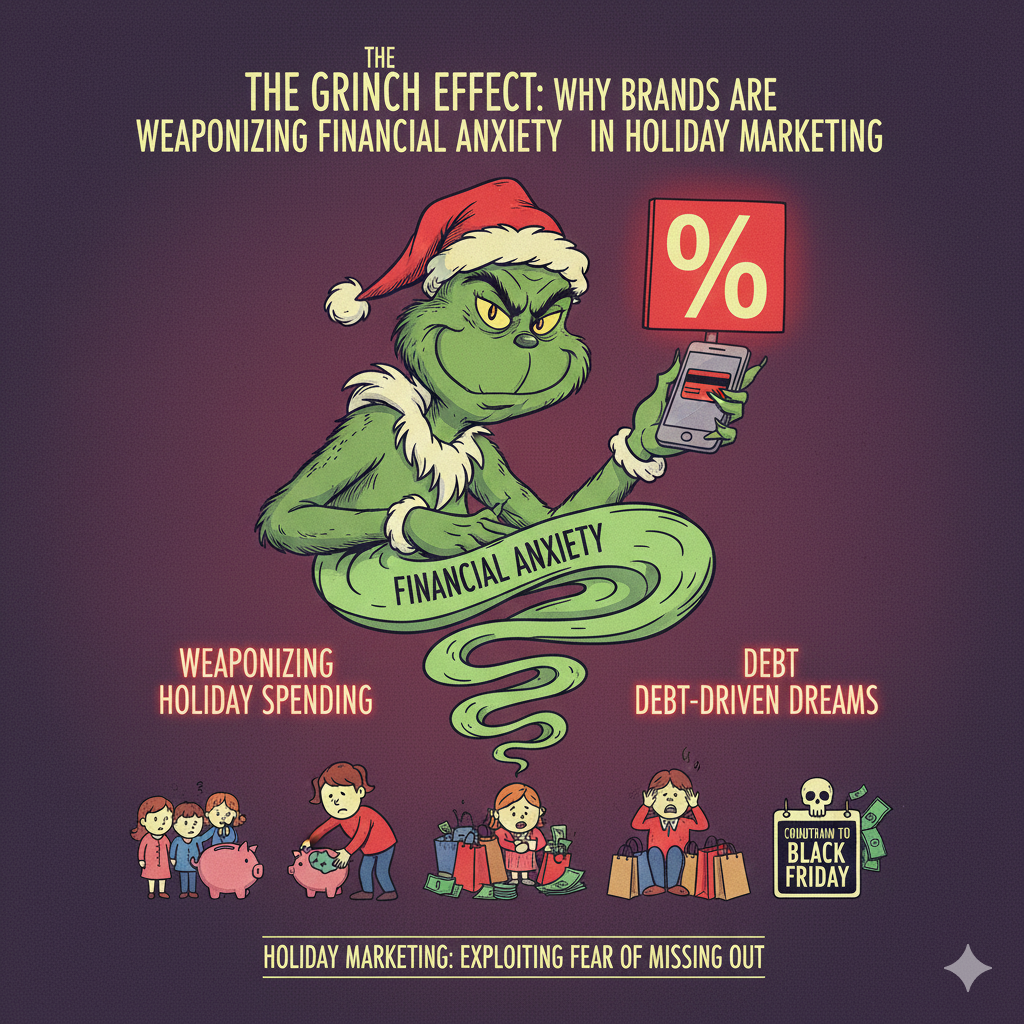
In the 2025 holiday season, brands are increasingly channeling the Grinch—not just as a nostalgic icon, but as a symbol of financial caution amid economic pressures. With consumers facing budget squeezes from tariffs and rising costs, marketers are leveraging this ‘Grinch Effect’ to blend emotional storytelling with value-driven messaging, turning anxiety into sales opportunities.
What Is the Grinch Effect?
The Grinch Effect refers to how brands invoke themes of holiday skepticism, thriftiness, and redemption to resonate with financially anxious shoppers. The Grinch, the curmudgeonly character from Dr. Seuss’s tale, embodies resistance to consumerism’s excesses, making him a perfect proxy for 2025’s budget-conscious mindset. Walmart’s ‘WhoKnewVille’ campaign features Walton Goggins as the Grinch, highlighting Black Friday deals on items like the Nintendo Switch 2 to ‘steal back’ value from high prices.[1] Similarly, McDonald’s Canada revived its Grinch campaign to revive holiday spirit through affordable promotions.[2]
This tactic weaponizes financial anxiety by acknowledging shoppers’ stress—18% feel stressed and 12% overwhelmed by holidays—while positioning brands as saviors offering deals and nostalgia.[1]
Holiday Marketing Trends Amplifying Anxiety in 2025
2025 data reveals a compressed shopping calendar and heightened deal-hunting. Shoppers started early: October purchases rose 4 points year-over-year, with 1 in 4 buying during summer sales like ‘Christmas in July.’ Post-Christmas sales surged, with a 25% jump in conversions the week after December 25.[3] Social media purchases hit 21% of holiday gifts, up from 12% in 2024, as 55% allocated 11–50% of budgets there.[3]
Financial pressures dominate: 44% plan to cut spending due to tariffs, prioritizing promo codes that stop scrolls and drive buys.[6] Overcrowded stores frustrate 44% of Americans, turning them into ‘holiday Grinches,’ especially Gen X at 51%.[4] Yet, 85% remain receptive to holiday ads, with 31% enjoying them despite 15% fatigue.[1]
Brand Examples: Grinch as Marketing Muse
- Walmart’s Grinch Takeover: The retailer’s campaign spans social videos, Times Square billboards, and NFL integrations, using the Grinch’s ‘fuzzy mitts’ to spotlight deals. VP David Hartman notes nostalgia opens ‘the door of attention’ in crowded retail periods.[1]
- McDonald’s Grinch Revival: The fast-food chain handed ‘the keys’ to the Grinch for 2025 campaigns, dominating seasonal ads by tying affordable meals to holiday cheer.[2]
- Influencer and Social Plays: Brands boosted influencer budgets 60% in 2024, with micro-creators driving authenticity. Walmart’s past Mean Girls tie-ins went viral on TikTok, mirroring Grinch-style cultural hooks.[3]
These efforts acknowledge anxiety—67% feel happy about holidays, but nostalgia (37%) and anticipation (26%) mix with stress—positioning brands as empathetic.[1]
The Psychology Behind Weaponizing Anxiety
Financial anxiety makes Grinch narratives potent: consumers trust past experiences (53%), reviews (44%), and price guarantees (32%) over sustainability (12%).[1] Gen Z rewrites rules, with 78% preferring experiences over items and 43% using AI for deals; 61% accept relevant retail media ads.[5]
Brands exploit this by starting campaigns early—44% buy more from August launches, rising to 63% for Gen Z.[6] Early birds like IKEA’s October mini-Christmas trees capitalize on shifting timelines, blending fun with frugality.[3]
Retargeting adds tension: 47% say ads spoiled gift surprises, up from 33%, with 24% wanting ‘holiday mode’ opt-outs.[1] This mirrors the Grinch ‘stealing’ joy, prompting brands to offer control and value.
Consumer Reactions and Risks
While effective, the approach risks backlash. 14% of 18-24-year-olds become ‘Grinches’ from wrong gifts, versus 7% over 65.[4] Gen Z flags greenwashing, demanding authenticity.[5] AI comforts 74% for faster service, but over-personalization could amplify anxiety.[3]
Trust hinges on delivery: neutral (54%) or loving (31%) holiday ads work if they deliver value amid economic strain.[1]
Conclusion
The Grinch Effect thrives in 2025 by humanizing financial anxiety, using nostalgia and deals to convert skeptics. Brands succeeding balance empathy with execution, ensuring holiday magic outweighs the Grinch’s gloom. As tariffs and trends evolve, this strategy may define future seasons.
References
- https://www.mediapost.com/publications/article/410973/grinch-and-ad-retargeting-steal-holiday-surpri.html?edition=140936
- https://www.marketingdive.com/news/how-walmart-is-deploying-the-grinch-to-boost-holiday-marketing/805591/
- https://www.viralnation.com/resources/blog/5-holiday-marketing-trends-to-watch-this-2025-season
- https://www.surveymonkey.com/curiosity/holiday-shopping-trends-statistics/
- https://www.sparkshoppe.com/the-generational-grinch-how-gen-z-is-rewriting-the-holiday-marketing-rulebook
- https://sproutsocial.com/insights/holiday-shopping-trends/
About the Author
InsightPulseHub Editorial Team creates research-driven content across finance, technology, digital policy, and emerging trends. Our articles focus on practical insights and simplified explanations to help readers make informed decisions.