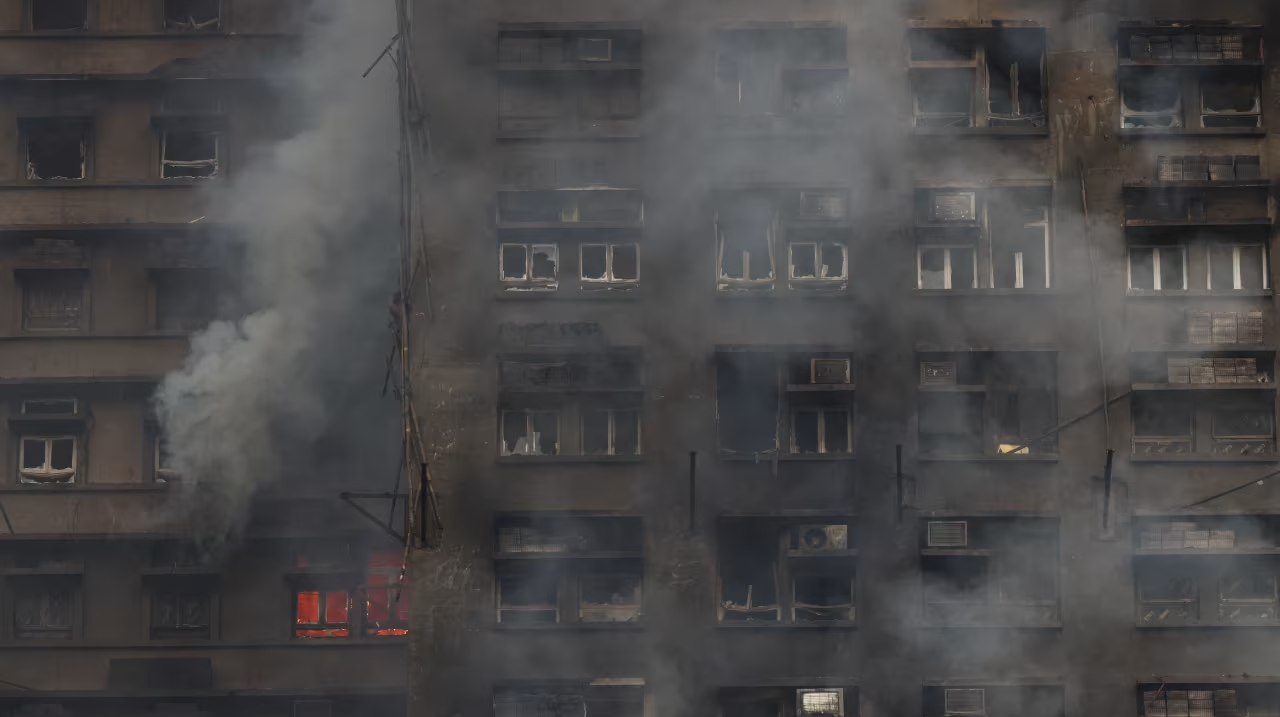
A Catastrophic Fire Strikes Hong Kong: Understanding the Tai Po Apartment Complex Tragedy
On November 26, 2025, Hong Kong experienced one of its most devastating disasters in over a century when a massive fire erupted at the Wang Fuk Court apartment complex in Tai Po District, New Territories. The blaze, which spread rapidly across multiple high-rise buildings, has claimed at least 55 lives, left 77 people injured, and resulted in 279 individuals reported missing. This tragedy marks the deadliest fire in Hong Kong since the Happy Valley Racecourse fire of 1918, which killed 614 people, and represents a sobering reminder of the dangers that persist in densely populated urban environments.[1]
The scale of the emergency response and the ongoing search and rescue efforts underscore the severity of this incident. With 128 fire trucks, 57 ambulances, and 767 firefighters deployed to the scene, authorities mobilized one of the largest emergency responses in Hong Kong’s history. Over 1,000 residents were evacuated to the nearby Kwong Fuk Shopping Centre, and as of the morning of November 27, search and rescue operations continued at lower floors while three of the seven buildings remained on fire.[1]
How the Fire Unfolded: Timeline and Spread
The fire began when flames ignited externally on the scaffolding’s green safety nets at Wang Fuk Court. What started as a localized fire quickly escalated into an uncontrollable inferno, spreading across several high-rise blocks and engulfing at least four buildings before extending to the entire estate. The rapid spread was particularly alarming, with reports of numerous residents trapped within the buildings as the flames consumed multiple floors.[1]
The fire was officially classified as a five-alarm fire—the second such designation since Hong Kong’s handover in 1997, and the first since the 2008 Cornwall Court fire. This classification reflects the severity and complexity of the emergency, indicating that multiple alarm levels were needed to mobilize sufficient resources to combat the blaze. By 06:23 on November 27, fires in four blocks were brought under control, allowing rescue teams to begin systematic search and rescue operations on the lower floors.[1]
Adding to the complexity of the emergency response, a small wildfire also broke out across Tai Po River from the apartment complex, near Wong Shiu Chi Secondary School at 22:13 on November 26. While this secondary fire was contained more easily than the main blaze, it demonstrated how the extreme conditions created by the apartment fire could trigger additional emergencies in the surrounding area.[1]
The Human Cost: Casualties and Injuries
The loss of life in this tragedy is profound and deeply troubling. At least 55 people have been confirmed dead, with 51 declared dead on scene and four others succumbing to their injuries in hospital. Among the fatalities was a firefighter who died while responding to the emergency—a reminder of the extraordinary risks that emergency responders face when confronting such disasters.[1]
Beyond those killed, 77 others sustained injuries, with 17 in critical condition requiring intensive medical care. By 05:00 on November 27, at least 20 bodies had been recovered from the site, though the ongoing search and rescue efforts suggest that the final casualty count may change as operations continue. Additionally, 279 people remain missing, creating an atmosphere of uncertainty and anguish for families desperately seeking information about their loved ones.[1]
Emergency Response and Evacuation Efforts
The scale of Hong Kong’s emergency response demonstrates both the severity of the crisis and the coordination capabilities of the city’s disaster management systems. The deployment of 128 fire trucks and 57 ambulances, along with 767 firefighters, represents a massive mobilization of resources. This response was necessary given the complexity of fighting fires in high-rise residential buildings, where flames can spread rapidly through multiple floors and residents may become trapped in upper levels.
The evacuation of over 1,000 residents to the nearby Kwong Fuk Shopping Centre was executed as a precautionary measure to ensure the safety of those not directly affected by the flames. This temporary shelter provided refuge for displaced residents while emergency services focused on combating the fire and conducting rescue operations. The logistical challenges of managing such a large-scale evacuation in a densely populated urban area like Hong Kong are considerable, yet the authorities managed to relocate residents efficiently during an active emergency.
Historical Context: Hong Kong’s Fire Safety Legacy
While the Tai Po apartment fire is the deadliest in Hong Kong since 1918, the city has experienced several significant fire incidents in recent decades that have shaped its approach to fire safety and emergency preparedness. The 2008 Cornwall Court fire, which prompted the previous five-alarm classification, demonstrated the ongoing risks associated with high-rise residential buildings in Hong Kong’s urban landscape.
The fact that this fire is only the second five-alarm fire since 1997 underscores how rare such catastrophic events are in modern Hong Kong, despite the city’s dense population and numerous high-rise buildings. However, this rarity does not diminish the importance of robust fire prevention measures, regular safety inspections, and comprehensive emergency response protocols. The Tai Po tragedy will likely prompt a comprehensive review of fire safety standards and building codes across Hong Kong’s residential sector.
Immediate Aftermath and Ongoing Challenges
As of November 27, 2025, the emergency situation remained fluid. Three of the seven buildings at Wang Fuk Court were still actively burning, and search and rescue operations were underway in the lower floors of affected structures. The presence of 279 missing persons suggests that rescue teams faced significant challenges in accessing all areas of the complex, particularly in sections where fires had been most intense.
The identification of victims and notification of next of kin represents an enormous logistical and emotional challenge for authorities. The temporary shelter at Kwong Fuk Shopping Centre served not only as a refuge but also as a coordination center for displaced residents seeking information about missing family members and determining their next steps.
Looking Forward: Questions About Prevention and Safety
The Tai Po apartment fire will inevitably raise critical questions about building safety standards, fire prevention measures, and emergency preparedness in Hong Kong. Investigators will examine multiple factors, including the condition of the scaffolding and safety nets where the fire originated, the adequacy of fire suppression systems within the buildings, evacuation procedures, and whether residents received adequate warning to escape.
The involvement of external scaffolding in the fire’s initiation suggests that construction or maintenance activities may have played a role. This detail will likely lead to renewed scrutiny of safety protocols for ongoing construction projects in residential buildings and the materials used in temporary structures like scaffolding.
For Hong Kong’s government and building authorities, this tragedy represents a critical moment to assess whether current fire safety regulations are sufficient for the city’s aging housing stock and dense urban environment. Recommendations emerging from the official investigation may lead to enhanced building codes, more frequent safety inspections, improved evacuation procedures, and updated fire suppression technologies.
Conclusion: Reflecting on Urban Resilience and Safety
The Tai Po apartment fire of November 26, 2025, stands as a stark reminder of the vulnerabilities that exist even in modern, well-developed cities like Hong Kong. The loss of at least 55 lives, the injury of 77 others, and the displacement of over 1,000 residents represents an immense human tragedy with far-reaching consequences for families, the community, and the city as a whole.
While Hong Kong’s emergency response systems demonstrated considerable capability in mobilizing resources and coordinating evacuation efforts, the scale of this disaster underscores the importance of proactive fire prevention, rigorous safety standards, and continuous improvement in emergency preparedness. As investigations proceed and the full scope of the tragedy becomes clearer, Hong Kong will have an opportunity to strengthen its commitment to protecting residents from such catastrophic events in the future.
The memory of those lost in this fire should serve as a catalyst for meaningful action—not merely symbolic gestures, but concrete measures to enhance building safety, improve fire prevention protocols, and ensure that Hong Kong’s residents can feel secure in their homes. In the weeks and months ahead, the city’s response to this tragedy will define its commitment to learning from disaster and building a safer urban future.